
Kimchi soup
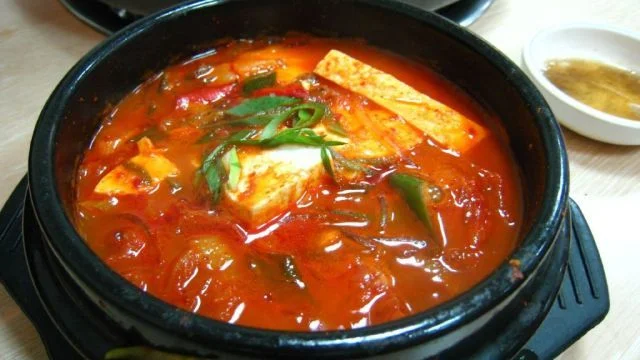
This Korean-inspired kimchi soup combines fermented cabbage, tofu and pork belly in a warming, spicy broth. It is a straightforward way to turn kimchi into a savoury meal, with sesame oil added at the end for aroma.
Ingredients
- 3 pieceskimchi
- 150 gtofu
- 1/2 spoongochujang
- 100 gpork belly
- 1 clovegarlic
- 1onion
- as neededwater
- to tastesesame oil
Instructions
- 1
Prepare the ingredients
Chop the kimchi, slice the onion into thin strips, finely chop the garlic and cut the pork belly into thick slices.
- 2
Start the soup
Put the kimchi, onion, garlic and pork belly in a saucepan with the gochujang. The source method also mentions chilli pepper and sugar, but gives no quantities for them.
- 3
Simmer the broth
Add enough water to cover the ingredients. Bring to the boil over high heat, then lower the heat and simmer for 15 minutes; the method also specifies an initial 10 minutes of cooking.
- 4
Add the tofu
Cut the tofu into pieces, add it to the saucepan and cook for 5 minutes. Take the pan off the heat, drizzle with sesame oil and serve.
What is kimchi soup?
Kimchi soup is a Korean-style dish built around kimchi, fermented cabbage seasoned with ingredients such as chilli and garlic. Its sharp, tangy flavour gives the broth much of its character.
This version combines kimchi with tofu and pork belly for a simple, hearty bowl. Gochujang reinforces the chilli warmth, while sesame oil finishes the soup with a toasted aroma.
Nutrition and macros by portion
The nutrition label shows one serving as written: 180 calories, 8g protein, 5g carbs, 14g fat.
| Portion | Adjustment | kcal | Protein | Carbs | Fat |
|---|---|---|---|---|---|
| Lighter | Use leaner pork belly | 126 kcal | 6g | 4g | 10g |
| This serving | As written | 180 kcal | 8g | 5g | 14g |
| Hungry | Add rice on the side | 270 kcal | 12g | 8g | 21g |
The pork belly and sesame oil contribute most of the fat, while the tofu and pork provide protein. Kimchi and onion supply some carbohydrates, and the broth’s sodium will depend largely on the kimchi and gochujang used; serve with a modest portion of rice and extra vegetables to round out the meal.
Choosing the ingredients
Kimchi: use a well-fermented cabbage kimchi for a more pronounced sour and savoury flavour. The recipe lists three pieces rather than a weight, so adjust the amount to suit the size of the pieces you have.
Pork belly: cut it into thick slices so it remains substantial in the broth. Tofu adds a softer, milder contrast to the seasoned cabbage.
Preparing the vegetables
Even cuts: slice the onion into thin strips and chop the garlic finely so they cook readily in the broth. Chop the kimchi into manageable pieces for serving.
Tofu: add it near the end rather than at the start, as the method calls for just five minutes of cooking once it is in the soup.
Managing the simmer
Heat: bring the covered ingredients and water to the boil over high heat, then reduce the heat for a gentler simmer. The supplied method mentions an initial 10 minutes and then a further 15 minutes at low heat.
Timing: the method’s stages do not align neatly with the stated 38-minute total, so use the listed simmering times as a guide and check that the pork is cooked through before serving.
Checking the texture
Broth: the water should cover the ingredients before cooking. If you prefer a more concentrated soup, use less water; for a lighter broth, add more.
Finish: the tofu should be hot after its five-minute cook, and the pork should be fully cooked. Add the sesame oil after taking the pan off the heat to preserve its fragrance.
Serving the soup
Serve the soup hot, making sure each bowl gets some kimchi, tofu and pork. Plain rice is a natural accompaniment to the spicy, savoury broth.
A mild side dish can offset the kimchi’s intensity, while extra sesame oil at the table lets diners adjust the aroma to taste.
Recipe notes & tips
- Taste the kimchi before cooking, as its saltiness and sourness can vary.
- Cut the pork belly into similarly thick slices so it cooks evenly.
- Keep the tofu pieces large enough to handle without breaking apart.
- Add the sesame oil after removing the pan from the heat.
- Serve the soup promptly while the tofu is hot and tender.
Variations
- Make it vegetarian: leave out the pork belly and use water or vegetable stock.
- Add mushrooms: slice them and simmer them with the kimchi for an earthier broth.
- Adjust the heat: use less gochujang for a milder bowl.
- Serve with rice: add cooked rice alongside the soup for a more filling meal.
- Add spring onions: scatter sliced spring onions over the bowls just before serving.
Common mistakes to avoid
- Adding tofu too early: it can break up during the longer simmer; follow the method and add it for the final five minutes.
- Boiling hard throughout: a rolling boil can make the soup cook unevenly; reduce the heat after it comes to the boil.
- Using too much water: the broth may taste weak; add only enough to cover the ingredients, then adjust if needed.
- Skipping the pork check: thick slices need to be cooked through; cut into one to check before serving.
- Adding sesame oil while cooking: its aroma can fade; drizzle it on after taking the pan off the heat.
How to store
Refrigerate leftovers in a covered container and use within 2–3 days. Reheat gently in a saucepan until piping hot, stirring carefully so the tofu stays intact.
Frequently asked questions
What does kimchi taste like in soup?
It brings a tangy, savoury flavour and a chilli warmth, with the exact intensity depending on the kimchi. The broth softens its sharpness as it simmers.
Can I make this soup without pork belly?
Yes. Leave it out for a meat-free version, or use mushrooms for a more substantial texture. The recipe does not specify a stock, so water can still be used.
How spicy is kimchi soup?
The heat depends on both the kimchi and the amount of gochujang. Start with the listed half spoon and adjust only if you know your paste is mild.
What should I serve with kimchi soup?
Plain rice is a simple accompaniment, and mild vegetables or side dishes work well alongside its punchy broth.
Can I use a different tofu?
Yes. Use the tofu you have, cutting it into pieces and adding it for the final five minutes as directed. Softer tofu needs gentler handling.
Why does the method mention chilli and sugar?
The supplied method mentions both, but neither appears in the ingredient list and no quantities are given. This version therefore does not include them as measured ingredients.
Cook it from the original
This recipe comes from saborgourmet.com. Their page has the author’s own photos, notes and tips — the best place to cook it from.
Open the recipe on saborgourmet.com