
Ground Beef and Cabbage
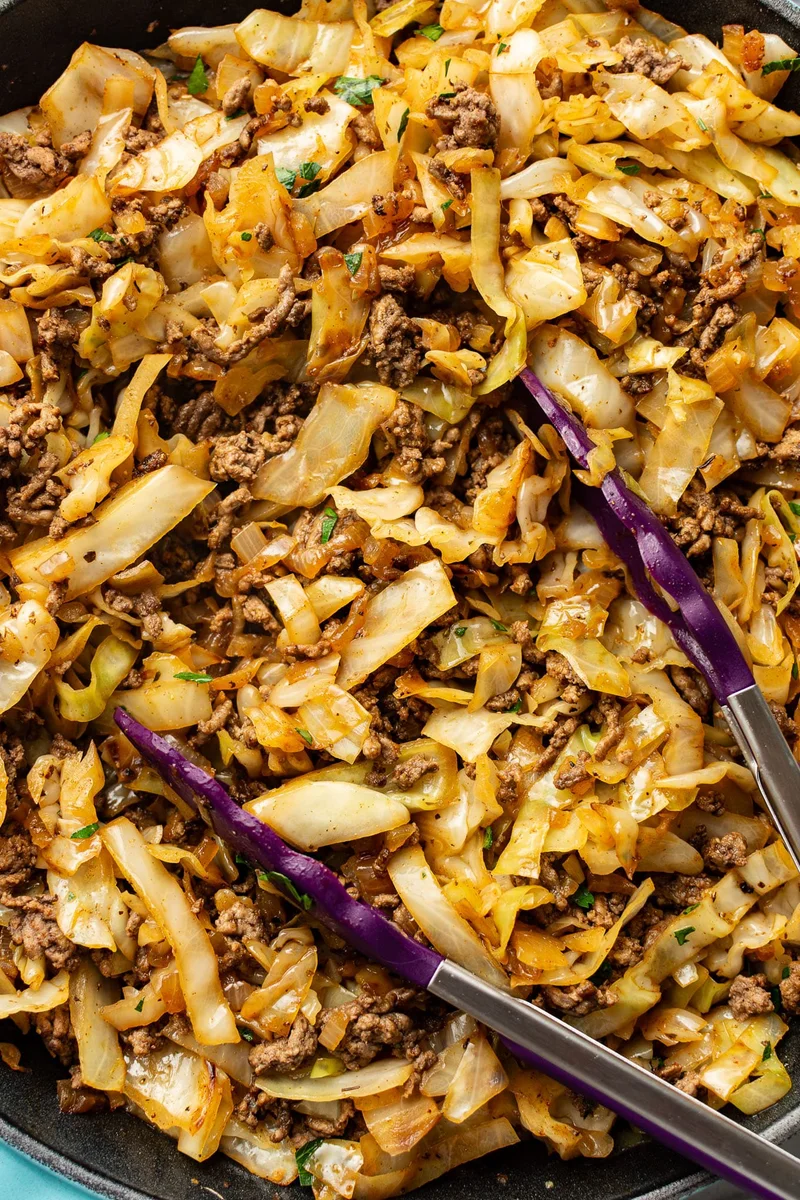
This American-style skillet combines browned ground beef with soft, golden ribbons of cabbage, onion and paprika. It is a straightforward one-pan meal that turns familiar pantry ingredients into a filling dinner.
Ingredients
- 454 g (1 pound)lean ground beef
- 28 g (2 tablespoons)butter
- 1 mediumonion, chopped
- 1 mediumgreen cabbage, cored and chopped
- 2 clovesgarlic, minced
- 1 teaspoonpaprika
- ½ teaspoonItalian seasoning
- 120 ml (½ cup), or more to tastebeef broth
- To tasteseasoning salt and pepper
- To tastesour cream, optional for serving
Instructions
- 1
Brown the beef
Heat a skillet over medium-high heat. Add the ground beef and cook for about 8–10 minutes, breaking it into pieces as it browns.
- 2
Drain the beef
Transfer the beef to a plate lined with kitchen paper. If a lot of excess fat remains in the skillet, drain it.
- 3
Cook the onion
Add the butter and onion to the skillet and sauté for 3 minutes.
- 4
Soften the cabbage
Add the cabbage and cook uncovered for about 10–15 minutes, stirring fairly often, until soft or cooked to your preferred tenderness. The cabbage at the bottom will begin to wilt after a few minutes, making it easier to stir. Let the onions take on a little colour too; this slow cooking builds flavour.
- 5
Add the seasonings
Stir in the garlic, paprika and Italian seasoning.
- 6
Finish the skillet
Pour in the beef broth and return the cooked beef to the skillet. Cook for a few minutes, stirring or tossing fairly often, until heated through. Add a splash more broth if the mixture needs extra moisture.
- 7
Season and serve
Taste and add seasoning salt and pepper as needed; the large amount of cabbage may need a generous seasoning. Serve with a dollop or two of sour cream, if you like.
What is ground beef and cabbage?
This is a simple American-style skillet meal built around browned ground beef and cooked cabbage. Cabbage-and-meat combinations appear in many food traditions, while this version takes a practical pantry-meal approach with paprika, Italian seasoning and beef broth.
The method works because the beef browns separately before joining the cabbage, and the cabbage has time to soften and develop flavour in the pan.
Nutrition and macros by portion
The nutrition label shows one serving as written: 280 calories, 28g protein, 17g carbs, 12g fat.
| Portion | Adjustment | kcal | Protein | Carbs | Fat |
|---|---|---|---|---|---|
| Lighter | Skip the sour cream | 196 kcal | 20g | 12g | 8g |
| This serving | As written | 280 kcal | 28g | 17g | 12g |
| Hungry | Serve with boiled potatoes | 420 kcal | 42g | 26g | 18g |
The beef provides most of the protein and contributes fat, while cabbage and onion supply much of the carbohydrate. Butter and optional sour cream add more fat; serve with a simple vegetable side if you want to balance the plate with more variety.
Brown the beef first
Beef: Break it into small pieces as it cooks so it browns evenly. Moving it to a plate before cooking the vegetables also makes room for the cabbage.
Fat: Drain away excess fat if there is a lot in the skillet, but leave the pan ready for the butter and onion.
Give the cabbage time
Cabbage: It may fill the skillet at first, but it will wilt as the bottom layers cook. Stir fairly often so the pieces cook more evenly.
Onion: Let the cabbage cook for the full 10–15 minutes, or until it reaches the tenderness you prefer. The onion can become lightly browned during this time, adding savoury depth.
Build flavour with the seasonings
Paprika and Italian seasoning: Stir them in with the garlic after the cabbage has softened. This distributes the seasonings through the vegetables without leaving the garlic in the pan for the whole cooking time.
Broth: Add the stated amount to bring the ingredients together, then use a splash more only if the skillet seems dry.
Check the texture and doneness
Cabbage: Look for softened pieces with no raw crunch, unless you prefer a little more bite. The recipe leaves the final tenderness to your preference.
Beef: Once it goes back into the pan, cook just until heated through, stirring often. Taste at the end so you can adjust the seasoning salt and pepper.
Serve it simply
Sour cream: A dollop or two adds a cool, creamy contrast to the warm, savoury skillet; it is optional.
On the side: Serve with bread, boiled potatoes or rice if you want a more substantial meal, or keep the plate simple with the cabbage and beef.
Recipe notes & tips
- Use a wide skillet so the cabbage has room to wilt as you stir.
- Break the beef into small pieces while browning for an even texture.
- If the cabbage initially seems difficult to stir, give the bottom layer a few minutes to wilt before mixing again.
- Keep the skillet uncovered while the cabbage cooks so excess moisture can escape.
- Add extra broth a little at a time if the pan becomes dry.
- Taste before adding seasoning salt, especially if your broth is already salty.
Variations
- Add chilli: Stir in a pinch of chilli flakes with the paprika for a little heat.
- Use smoked paprika: Swap it for the paprika listed for a smokier flavour.
- Add mushrooms: Cook sliced mushrooms with the onion until softened.
- Make it creamier: Serve with a little extra sour cream at the table.
- Try another cabbage: Use a different variety, chopped into pieces of similar size.
Common mistakes to avoid
- Crowding the beef: It may steam rather than brown; use a roomy skillet and let it cook until nicely browned.
- Rushing the cabbage: It will be less soft and less flavourful; allow the full 10–15 minutes.
- Stirring too infrequently: Some pieces may cook unevenly; stir fairly often as the cabbage wilts.
- Adding too much broth: The skillet can become wetter than intended; start with 120 ml and add more only as needed.
- Over-seasoning early: Broth and seasoning salt can both be salty; taste before adjusting at the end.
How to store
Refrigerate leftovers in a covered container and use within 3–4 days. Reheat in a skillet over medium heat, stirring until hot throughout; add a small splash of broth if needed.
Frequently asked questions
Can I prepare this without sour cream?
Yes. Sour cream is optional and is served at the end, so you can leave it off.
How tender should the cabbage be?
Cook it until soft, or stop earlier if you prefer it with more bite. The recipe gives a 10–15 minute guide.
Do I need to drain the beef?
Transfer it to a paper-towel-lined plate, then drain the skillet if there is a lot of excess fat. You can leave a little behind for cooking the vegetables.
Can I add more beef broth?
Yes. The recipe allows more to taste, and you can add a splash if the skillet needs moisture while the beef heats through.
What can I serve alongside it?
Bread, boiled potatoes or rice make a filling accompaniment. You can also serve it on its own with the optional sour cream.
Can I make it ahead?
You can cook it ahead and refrigerate it in a covered container. Reheat it in a skillet until hot throughout, adding a little broth if it seems dry.
Cook it from the original
This recipe comes from saltandlavender.com. Their page has the author’s own photos, notes and tips — the best place to cook it from.
Open the recipe on saltandlavender.com