
Vegetarian/vegan potato stew with vegetables
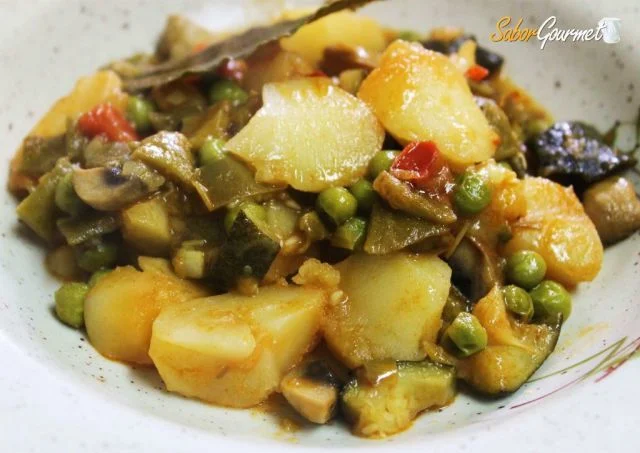
This vegan potato stew combines potatoes with peppers, courgette, mushrooms and peas in a gently simmered, paprika-seasoned broth. It’s a simple one-pot meal, and the vegetables can be adjusted to suit what you have.
Ingredients
- To tastePeas
- To tasteCourgette
- To tasteMushrooms
- To tasteRed pepper
- To tasteGreen pepper
- To tastePotatoes
- To tasteOnion
- To tasteOlive oil
- To tasteSalt
- To tastePaprika
- 1Bay leaf
Instructions
- 1
Prepare the vegetables
Wash the ingredients. Peel and slice the mushrooms, dice the peppers and courgette, and leave the peas as they are.
- 2
Prepare the potatoes
Peel the potatoes and break them into chunks by cutting partway through each piece, then twisting so it breaks off. This helps release some of their starch into the stew.
- 3
Soften the onion
Warm a generous splash of olive oil in a frying pan or casserole. Once hot, add the onion and cook until softened.
- 4
Cook the vegetables
Add the red and green peppers, courgette and mushrooms as they soften, keeping the peas aside for later. Season with salt and pepper, then add a little paprika for colour.
- 5
Boil some water
Meanwhile, bring a separate saucepan of water to the boil.
- 6
Simmer the potatoes
When the vegetables have softened, add the potatoes and stir to coat them in the flavours. Add the bay leaf and cook for a few minutes, then pour in enough hot water to cover the potatoes without adding too much; you can top it up later if needed.
- 7
Check and add peas
As the water reduces, test the potatoes with a knife or fork. When they are nearly tender, add the peas, which cook quickly. The potatoes should take about 20 minutes to cook.
- 8
Serve the stew
Once the potatoes are tender, remove the pan from the heat and serve.
What is a potato and vegetable stew?
A potato stew is a homely dish in which chunks of potato cook with vegetables in a seasoned broth until tender. This version uses familiar vegetables and paprika for colour and flavour, with no meat or dairy.
Potato stews are found in many forms in Spanish home cooking, rather than belonging to one single fixed recipe. Here, breaking the potatoes into chunks helps thicken the liquid as they cook.
Nutrition and macros by portion
The nutrition label shows one serving as written: 380 calories, 0g protein, 0g carbs, 0g fat.
| Portion | Adjustment | kcal | Protein | Carbs | Fat |
|---|---|---|---|---|---|
| Lighter | Use less olive oil | 266 kcal | 0g | 0g | 0g |
| This serving | As written | 380 kcal | 0g | 0g | 0g |
| Hungry | Serve a larger bowl | 570 kcal | 0g | 0g | 0g |
The potatoes provide most of the carbohydrates, while olive oil contributes most of the fat. The vegetables add flavour and variety, but the stew is not built around a concentrated protein ingredient; pair it with beans or lentils if you want a more balanced plate. Nutrition figures were supplied with the recipe, so individual macros are not estimated here.
Preparing the vegetables
Even pieces: Cut the peppers and courgette into similar-sized dice so they soften at a similar pace. Slice the mushrooms and keep the peas aside, as the method adds them near the end.
Broken potatoes: Peel the potatoes, cut partway through, then twist to break off each chunk. The rough edges release starch into the broth as the potatoes simmer.
Building the flavour
Onion first: Let the onion soften in hot olive oil before adding the other vegetables. This gives it time to turn tender and form a savoury base.
Paprika: Stir in a little paprika with the salt and pepper after the vegetables have started to soften. Avoid letting it sit in hot oil for too long, as it can become bitter.
Getting the broth right
Hot water: The method uses water brought to the boil in a separate pan. Add enough to cover the potatoes, but keep it measured so the finished stew does not turn watery.
Adjust as it cooks: Check the liquid as it reduces and add more hot water only if the potatoes need it to finish cooking. The broth should be plentiful enough to stew the potatoes, not drown them.
Knowing when it is ready
Potatoes: Test a piece with a knife or fork; it should slide in easily when the potato is tender. The recipe gives about 20 minutes as a guide, but the potato pieces and pan can affect the timing.
Peas: Add them when the potatoes are nearly done. They need less cooking time, so adding them late helps them keep their shape.
Serving the stew
Serve it hot once the potatoes are tender, with enough broth in each bowl to coat the vegetables. Bread is a handy accompaniment for soaking up the liquid.
For a more substantial plate, serve the stew alongside a source of plant protein, such as beans or lentils. Keep the stew itself as written if you want to stick to the original ingredient list.
Recipe notes & tips
- Keep the peas aside until the potatoes are nearly tender so they do not overcook.
- Use hot water from the separate saucepan to keep the stew simmering when you need to add more liquid.
- Add water gradually; it is easier to loosen the stew than to correct a watery broth.
- Break the potatoes rather than cutting clean cubes to help thicken the cooking liquid.
- Taste the broth before serving and adjust the seasoning if needed.
Variations
- Add carrots: Cut them into small pieces and add them with the peppers so they have time to soften.
- Use smoked paprika: Swap it for the paprika in the recipe for a smokier flavour.
- Add beans: Stir in cooked white beans near the end for a more filling bowl.
- Change the mushrooms: Use whichever fresh mushrooms you have, sliced to a similar thickness.
- Finish with herbs: Scatter chopped parsley over the stew just before serving.
Common mistakes to avoid
- Adding too much water: The stew can become thin; begin with enough to cover the potatoes and add more only as needed.
- Adding peas too early: They can lose their shape; wait until the potatoes are nearly tender.
- Cutting the potatoes into smooth cubes: They release less starch; break them into chunks by twisting off the cut pieces.
- Cooking paprika for too long: It may turn bitter; stir it in briefly with the softened vegetables.
- Skipping the potato test: Cooking time can vary; check a piece for tenderness before taking the pan off the heat.
How to store
Cool leftovers and refrigerate them in a covered container for up to 3 days. Reheat gently in a saucepan until hot throughout, adding a little water if the broth has thickened; the potatoes may soften further.
Frequently asked questions
Can I make this stew ahead?
Yes. Refrigerate it once cooled and reheat gently when ready to serve. The potatoes may absorb some broth as it stands, so add a splash of water during reheating if needed.
How do I stop the stew from becoming watery?
Start with just enough water to cover the potatoes and add more only if the pan looks too dry before they are tender. Breaking the potatoes into chunks also helps release starch into the broth.
Can I use frozen peas?
Yes. Add them while still frozen when the potatoes are nearly tender, as the recipe directs. Cook until they are hot and the potatoes are done.
What does it mean to break or 'crash' the potatoes?
Cut into a potato partway, then twist the knife so a rough piece breaks off. Those uneven edges help release starch as the potato cooks.
Can I leave out a vegetable?
Yes. The recipe description allows the amount and mix of vegetables to be adjusted. Keep enough potato and liquid for the stew to cook as intended.
How can I make this stew more filling?
Serve it with bread or add cooked beans near the end. The original recipe does not include beans, so this would be an optional variation.
Cook it from the original
This recipe comes from saborgourmet.com. Their page has the author’s own photos, notes and tips — the best place to cook it from.
Open the recipe on saborgourmet.com