
No Onion No Garlic Malai Kofta
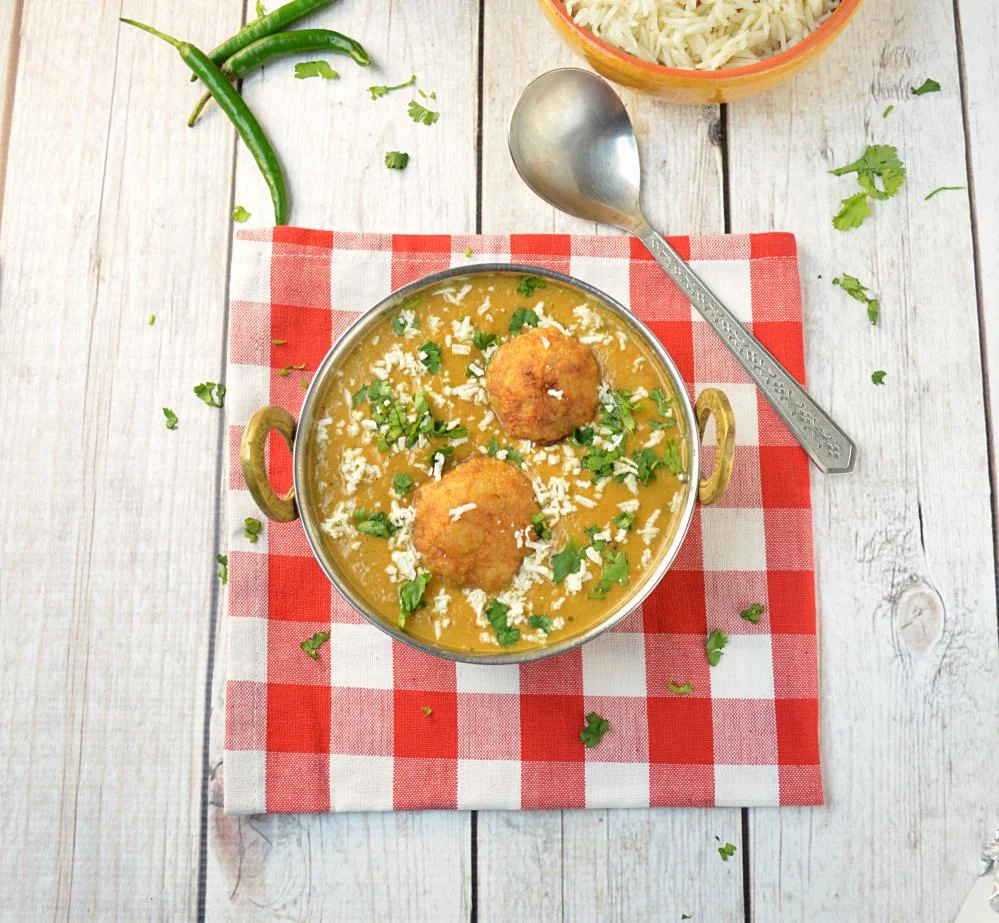
Malai kofta pairs potato and paneer balls with a smooth, creamy tomato-based gravy, made here without onion or garlic. It is a satisfying centrepiece for a meal with warm rotis or rice.
Ingredients
- 4 mediumboiled and mashed potatoes
- 1/4 teaspooncoriander powder (sukha dhaniya)
- 1/4 teaspoonred chilli powder
- 1/2 teaspoondried mint leaves
- 1.2 tablespoons (about 18 ml)cornflour, besan or rice flour
- to tastesalt
- for fryingoil
- 1/2 tablespoon (about 7.5 ml)lemon juice (optional)
- 225 g (1 cup)crumbled paneer
- 40 g (1/4 cup)boiled corn (optional)
- 40 g (1/4 cup)boiled peas
- 4–6 pieceskaju (cashews)
- 4–6 piecesyellow raisins (khismish)
- 1/4 teaspoonred chilli powder
- 1/4 teaspooncoriander powder (sukha dhaniya)
- 1 tablespoonchopped coriander leaves
- to tastesalt
- 80 ml (1/3 cup)boiled cabbage paste
- 120–180 ml (1/2–3/4 cup)homemade tomato purée
- 3 tablespoonscoconut paste
- 1 tablespoonginger paste
- 1 tablespooncashew paste
- 1/2 teaspoonred chilli powder
- 1 teaspooncoriander powder (sukha dhaniya)
- 1 teaspoongaram masala powder
- 1–2 tablespoonskasoori methi (dried fenugreek leaves)
- to tastesalt
- 2 tablespoonsoil
Instructions
- 1
Mash potatoes
Mash the boiled potatoes until smooth.
- 2
Mix potato dough
Gather the potato mixture ingredients. Combine them with the potatoes in a large bowl and work into a dough. Set aside.
- 3
Mix the stuffing
Gather the stuffing ingredients, put them in a bowl and mix well.
- 4
Fill the kofta
Take a small ball of potato mixture and flatten it. Place 2 teaspoons of stuffing in the centre, bring the edges together and shape into a ball, sealing all the joins. Repeat with the remaining mixture.
- 5
Cook the kofta
Cook the kofta in an appe pan, or fry them until brown.
- 6
Prepare gravy ingredients
Gather the gravy ingredients, including the cashew paste.
- 7
Cook the pastes
Heat 2 tablespoons of oil in a pan. Add the cabbage paste and tomato purée and cook for 1 minute.
- 8
Add the spices
Stir in the chilli powder, coriander powder, garam masala and salt, and cook for another minute.
- 9
Add creamy pastes
Add the coconut paste and cashew paste. Cook for 1 minute, until the oil starts to separate.
- 10
Thin and blend
Pour in water gradually until the gravy is thick but spoonable. Blend it with an immersion blender.
- 11
Finish the gravy
Add the kasoori methi and adjust the seasoning. Bring the gravy to a boil.
- 12
Serve the kofta
Just before serving, add the kofta to the hot gravy, mix and serve with warm rotis or boiled rice.
What is malai kofta?
Malai kofta is a North Indian-style dish of soft, filled dumplings served in a rich, creamy sauce. This version leaves out onion and garlic, building flavour with tomato, ginger, spices, coconut and cashew instead.
The potato mixture forms the outside of each kofta, while paneer and optional vegetables make up the filling. Keeping the dumplings sealed helps the filling stay inside as they cook.
Nutrition and macros by portion
The nutrition label shows one serving as written: 560 calories, 14g protein, 49g carbs, 34g fat.
| Portion | Adjustment | kcal | Protein | Carbs | Fat |
|---|---|---|---|---|---|
| Lighter | Use less frying oil | 392 kcal | 10g | 34g | 24g |
| This serving | As written | 560 kcal | 14g | 49g | 34g |
| Hungry | Add extra rice | 840 kcal | 21g | 74g | 51g |
Potatoes, flour and raisins contribute most of the carbohydrates; paneer supplies much of the protein, while paneer, coconut, cashew and cooking oil contribute fat. Serve a moderate portion with vegetables and choose either roti or rice to balance the plate.
The potato coating
Smooth potatoes: mash thoroughly so the mixture is even and easy to shape. The flour helps bind it, so add it with the listed ingredients and work the mixture into a dough.
Shape gently: flatten a small portion, add the 2 teaspoons of filling and bring the edges together. Check that there are no gaps before cooking.
A savoury-sweet filling
Paneer and vegetables: crumbled paneer gives the centre substance, while boiled peas and optional corn add little bursts of texture. Cashews and raisins bring a sweet, nutty contrast.
Even mixing: combine the stuffing ingredients well so each kofta gets a balanced filling. Keep the stated 2 teaspoons as a guide when portioning.
Building the gravy
Cook the pastes: give the cabbage paste and tomato purée their minute in the oil before adding the spices. This brief cooking step brings the base together without adding onion or garlic.
Creamy finish: coconut and cashew pastes enrich the sauce. Add water gradually, since the recipe calls for a thick gravy, then blend until smooth.
Cooking and texture cues
Kofta: the recipe offers an appe pan or frying until brown. Handle the balls carefully, particularly when turning them, so the sealed edges stay intact.
Gravy: cook the coconut and cashew pastes until oil starts to separate, then bring the blended sauce to a boil. Add the kofta only just before serving, as directed.
Serving the dish
Serve the kofta with warm rotis or boiled rice, which are both suggested accompaniments. Add the dumplings to the hot gravy at the last moment so they are served warm.
For a varied plate, serve alongside a simple vegetable dish. The gravy is rich, so a fresh, lightly dressed salad can also provide a crisp contrast.
Recipe notes & tips
- Mash the potatoes until smooth to make the kofta easier to shape.
- Seal every join in the potato coating before cooking.
- Measure the stuffing so the kofta are easier to close evenly.
- Add water to the gravy gradually to avoid making it too thin.
- Add the cooked kofta to the gravy just before serving.
Variations
- Skip the corn: leave it out as the recipe marks it optional.
- Add lemon: include the optional lemon juice in the potato mixture.
- Choose the flour: use cornflour, besan or rice flour as listed.
- Adjust the fenugreek: use 1 tablespoon for a milder herbal note or 2 for a stronger one.
- Use the appe pan: cook the kofta this way instead of frying them.
Common mistakes to avoid
- Lumpy potatoes: mash them thoroughly so the coating shapes evenly.
- Loose seams: bring all the edges together and seal them before cooking.
- Overfilling: use the specified 2 teaspoons so the potato layer can close around the stuffing.
- Thin gravy: pour in water slowly and stop once it is thick.
- Early mixing: add the kofta to the gravy just before serving to avoid leaving them in the sauce.
How to store
Refrigerate leftover kofta and gravy in a covered container and use within 2–3 days. Store them separately if possible, then reheat the gravy until hot and add the kofta for the final part of reheating.
Frequently asked questions
Can I make the kofta without corn?
Yes. The boiled corn is listed as optional, so you can leave it out while keeping the rest of the stuffing.
Can I cook the kofta without deep-frying?
The recipe suggests cooking them in an appe pan as an alternative to frying. Cook them carefully and turn gently to help keep their shape.
How do I stop the kofta from breaking?
Mash the potatoes well, work the mixture into a dough and seal the edges around the filling. Handle the balls gently while cooking.
How thick should the gravy be?
Add water gradually until it is a thick gravy, as the method specifies. Blend it smooth before bringing it to a boil.
Can I prepare the gravy ahead?
You can prepare the gravy ahead and reheat it until hot. Add the kofta just before serving, following the recipe's timing.
What should I serve with malai kofta?
Serve it with warm rotis or boiled rice. Either works well with the creamy tomato-based gravy.
Cook it from the original
This recipe comes from ruchiskitchen.com. Their page has the author’s own photos, notes and tips — the best place to cook it from.
Open the recipe on ruchiskitchen.com