
Lemon Parmesan Chicken Alfredo Recipe
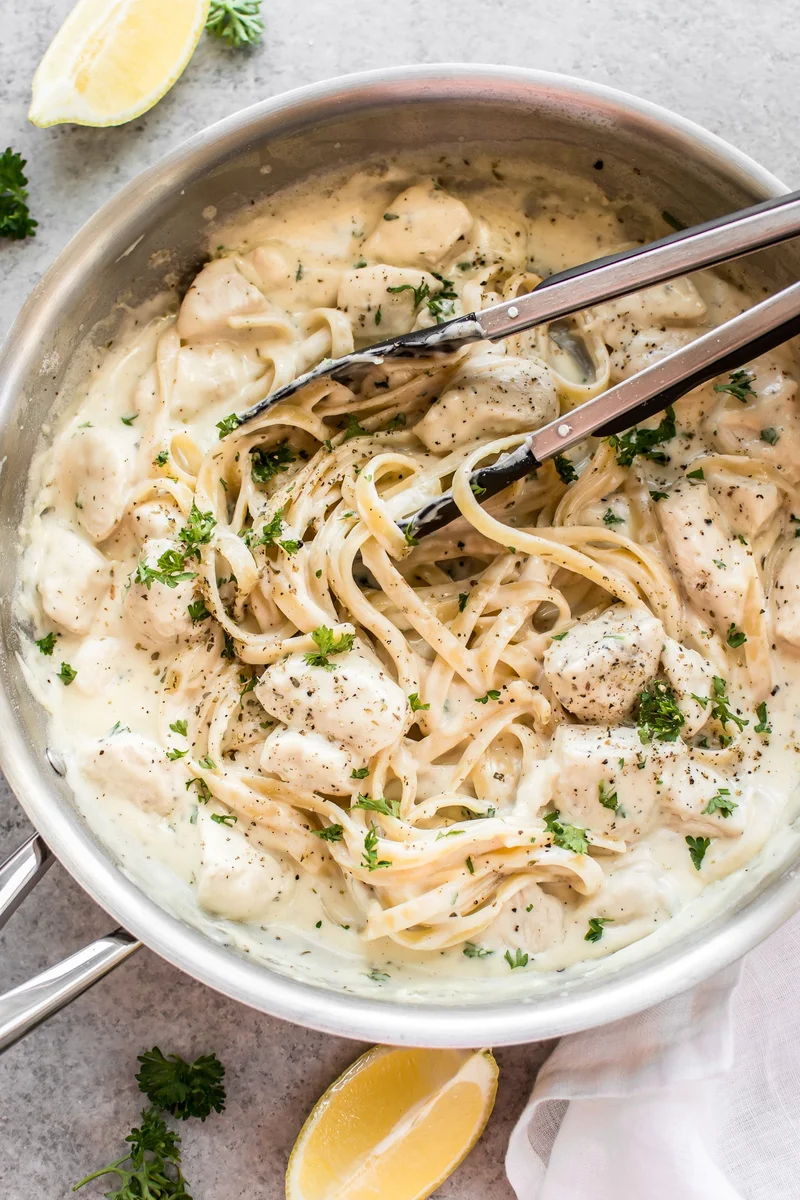
This Italian-American-style fettuccine pairs tender chicken with a rich Parmesan cream sauce brightened by lemon, garlic and Dijon. It makes a satisfying 25-minute dinner when you want classic Alfredo with a fresher, tangier edge.
Ingredients
- 227 g (8 oz)uncooked fettuccine
- 2chicken breasts, cut into bite-sized pieces
- to tastesalt and pepper
- as neededflour, for dredging
- 28 g (2 tablespoons)butter
- 60 ml (¼ cup)chicken broth or dry white wine
- 15 ml (1 tablespoon)lemon juice
- 2.5 ml (½ teaspoon)Dijon mustard
- 3 large clovesgarlic, minced
- 2 dashesItalian seasoning
- 240 ml (1 cup)double cream or whipping cream
- about 50 g (½ cup)freshly grated Parmesan
- to tastefresh parsley, chopped
Instructions
- 1
Cook the pasta
Bring a large pan of salted water to the boil. Cook the fettuccine according to the packet directions.
- 2
Prepare the chicken
Cut the chicken into bite-sized pieces and season with salt and pepper. Coat each piece in flour, shaking off any excess.
- 3
Heat the butter
Set a frying pan over medium-high heat and add the butter.
- 4
Brown the chicken
When the butter has melted and is hot, add the chicken. Cook for 5 minutes, stirring occasionally, then lift it out of the pan.
- 5
Start the sauce
Add the chicken broth, lemon juice, Dijon mustard, garlic and Italian seasoning to the pan. Stir to combine.
- 6
Add cream and cheese
Stir in the cream and Parmesan, then let the sauce bubble for about 1 minute.
- 7
Simmer the chicken
Return the chicken to the pan and simmer for 4–5 minutes, until cooked through and the sauce has reduced further. Lower the heat if the sauce is bubbling too vigorously.
- 8
Adjust the seasoning
Taste the sauce and add a little more lemon juice if needed. Season with salt and pepper to taste, then scatter over the chopped parsley.
- 9
Toss and serve
Drain the pasta and toss it with the chicken and sauce. If the sauce needs loosening, stir in some pasta water before draining the fettuccine.
What is chicken Alfredo?
Chicken Alfredo is an Italian-American pasta dish combining fettuccine, chicken and a creamy cheese sauce. It takes inspiration from Roman fettuccine Alfredo, while the cream-rich, chicken-topped version is a familiar American adaptation.
Here, lemon juice and garlic give the sauce a brighter, more savoury balance. Flour-dusted chicken also helps the butter-based pan juices come together with the cream.
Nutrition and macros by portion
The nutrition label shows one serving as written: 700 calories, 47g protein, 46g carbs, 34g fat.
| Portion | Adjustment | kcal | Protein | Carbs | Fat |
|---|---|---|---|---|---|
| Lighter | Use less cream | 490 kcal | 33g | 32g | 24g |
| This serving | As written | 700 kcal | 47g | 46g | 34g |
| Hungry | Add more fettuccine | 1050 kcal | 71g | 69g | 51g |
Most of the carbohydrates come from the fettuccine and the flour coating, while the cream, butter and Parmesan contribute much of the fat. Chicken and Parmesan supply much of the protein. Pair a serving with green vegetables or salad to add freshness and balance the rich sauce.
The ingredient choices
Fettuccine: Its broad ribbons hold the thick sauce well. Cook it just until tender, following the packet timing.
Parmesan: Freshly grated cheese melts more smoothly than many pre-grated options. Add it to the cream and stir as it warms.
Lemon and Dijon: Lemon brings the main sharp note, while a little mustard adds savoury depth. Taste before adding extra lemon so the sauce stays balanced.
Dredging and browning
Flour coating: Use a light, even coating on the chicken and shake off the excess. Too much flour can leave a pasty layer in the pan.
Pan space: Cook the chicken in a single layer if possible, stirring now and then so the pieces cook evenly. Remove it after 5 minutes as directed, then finish cooking it in the sauce.
Getting the sauce right
Gentle bubbling: Once the cream and Parmesan are in, keep the sauce at a steady, mild bubble rather than a hard boil. Turn down the heat if it is bubbling furiously.
Consistency: The sauce will reduce as the chicken simmers for 4–5 minutes. If it becomes too thick to coat the pasta, loosen it with a splash of reserved pasta water.
Timing the pasta
Pasta water: Start boiling the water while preparing the chicken so the pasta and sauce can be ready close together. Before draining, save a little of the starchy water in case the sauce needs thinning.
Final toss: Combine the drained pasta with the chicken and sauce while everything is hot. This helps the sauce coat the ribbons rather than sitting in a pool underneath.
What to serve alongside
A crisp green salad with a simple vinaigrette gives the creamy pasta a fresh contrast. Steamed or roasted green vegetables, such as broccoli or green beans, also work well.
Serve the pasta straight away, with extra chopped parsley if you like. A squeeze of lemon at the table can suit anyone who prefers a sharper finish.
Recipe notes & tips
- Grate the Parmesan finely so it melts readily into the warm cream.
- Keep a small mug of pasta water before draining the fettuccine.
- Cut the chicken into pieces of similar size so they cook at a similar rate.
- Taste the sauce before adding extra lemon, salt or pepper.
- Serve as soon as the pasta is tossed with the sauce for the best texture.
Variations
- Use white wine: Replace the chicken broth with dry white wine as suggested in the ingredient list.
- Add vegetables: Stir in cooked broccoli or peas when returning the chicken to the pan.
- Make it extra lemony: Add a little more lemon juice after tasting the finished sauce.
- Change the pasta: Use another long pasta shape if fettuccine is unavailable.
- Add black pepper: Grind extra pepper over each serving for a more pronounced peppery finish.
Common mistakes to avoid
- Too much flour: Excess coating can turn gummy in the pan; shake the chicken pieces before cooking.
- Overcooking the chicken: Keep to the 5-minute initial cook, then simmer until just cooked through.
- Boiling the cream hard: A furious boil can make the sauce reduce too quickly; lower the heat.
- Adding all the lemon at once: Taste first and add more gradually to avoid overpowering the cream.
- Draining away all the pasta water: Reserve a little before draining so you can thin the sauce if needed.
How to store
Refrigerate leftovers in an airtight container for up to 3 days. Reheat gently in a pan with a splash of milk, cream or water, stirring until hot; the sauce may thicken as it sits.
Frequently asked questions
Can I use chicken thighs instead of chicken breasts?
Yes, boneless chicken thighs can be cut into bite-sized pieces and used in the same way. Check that the chicken is cooked through before serving.
Can I use milk instead of cream?
Milk will make a thinner, less rich sauce, so it may not reduce to the same creamy texture. For the closest result, use the cream specified.
How do I know the chicken is cooked?
Cut into one of the larger pieces to check that it is no longer pink in the centre. The recipe finishes the chicken in the sauce after its initial 5-minute cook.
What can I use instead of chicken broth?
Dry white wine is listed as an alternative. Use the same 60 ml amount.
Can I make the sauce ahead?
It is best made just before serving, as cream sauce can thicken when chilled and reheated. If preparing ahead, reheat it gently and loosen it with a splash of liquid.
Cook it from the original
This recipe comes from saltandlavender.com. Their page has the author’s own photos, notes and tips — the best place to cook it from.
Open the recipe on saltandlavender.com