
Brioche Burger Buns- so good!
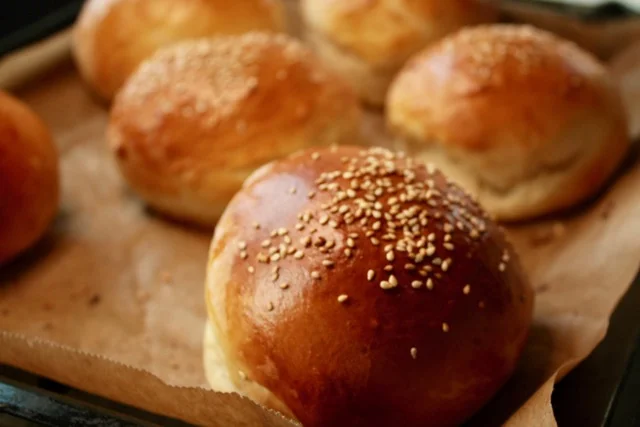
These soft, enriched brioche-style buns make a tender, buttery base for burgers. They take a little time to rise, but the dough is straightforward to shape and bake at home.
Ingredients
- 400 gplain flour
- 200 ml, room temperaturemilk
- 50 g, room temperaturebutter
- 20 gsugar
- 30 gfresh yeast
- 1egg
- 1 tspsalt
- 1egg
- 10 mlmilk
- to tastesesame seeds
Instructions
- 1
Mix yeast and milk
In a large bowl, dissolve the fresh yeast in the room-temperature milk, then stir in the sugar.
- 2
Rest briefly
Leave the mixture to stand for 5 minutes.
- 3
Knead the dough
Add the flour, salt and one egg. Knead with an electric mixer for 2 minutes.
- 4
Work in butter
Add the room-temperature butter and knead for a further 3 minutes, until the dough comes away from the surface easily.
- 5
Let dough rise
Cover the bowl with a tea towel and leave the dough to rise for 1 hour, or until it has doubled in size.
- 6
Flour the surface
Dust a clean work surface with flour and turn out the dough.
- 7
Divide into portions
Use a scale and dough scraper to divide the dough into 8 equal portions of 80–100 g each.
- 8
Prepare the tray
Line a baking tray with parchment paper.
- 9
Shape the dough
Roll each portion into a ball.
- 10
Create tight balls
Cup your hand over a piece of dough and press it lightly against the work surface. Move your hand in a circular motion so the dough slides beneath it, keeping the piece from slipping out and the seam underneath.
- 11
Arrange the buns
Set the shaped buns on the lined tray, leaving space between them.
- 12
Proof the buns
Cover the tray with a tea towel and leave the buns to rise for 30 minutes.
- 13
Heat the oven
Preheat the oven to 180°C.
- 14
Brush with egg
Beat the second egg with 10 ml milk, then brush the mixture over the buns.
- 15
Add sesame seeds
Sprinkle sesame seeds over the buns, if you like.
- 16
Bake the buns
Bake for 18–20 minutes. Let the buns cool slightly before serving.
What are brioche burger buns?
Brioche is an enriched bread associated with France, made with ingredients such as butter and eggs for a soft, tender crumb. This recipe shapes that style of dough into individual buns for burgers.
The milk, butter and egg give the rolls a richer texture than a basic bread bun, while the sesame topping adds a familiar finish.
Nutrition and macros by portion
The nutrition label shows one serving as written: 560 calories, 0g protein, 0g carbs, 0g fat.
| Portion | Adjustment | kcal | Protein | Carbs | Fat |
|---|---|---|---|---|---|
| Lighter | Use a smaller bun | 392 kcal | 0g | 0g | 0g |
| This serving | As written | 560 kcal | 0g | 0g | 0g |
| Hungry | Serve a larger portion | 840 kcal | 0g | 0g | 0g |
The flour supplies most of the carbohydrates, while butter and egg contribute much of the fat; the egg, milk and flour also provide some protein. Pair a bun with a protein-rich burger filling and a generous serving of vegetables for a more balanced plate.
Why the dough is enriched
Butter: adding it after the first few minutes of kneading lets the flour and liquid begin to form a dough before the fat is worked in.
Milk and egg: these contribute to the dough's softness and give the finished buns their enriched character.
How to shape even buns
Portioning: weighing the dough helps the 8 buns bake at a similar rate. Aim for the recipe's stated 80–100 g per portion.
Tension: the cupped-hand circular motion tightens the surface of each dough ball. Keep the seam tucked underneath as you shape.
Watch the proofing cues
First rise: the dough should double in size during its 1-hour rest. The time can vary, so use the increase in volume as the main cue.
Second rise: after shaping, give the buns 30 minutes under a tea towel before brushing and baking.
Getting the finish right
Egg wash: brush the beaten egg and milk over the tops shortly before baking for an even coating.
Baking: bake at 180°C for 18–20 minutes. The buns should look well coloured; allow them to cool a little before cutting.
Serving ideas
Use the buns for burgers, or split and fill them with cooked vegetables, cheese or other sandwich fillings.
For a full plate, add a side such as salad or vegetables alongside the filled bun.
Recipe notes & tips
- Bring the milk and butter to room temperature before mixing, as listed.
- Use a scale to divide the dough evenly so the buns finish baking together.
- Leave room between the shaped buns on the tray for the second rise.
- Keep the seams of the dough balls underneath while shaping.
- Brush the egg wash gently so you do not deflate the risen buns.
- Let the buns cool slightly before slicing to help the crumb settle.
Variations
- Plain tops: leave off the sesame seeds for an undecorated finish.
- Mixed seeds: replace the sesame seeds with another seed topping you have to hand.
- Smaller buns: divide the dough into more portions and check them earlier in the bake.
- Larger buns: make fewer portions and allow extra baking time if needed.
- Sandwich rolls: use the same shaped buns for filled sandwiches instead of burgers.
Common mistakes to avoid
- Cold ingredients: use the specified room-temperature milk and butter so they are easier to incorporate.
- Uneven portions: weigh the dough pieces to help them bake at the same rate.
- Loose shaping: keep the seam underneath and use the circular hand motion to tighten each ball.
- Crowded tray: leave space between the buns so they have room during the second rise.
- Skipping the rise: wait for the dough to double during the first rise before dividing it.
- Overbaking: start checking at 18 minutes and remove the buns once they are baked and coloured.
How to store
Once completely cool, keep the buns in an airtight container at room temperature and use within 2 days. Reheat briefly in a warm oven, or freeze the cooled buns in a sealed freezer bag for up to 2 months and thaw before serving.
Frequently asked questions
Can I use dried yeast instead of fresh yeast?
This ingredient list specifies 30 g fresh yeast. Dried yeast has a different concentration, so use the conversion on its packaging rather than swapping the same weight.
How do I know when the first rise is complete?
The recipe's cue is that the dough has doubled in size. Check its volume rather than relying only on the clock.
Can I make the dough portions ahead?
The method gives the shaped buns a 30-minute rise before baking. For a make-ahead schedule, keep the dough covered and chilled, and allow it time to come back to a risen state before baking.
Do I have to add sesame seeds?
No. The recipe lists them as optional, so you can leave them off.
Why should the dough balls have a seam underneath?
Keeping the seam underneath helps the shaped surface stay smooth as the buns rise and bake.
Can I freeze the baked buns?
Yes. Cool them completely, seal them in a freezer bag and thaw before serving.
Cook it from the original
This recipe comes from sabrinastable.com. Their page has the author’s own photos, notes and tips — the best place to cook it from.
Open the recipe on sabrinastable.com