
Strawberry Spongecake- perfect for Mother’s Day
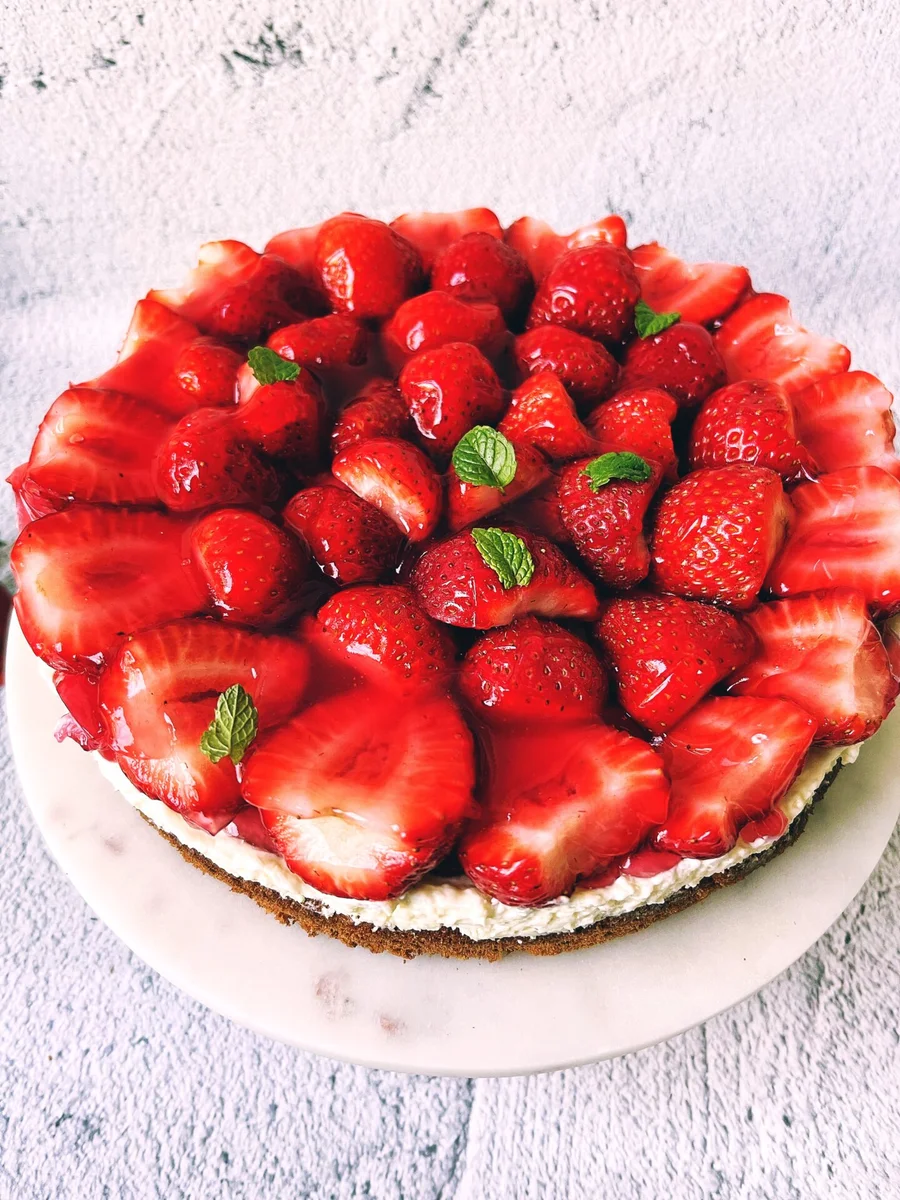
A light German-style sponge base is topped with orange-scented quark cream, fresh strawberries and a red cake glaze. It makes a generous celebration cake for Mother’s Day or Easter, with a chilled filling that can be prepared ahead.
Ingredients
- 500 gfresh strawberries
- 250 glow-fat quark
- 85 gsugar
- 3 dropsvanilla extract
- 1orange, for the juice and some freshly grated zest
- 250 mlwhipping cream, at least 30% fat
- 4 leavesgelatine
- as directed on the packetred cake glaze
- 3eggs
- 100 gsugar
- 1 packet (8 g)vanilla sugar
- 90 gflour
- 1 tbspbaking soda
- a pinchsalt
Instructions
- 1
Skip the base
If using a shop-bought sponge base, skip ahead to step 11.
- 2
Heat the oven
Preheat the oven to 180 °C.
- 3
Whisk the eggs
Beat the eggs with 100 g sugar, the salt and vanilla sugar for about 6 minutes, until pale and frothy and roughly doubled in volume.
- 4
Sift the flour
Mix the flour with the baking soda, then sift it over the egg mixture.
- 5
Fold gently
Carefully fold the flour mixture into the eggs.
- 6
Prepare the tin
Line the base of a springform tin with baking paper. Do not grease the sides, so the sponge can rise against them.
- 7
Bake the sponge
Pour the batter into the tin and bake in the preheated oven for about 20 minutes.
- 8
Test the centre
Check the sponge with a toothpick.
- 9
Loosen the edge
Leave the sponge to cool for 5 minutes, then run a knife around the inside edge of the tin.
- 10
Cool completely
Turn the sponge out onto a wire rack and leave it to cool completely.
- 11
Set up the cake
Place the sponge on a cake stand and fit a cake ring around it.
- 12
Use an alternative tin
Alternatively, use a round cake tin with a removable base.
- 13
Soak the gelatine
Soak the gelatine leaves in cold water.
- 14
Mix the quark
In a large bowl, mix the quark with the orange juice and zest, 85 g sugar and vanilla extract.
- 15
Whip the cream
In a separate bowl, whisk the cream until thickened. Gently fold it into the quark mixture.
- 16
Melt the gelatine
Drain the gelatine and put it in a small saucepan over medium heat. Let it melt slowly.
- 17
Work quickly
Once the gelatine is runny, proceed promptly with the next step.
- 18
Blend the gelatine
Quickly stir a spoonful of the quark mixture into the melted gelatine. Pour this into the remaining quark mixture and fold it through.
- 19
Chill the filling
Spread the quark mixture slowly and evenly over the sponge, then refrigerate for 1 hour.
- 20
Prepare the berries
Meanwhile, wash and drain the strawberries. Remove their stalks and cut them in half.
- 21
Glaze the cake
Arrange the strawberries over the cake. Prepare the glaze according to its packet instructions and gently pour it over the fruit.
- 22
Chill before serving
Return the cake to the fridge to chill until serving.
What is German strawberry sponge cake?
This celebration cake pairs a simple sponge with a chilled quark filling and fresh strawberries under a glossy fruit glaze. Sponge cakes and quark-based fillings are familiar in German home baking, where seasonal fruit often tops cakes served for afternoon Kaffee und Kuchen.
Here, orange juice and zest brighten the creamy filling, while gelatine helps it hold its shape around the sponge. The cake is assembled in a ring so the soft filling can set neatly.
Nutrition and macros by portion
The nutrition label shows one serving as written: 105 calories, 4g protein, 14g carbs, 4g fat.
| Portion | Adjustment | kcal | Protein | Carbs | Fat |
|---|---|---|---|---|---|
| Lighter | Use less glaze | 74 kcal | 3g | 10g | 3g |
| This serving | As written | 105 kcal | 4g | 14g | 4g |
| Hungry | Serve a larger slice | 158 kcal | 6g | 21g | 6g |
The sponge flour and sugars provide most of the carbohydrates, while the cream contributes much of the fat. Quark and eggs supply some protein, with strawberries adding fruit and fibre. Pair a slice with plain yoghurt or serve it after a meal that includes savoury protein and vegetables for a more balanced plate.
The sponge base
Egg mixture: whisking the eggs and sugar until pale and voluminous gives the sponge much of its lift. Fold in the dry ingredients gently to avoid knocking out too much air.
Tin: line only the base with baking paper and leave the sides ungreased, as instructed. The recipe lists baking soda, although its method refers to baking powder; check which raising agent you have before mixing.
Getting a smooth quark filling
Quark: mix it with the orange juice, zest, sugar and vanilla before adding the cream. This spreads the flavour evenly through the filling.
Cream: whip until thickened rather than stiff, then fold it in gently. That keeps the mixture light while still giving it enough body to sit on the sponge.
Adding the gelatine
Temperature: melt the drained gelatine slowly over medium heat, and take care not to let it boil. Stirring in a spoonful of the quark mixture first helps it blend into the cooler filling.
Timing: work promptly once the gelatine is runny, as it can begin to set as it cools. Fold it through thoroughly so the filling sets evenly.
Checking the sponge
Doneness: after about 20 minutes at 180 °C, test the centre with a toothpick. The recipe does not specify a result, but the sponge should be checked before you take it from the oven.
Cooling: leave it in the tin for 5 minutes, loosen the edge with a knife, then cool it completely on a wire rack before adding the filling.
Finishing with strawberries
Fruit: drain the washed strawberries well and halve them after removing the stalks. Arrange them over the set quark layer before adding the glaze.
Glaze: prepare the red cake glaze according to its packet directions and pour it gently over the fruit. Chill the finished cake again until it is time to serve.
Serving the cake
Cut the cake with a sharp knife, wiping the blade between slices for cleaner edges through the fruit and set filling. Keep it chilled until shortly before serving.
It works well as a dessert or with tea or coffee. Since the recipe makes 26 portions, smaller slices are practical for a gathering.
Recipe notes & tips
- Use room-temperature eggs if possible so they whisk readily into a voluminous mixture.
- Fold the flour in with a light hand to help preserve the air in the sponge.
- Drain the strawberries well so excess water does not dilute the glaze.
- Check the cake glaze packet for its liquid quantity and preparation instructions.
- Use a cake ring that fits snugly around the sponge to keep the filling in place.
Variations
- Use another berry: arrange raspberries or blueberries over the set quark filling.
- Add lemon: replace the orange juice and zest with lemon for a sharper citrus note.
- Skip the glaze: leave the berries uncovered for a less glossy finish.
- Choose a shop-bought base: use a prepared sponge and begin assembling from step 11.
- Add more zest: grate a little extra orange zest into the quark mixture for a stronger citrus flavour.
Common mistakes to avoid
- Greasing the tin sides: the sponge may not rise as intended; line only the base.
- Under-whisking the eggs: the mixture may lack volume; continue until it is pale and frothy.
- Folding too firmly: the batter can lose air; use gentle folding motions.
- Adding hot gelatine directly: it may not blend smoothly; first stir in a spoonful of the quark mixture.
- Glazing wet berries: extra water can affect the topping; drain the fruit before arranging it.
How to store
Keep the cake covered in the fridge and serve it chilled. For best texture, eat it within 2 days; the sponge and fresh fruit are not suited to reheating.
Frequently asked questions
Can I use a shop-bought sponge base?
Yes. The method says to skip ahead to the assembly step if you are using a prepared base.
Can I make the cake ahead?
Yes. Assemble and chill it ahead of serving, keeping it refrigerated. Add the fruit and glaze as directed once the quark layer has chilled for an hour.
Why is my quark filling lumpy?
The gelatine may have cooled or started setting before it was blended in. Stir a spoonful of the quark mixture into the runny gelatine first, then quickly fold it into the rest.
Can I use a different tin?
The method suggests a round cake tin with a removable base as an alternative to a cake ring. Make sure it can contain the filling around the sponge.
Should I use baking soda or baking powder?
The ingredient list says baking soda, but the method says baking powder. Those are different ingredients, so check the original recipe publisher’s instructions before baking.
Cook it from the original
This recipe comes from sabrinastable.com. Their page has the author’s own photos, notes and tips — the best place to cook it from.
Open the recipe on sabrinastable.com