
Sawa ke chawal ki tikki and vada
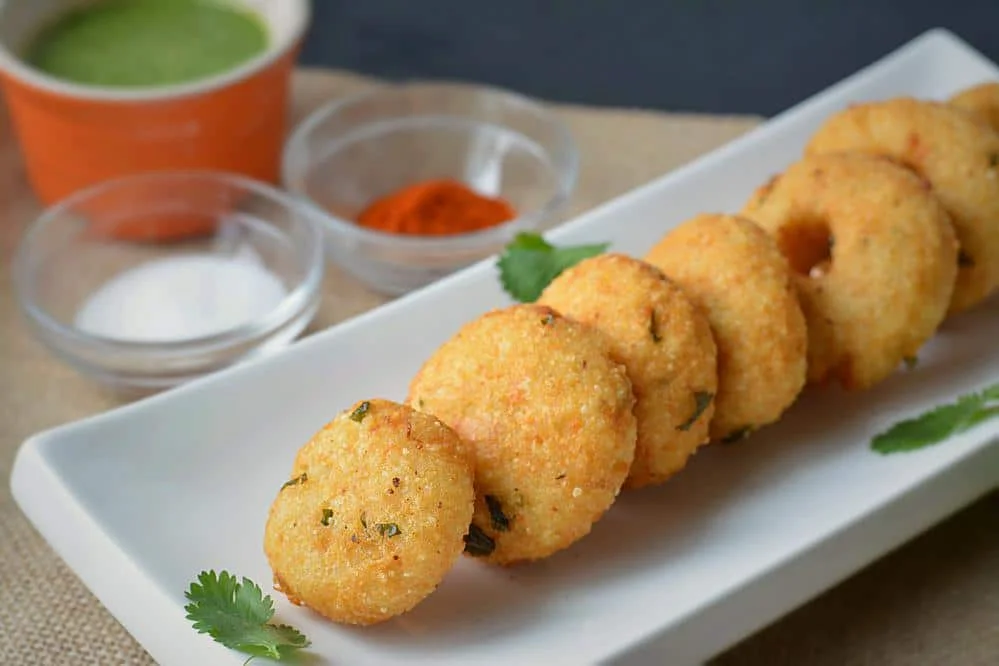
Sawa ke chawal ki tikki and vada are crisp, savoury fritters made with cooked barnyard millet rice and mashed potato. Shape them as flat tikkis, centre-holed vadas or cylinders, then fry until golden for a fasting-day snack or side.
Ingredients
- 90 g (½ cup)sawa rice (barnyard millet)
- 300 ml (1¼ cups)water
- 2 largepotatoes, boiled and peeled
- 1 largegreen chilli, chopped
- ¼–½ teaspoonred chilli powder
- ½–1 teaspoonground coriander (omit if avoiding it during a fast)
- ½–1 tablespoonfresh coriander leaves, chopped
- to tastesendha namak (rock salt)
- for fryingoil
Instructions
- 1
Measure the rice
Measure out the sawa rice.
- 2
Add to cooker
Put the sawa rice into a pressure cooker.
- 3
Cook rice and potatoes
Pour in the water, close the cooker and cook for 4–5 whistles. At the same time, boil the potatoes in a microwave or another pressure cooker. The rice can also be cooked in a microwave.
- 4
Check the rice
Once cooked, the rice should have absorbed all the water.
- 5
Cool the rice
Transfer the rice to a plate and let it cool completely. Make sure no water remains, as excess moisture can make the tikki mixture sticky and hard to shape.
- 6
Prepare ingredients
Boil and peel the potatoes, then gather the remaining ingredients.
- 7
Mash the potatoes
Mash the potatoes in a large bowl and add the other ingredients one by one.
- 8
Mix the seasoning
Mix until the potato and seasonings are evenly combined.
- 9
Add the rice
Add the cooled sawa rice to the bowl.
- 10
Combine the mixture
Mix the rice through the potato mixture.
- 11
Shape the tikkis
Shape the mixture into tikkis. If it sticks to your hands, rub a drop of oil on your palms.
- 12
Shape the vadas
Alternatively, shape the mixture into vadas by making a hole in the centre of each tikki.
- 13
Choose a shape
The vadas are ready to fry, or you can shape the mixture into cylinders for fritters.
- 14
Heat the oil
Heat oil in a kadhai. Once it is hot, turn the heat down.
- 15
Fry until golden
Fry the tikkis until golden brown.
- 16
Drain the tikkis
Lift them out and leave them on kitchen paper to absorb excess oil.
- 17
Serve as dahi vadas
For vadas, dip the fried pieces in hot water until soft, then squeeze out the excess water. Dip them in well-beaten curd seasoned with salt and red chilli powder, and finish with green chutney.
- 18
Serve as fritters
If you shaped the mixture into fritters, they are ready to dip and eat.
- 19
Serve the tikkis
Enjoy the crisp sawa rice tikkis with vrat ki chutney.
What are sawa rice tikkis?
Sawa, also called sama or barnyard millet, is used in Indian fasting dishes, where it stands in for grains avoided during vrat. These tikkis combine cooked sawa rice with mashed potato, herbs and spices, then fry the mixture into a crisp snack.
This version offers three shapes from one mixture: flat tikkis, centre-holed vadas or cylindrical fritters. The potato binds the rice, while cooling the cooked grains before mixing helps keep the mixture manageable.
Nutrition and macros by portion
The nutrition label shows one serving as written: 150 calories, 3g protein, 21g carbs, 6g fat.
| Portion | Adjustment | kcal | Protein | Carbs | Fat |
|---|---|---|---|---|---|
| Lighter | Use less frying oil | 105 kcal | 2g | 15g | 4g |
| This serving | As written | 150 kcal | 3g | 21g | 6g |
| Hungry | Serve a larger portion | 225 kcal | 5g | 32g | 9g |
The rice and potatoes provide most of the carbohydrates, while the potatoes and millet contribute a little protein. Most of the fat comes from oil absorbed during frying, and the salt level depends on how much sendha namak you add. Serve a tikki or two with a fresh salad or vegetables to round out the plate.
Choosing the ingredients
Sawa rice: Cook it with the stated water until the grains are tender and the liquid is absorbed. It needs to cool fully before it goes into the potato mixture.
Potatoes: Boil and peel them before mashing. The recipe leaves the size of the potatoes flexible, so use large ones as listed and check that the mixture holds together when shaped.
Seasoning: Green chilli, red chilli powder and fresh coriander bring heat and freshness. Ground coriander is optional if you do not eat it during a fast; use sendha namak if that is your fasting practice.
Getting the mixture right
Dry rice: Any water left with the cooked rice can make the mixture sticky and difficult to shape. Let the rice cool completely, and check that the water has been absorbed before mixing.
Even mixing: Work the seasonings into the mashed potato first, then fold in the cooled rice. If the mixture clings to your hands, a little oil on your palms can help with shaping.
Shaping and frying
Tikkis: Shape the mixture into flat rounds for a straightforward fritter. Vadas: Make a hole in the middle of each round, or roll the mixture into cylinders for another shape.
Oil: Heat the frying oil, then lower the heat before adding the pieces. Fry until golden brown and drain on kitchen paper; avoid moving them around excessively while they cook.
Serving the different shapes
Crisp tikkis and cylindrical fritters can be served hot with vrat ki chutney for dipping. Their crisp exterior is best enjoyed soon after frying.
For a dahi vada-style serving, soften the fried vadas in hot water, squeeze out the excess, then coat them in seasoned, well-beaten curd. Add green chutney just before serving.
Timing and make-ahead
The listed total time is 40 minutes, including cooking and shaping. The rice needs time to cool completely before it is mixed with the potatoes, so allow for that cooling stage within your preparation.
You can boil the potatoes while the rice cooks, as the method suggests. Fry the shaped pieces close to serving time for the crispest result.
Recipe notes & tips
- Let the cooked rice cool completely before mixing it with the potatoes.
- Check that the rice has absorbed all its cooking water before transferring it to a plate.
- Oil your palms lightly if the mixture sticks while you shape it.
- Lower the heat once the frying oil is hot, as directed in the method.
- Drain the fried pieces on kitchen paper before serving.
- For dahi vadas, squeeze out excess water after softening them so they do not water down the curd.
Variations
- Flat tikkis: Shape the mixture into rounds and serve them crisp with vrat ki chutney.
- Centre-holed vadas: Make a hole in each round and serve as dahi vadas with seasoned curd and green chutney.
- Cylindrical fritters: Roll the mixture into cylinders for a different shape to dip and eat.
- Skip coriander powder: Leave it out if it does not fit your fasting practice.
- Adjust the chilli: Use the lower end of the red chilli powder range for a milder batch.
Common mistakes to avoid
- Wet rice: Leftover water makes the mixture sticky; cook until absorbed and cool the rice fully.
- Warm rice: It can be harder to handle in the mixture; let it cool completely before combining.
- Sticky shaping: Do not add extra ingredients automatically; first try rubbing a drop of oil on your palms.
- Oil too hot: The outside may brown before the fritters are ready; lower the heat once the oil is hot.
- Skipping the drain: Excess surface oil can make the tikkis greasy; rest them briefly on kitchen paper.
- Watery dahi vadas: Squeeze out the water after softening the fried vadas before dipping them in curd.
How to store
Refrigerate leftover fried tikkis in a covered container for up to 3 days. Reheat in a frying pan or oven until hot and crisp; the texture may soften in storage. Prepare dahi vadas with curd and chutney close to serving rather than storing them already assembled.
Frequently asked questions
Can I cook the sawa rice in a microwave?
Yes. The recipe notes that the rice can be cooked in a microwave, but does not give microwave timings; cook it until tender and all the water is absorbed.
How do I know the rice is ready?
The rice should be cooked through with all the water absorbed. Cool it completely before adding it to the potato mixture.
Why is my mixture too sticky to shape?
There may be water left in the cooked rice, or the rice may not have cooled completely. For shaping, lightly oil your palms as described in the method.
Can I make these without coriander powder?
Yes. The recipe specifically says to omit it if you do not eat it during vrat.
How do I serve these as dahi vadas?
Dip the fried vadas in hot water until soft, squeeze out the excess, then coat them in well-beaten curd seasoned with salt and red chilli powder. Add green chutney to finish.
Can I prepare the mixture ahead?
You can cook the rice and potatoes ahead, but cool the rice fully before mixing. Fry the shaped pieces near serving time for a crisp finish.
Cook it from the original
This recipe comes from ruchiskitchen.com. Their page has the author’s own photos, notes and tips — the best place to cook it from.
Open the recipe on ruchiskitchen.com