
Easy ricotta gnudi with roasted tomato sauce
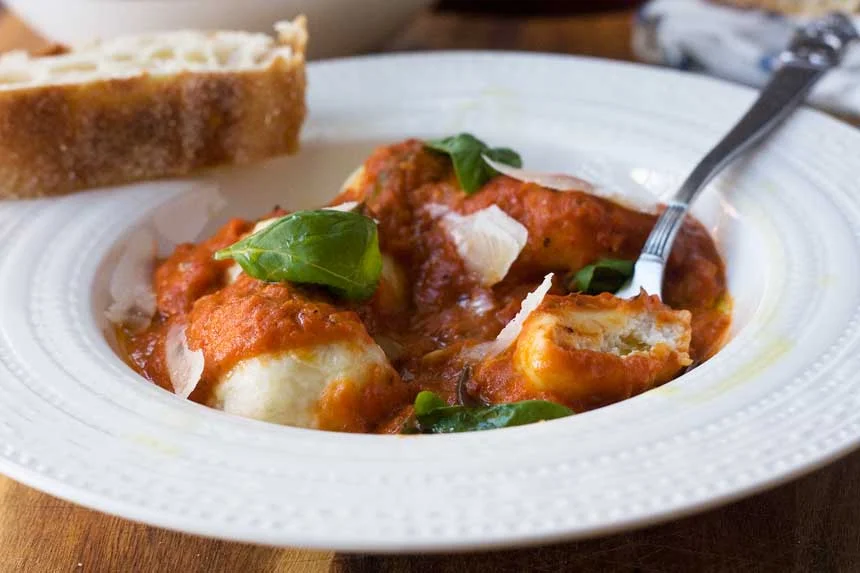
These Italian ricotta gnudi are soft, parmesan-scented dumplings served with a sauce made from slowly roasted tomatoes, garlic and thyme. The mixture comes together quickly, while the oven does most of the work for the sauce.
Ingredients
- 794 g (28 oz)tomatoes (a mix of small ordinary tomatoes and cherry tomatoes)
- 3garlic cloves, peeled
- 4 or 5 sprigsthyme
- to tasteolive oil
- 4 or 5 large leavesfresh basil
- 250 g (8.8 oz)ricotta cheese, drained of excess liquid
- ¼ of a wholenutmeg, grated
- 25 g (¼ cup)Parmesan cheese, finely grated
- 45 g (5 tablespoons)fresh breadcrumbs
- to tastesalt and pepper
- as neededplain flour or semolina, for rolling
- to serveextra fresh basil and Parmesan shavings
- optionalcrusty bread and salad leaves
Instructions
- 1
Roast the tomatoes
Preheat the oven to 160°C (320°F). Arrange the cherry tomatoes whole on a baking tray; halve larger tomatoes and set them cut-side up. Add the peeled garlic and thyme leaves stripped from their sprigs, drizzle with olive oil and roast for 1 hour.
- 2
Mix the dumplings
While the tomatoes roast, combine the ricotta, grated nutmeg, Parmesan, breadcrumbs, and salt and pepper in a bowl. Mix well with a wooden spoon, then adjust the seasoning to taste.
- 3
Shape and chill
Take very heaped teaspoons of the mixture and roll them into rough balls. Coat each well in flour and place on a floured baking tray or plate. Chill while the tomatoes finish roasting.
- 4
Blend the sauce
When the tomatoes are roasted, scrape them into a food processor and blend into a sauce. Transfer it to a small saucepan, tear in the fresh basil leaves and warm gently.
- 5
Boil the gnudi
Bring a medium pan of water to the boil. Cook the gnudi for about 3 minutes, or until they float to the surface, then lift them out with a slotted spoon and place them carefully in a colander.
- 6
Serve with sauce
Pour the warm tomato sauce over the gnudi. Finish with a little more fresh basil and Parmesan shavings.
What are gnudi?
Gnudi are Italian dumplings made from a soft cheese mixture; their name means “naked”, a reference to the filling of a ravioli without its pasta casing. They are often associated with Tuscany and are commonly made with ricotta.
This version pairs ricotta and Parmesan with a simple roasted tomato sauce. Draining the ricotta and chilling the shaped dumplings helps make the mixture easier to handle.
Nutrition and macros by portion
The nutrition label shows one serving as written: 254 calories, 15g protein, 20g carbs, 12g fat.
| Portion | Adjustment | kcal | Protein | Carbs | Fat |
|---|---|---|---|---|---|
| Lighter | Skip the crusty bread | 178 kcal | 11g | 14g | 8g |
| This serving | As written | 254 kcal | 15g | 20g | 12g |
| Hungry | Add crusty bread | 381 kcal | 23g | 30g | 18g |
The gnudi's carbohydrates come mainly from the breadcrumbs, flour coating and tomatoes; ricotta and Parmesan contribute protein and fat. Serve with salad leaves for a fresh side, or add crusty bread if you would like a more substantial plate.
Roasting the tomato sauce
Tomatoes: halving the larger ones and leaving the cherry tomatoes whole gives them time to soften and roast without losing their shape too quickly.
Garlic and thyme: roasting them alongside the tomatoes brings their flavour into the sauce. Strip the thyme leaves from the sprigs before adding them to the tray.
Getting the mixture ready
Ricotta: drain away excess liquid before mixing, so the dumpling mixture is not unnecessarily wet.
Breadcrumbs: they help give the soft cheese mixture enough structure to shape. Mix everything thoroughly with a wooden spoon and season to taste.
Shaping and chilling
Small portions: use very heaped teaspoons of mixture and roll them into rough balls; they do not need to be perfectly smooth.
Flouring: coat each dumpling well and set it on a floured surface. Chilling them while the tomatoes finish roasting gives the shaped gnudi time to firm up before boiling.
How to tell when they are done
Water: bring it to a boil before adding the gnudi, then cook them for about 3 minutes. Their main visual cue is that they rise to the surface.
Lifting: use a slotted spoon to remove them and handle them carefully as you transfer them to a colander, since the dumplings are soft.
Serving the dish
Sauce: warm the blended tomatoes gently with torn fresh basil, then pour it over the cooked gnudi.
On the side: crusty bread and salad leaves are optional accompaniments. A few extra basil leaves and Parmesan shavings finish the dish.
Recipe notes & tips
- Drain excess liquid from the ricotta before mixing.
- Keep the cherry tomatoes whole and halve the larger tomatoes.
- Flour the shaped gnudi well before chilling them.
- Use a slotted spoon to lift the delicate dumplings from the water.
- Tear the basil into the sauce as it warms gently.
Variations
- Use semolina: roll the gnudi in semolina instead of plain flour.
- Add more basil: tear extra fresh leaves into the warm sauce.
- Change the tomatoes: use all cherry tomatoes or a mix of tomato varieties.
- Serve with greens: add salad leaves alongside the gnudi.
- Add bread: serve with crusty bread to mop up the sauce.
Common mistakes to avoid
- Wet ricotta: drain off excess liquid before making the mixture.
- Oversized portions: use very heaped teaspoons so the gnudi remain manageable.
- Skipping the flour: coat the dumplings well before setting them aside.
- Rushing the roast: allow the tomatoes the full 1 hour at 160°C.
- Rough handling: lift the cooked gnudi gently with a slotted spoon.
How to store
Store leftover gnudi and sauce in a covered container in the fridge and use within 2 days. Reheat gently with the sauce in a saucepan until warmed through, taking care not to break up the dumplings.
Frequently asked questions
What does gnudi mean?
Gnudi means “naked” in Italian. The name describes dumplings made from a filling-like mixture without a pasta casing.
Can I make the gnudi ahead?
You can shape them and chill them while the tomatoes finish roasting, as directed. Keep them on a floured tray or plate.
How do I know when the gnudi are cooked?
Boil them for about 3 minutes; they are ready when they float to the surface.
Can I use only cherry tomatoes?
Yes. The recipe also allows a mix of tomatoes, with cherry tomatoes left whole and larger ones halved.
What can I serve with ricotta gnudi?
The recipe suggests crusty bread and salad leaves as optional accompaniments. Extra basil and Parmesan make a simple finishing touch.
Cook it from the original
This recipe comes from scrummylane.com. Their page has the author’s own photos, notes and tips — the best place to cook it from.
Open the recipe on scrummylane.com