
Vrat ka Halwa
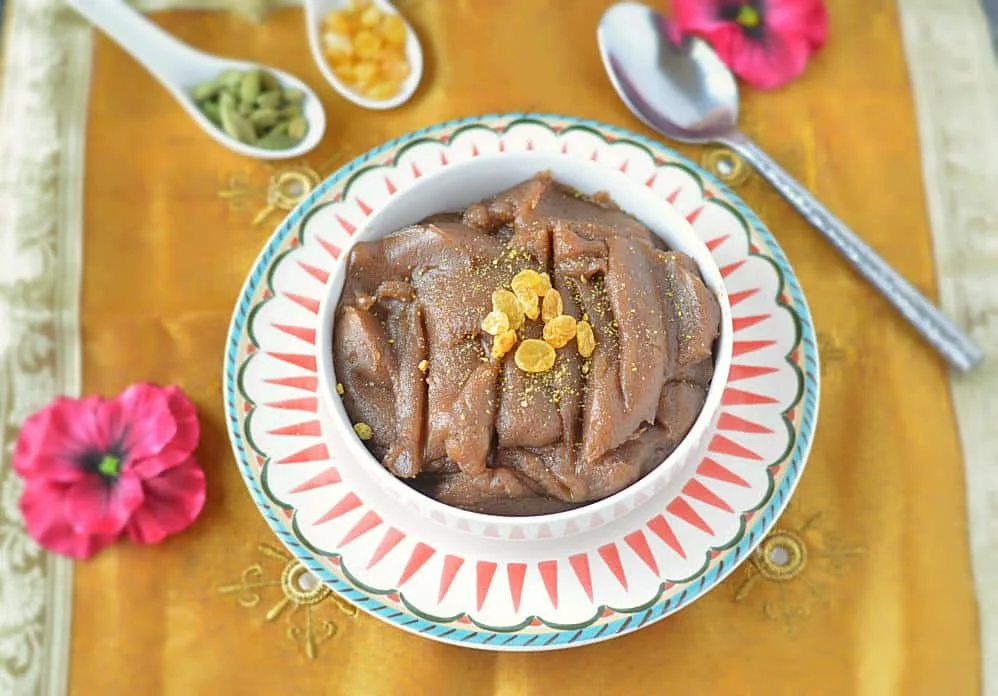
Vrat ka halwa is a soft, sweet Indian pudding made with buckwheat and amaranth flours, cardamom and a simple sugar syrup. It comes together in one pan and makes a comforting dessert for a fasting-day menu.
Ingredients
- 60 g (½ cup)buckwheat flour (kuttu flour)
- 60 g (½ cup)amaranth flour (rajgira flour)
- 200 g (1 cup)superfine sugar or brown sugar
- 1 teaspoonground cardamom
- 480 ml (2 cups)water
- 45 ml (3 tablespoons)ghee
Instructions
- 1
Gather ingredients
Measure out all the ingredients before you begin.
- 2
Heat the water
Warm the water in a pan.
- 3
Add the sugar
Stir the sugar into the water.
- 4
Mix the syrup
Mix the water and sugar together.
- 5
Dissolve the sugar
Heat the mixture for a few minutes, until the sugar dissolves.
- 6
Add cardamom
Stir in the cardamom, then set the syrup aside.
- 7
Heat the ghee
Warm the ghee in a pan.
- 8
Add the flours
Tip both flours into the pan.
- 9
Cook the flours
Cook over a medium heat, stirring continuously.
- 10
Check the colour
Continue until the flour mixture turns slightly light brown.
- 11
Pour in syrup
Lower the heat and carefully pour in the hot water and sugar mixture.
- 12
Stir out lumps
Keep stirring as you add the liquid to help prevent lumps.
- 13
Thicken the halwa
Cook for a few minutes, until the halwa starts to thicken.
- 14
Finish and serve
Take the pan off the heat, garnish with nuts and enjoy.
What is vrat ka halwa?
Vrat ka halwa is a sweet Indian pudding associated with vrat, or fasting days, when particular ingredients may be chosen according to household or regional customs. Buckwheat and amaranth flours give this version its distinctive flavour and make it different from a wheat-based halwa.
The method builds flavour by cooking the flours in ghee before adding cardamom-scented sugar syrup. The supplied description calls the recipe vegan, but ghee is dairy-derived, so this ingredient list is not vegan as written.
Nutrition and macros by portion
The nutrition label shows one serving as written: 263 calories, 3g protein, 47g carbs, 8g fat.
| Portion | Adjustment | kcal | Protein | Carbs | Fat |
|---|---|---|---|---|---|
| Lighter | Use less sugar | 184 kcal | 2g | 33g | 6g |
| This serving | As written | 263 kcal | 3g | 47g | 8g |
| Hungry | Serve a larger scoop | 395 kcal | 5g | 71g | 12g |
Most of the carbohydrates come from the sugar and the two flours, while ghee supplies most of the fat. The flours contribute a modest amount of protein. Serve a smaller scoop with fruit or another savoury dish to balance the sweetness of the plate.
The flour blend
Buckwheat flour: This is kuttu flour, despite buckwheat not being a type of wheat. Its earthy taste forms one half of the base.
Amaranth flour: Also called rajgira flour, it brings a gently nutty note. Measuring both flours before heating makes it easier to stir them evenly into the ghee.
Make the cardamom syrup
Dissolve the sugar in the water over heat, then stir in the cardamom and set the syrup aside. The recipe calls for adding it hot, so have it ready before pouring it into the cooked flour.
Toast without scorching
Stir the flour mixture continuously over a medium heat, scraping across the base of the pan as you go. Stop when it has become slightly light brown; the colour change is the recipe's cue that the flour has cooked.
Add the liquid carefully
Lower the heat before adding the hot syrup, and pour carefully. The liquid can bubble against the hot flour mixture, so steady stirring helps keep it manageable.
Keep stirring as the syrup goes in to break up lumps. The halwa should begin to thicken within a few minutes, as described in the method.
Serving ideas
Serve the halwa warm, as a dessert or as part of a fasting-day spread. The method suggests nuts for garnish, but gives no type or quantity, so choose them to suit your table.
A small serving alongside unsweetened yoghurt, if appropriate for your meal, or fresh fruit can make a more varied plate.
Recipe notes & tips
- Measure the syrup ingredients before starting to toast the flour.
- Stir continuously while the flour cooks so it browns evenly.
- Keep the heat low when pouring in the hot syrup.
- Add the syrup gradually while stirring to help prevent lumps.
- Use a heavy-based pan if you have one to make stirring and heat control easier.
- For a vegan version, replace the ghee with a suitable plant-based fat; this changes the recipe from the ingredient list provided.
Variations
- Brown sugar: Use it instead of superfine sugar for a deeper sweetness.
- Nuts: Add chopped nuts as a garnish, as suggested in the method.
- Extra cardamom: Increase the cardamom slightly for a more aromatic finish.
- Plant-based fat: Replace the ghee with a plant-based alternative for a vegan adaptation.
- Less sweet: Reduce the sugar to suit your preference, bearing in mind the halwa will taste less sweet.
Common mistakes to avoid
- Leaving the flour unstirred: It can brown unevenly, so keep stirring over medium heat.
- Cooking until dark brown: The method calls for a slightly light-brown colour, so take care not to over-toast it.
- Adding syrup over high heat: Lower the flame first to make the pour easier to control.
- Pouring without stirring: This encourages lumps, so keep the mixture moving as the syrup goes in.
- Expecting an instant set: Allow a few minutes of stirring for the halwa to begin thickening.
How to store
Cool leftovers and refrigerate them in a covered container for up to 3 days. Reheat gently in a pan or microwave, stirring and adding a small splash of water if the halwa has become too firm.
Frequently asked questions
Is this recipe vegan?
Not as written: it contains ghee, which is made from dairy. Use a plant-based fat instead if you want to adapt it for a vegan diet.
What is kuttu flour?
Kuttu flour is buckwheat flour, commonly used in some Indian fasting-day dishes. It is not made from wheat.
Can I use brown sugar?
Yes. The ingredient list allows either superfine sugar or brown sugar; brown sugar will give the syrup a deeper flavour.
How do I prevent lumps?
Lower the heat before adding the hot syrup, then pour it in carefully while stirring continuously.
How do I know when the halwa is ready?
The flour should first turn slightly light brown, and after the syrup is added the mixture should start to thicken within a few minutes.
Which nuts should I use for the garnish?
The method mentions nuts but does not specify a type or amount. Use whichever nuts suit your preference, or leave them off.
Cook it from the original
This recipe comes from ruchiskitchen.com. Their page has the author’s own photos, notes and tips — the best place to cook it from.
Open the recipe on ruchiskitchen.com