
Pork Tenderloin with Pomegranate Sauce
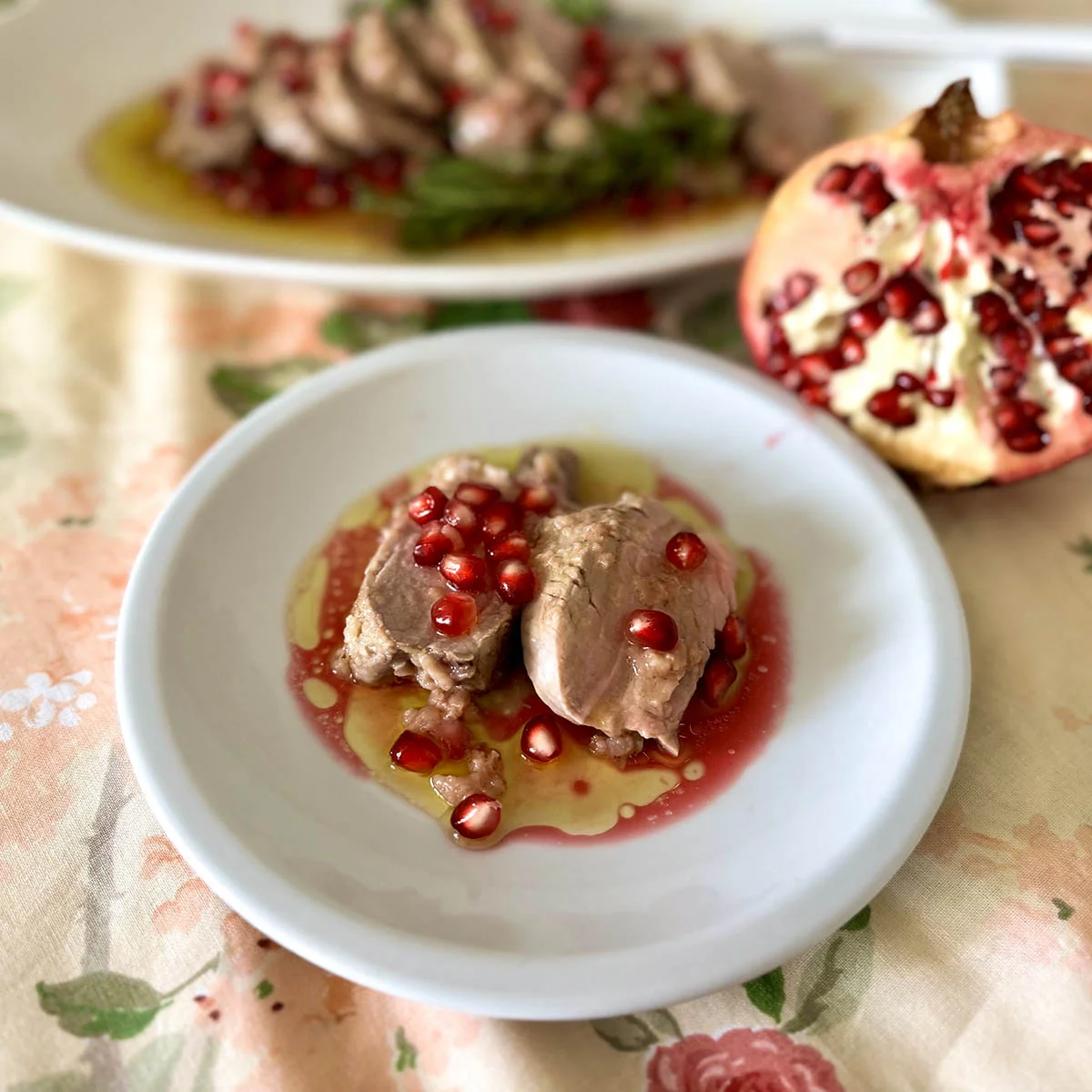
Pork tenderloin is marinated in fresh pomegranate juice, browned, then gently cooked in the marinade for a sweet-tart sauce. It makes an elegant centrepiece for a special dinner while relying on straightforward, mostly hands-off steps.
Ingredients
- 600 gpork tenderloin
- 2pomegranates
- 2 clovesgarlic
- 2 sprigs, plus more for decorationrosemary
- 40 gflour
- 50 gextra-virgin olive oil
- to tastesalt
- to tasteblack pepper
Instructions
- 1
Prepare the pomegranate
Slice the pomegranates horizontally. Squeeze the juice from one and a half into a small bowl, then remove the kernels from the remaining half and set them aside for garnish.
- 2
Marinate the pork
Put the pork in a large bowl with 2 tablespoons of the olive oil, the rosemary sprigs and peeled garlic cloves. Add the pomegranate juice, cover the bowl and leave the pork to marinate for about 1 hour.
- 3
Pat the pork dry
Lift the pork out of the marinade after an hour. Use kitchen paper to pat it dry if needed, so the flour will adhere.
- 4
Coat with flour
Lightly coat the tenderloin in flour, covering all sides.
- 5
Brown the tenderloin
Heat the remaining olive oil in a large pan over medium heat. Add the floured pork and sear it on all sides until golden brown.
- 6
Cook in the sauce
Pour the leftover marinade into the pan, including the garlic and rosemary. Turn the heat to low, season the pork with salt and ground black pepper to taste, cover the pan and cook gently for about 20 minutes.
- 7
Slice the pork
When the pork is cooked through, turn off the heat and carefully transfer it to a chopping board. Slice it with a sharp knife and arrange the pieces on a serving plate.
- 8
Finish and serve
Remove the rosemary sprigs and garlic cloves from the pan. Pour the pomegranate sauce over the pork, then garnish with the reserved kernels and a few fresh rosemary sprigs.
What is pork tenderloin with pomegranate sauce?
Pork tenderloin is a lean, tender cut that cooks relatively quickly and takes well to marinades. This Italian-inspired version pairs it with pomegranate, a fruit often used in Mediterranean cooking for its bright, sweet-tart flavour.
Fresh juice flavours the meat and becomes the base of the pan sauce, while the reserved kernels add a juicy finish. Browning the floured pork first brings colour and gives the sauce a little body.
Nutrition and macros by portion
The nutrition label shows one serving as written: 446 calories, 34g protein, 35g carbs, 20g fat.
| Portion | Adjustment | kcal | Protein | Carbs | Fat |
|---|---|---|---|---|---|
| Lighter | Use less olive oil | 312 kcal | 24g | 25g | 14g |
| This serving | As written | 446 kcal | 34g | 35g | 20g |
| Hungry | Serve with extra potatoes | 669 kcal | 51g | 53g | 30g |
The pork supplies most of the protein, while the flour and pomegranate contribute carbohydrates; olive oil is the main source of fat. Serve it with vegetables and a moderate portion of potatoes, rice or bread for a balanced plate.
The pomegranate and marinade
Juice: Squeeze one and a half pomegranates for the marinade, keeping the remaining half for kernels. Fresh juice gives the sauce a lively tartness that balances the richness of the pork and olive oil.
Marinating: Give the pork about an hour in the juice, oil, garlic and rosemary. Keep it covered while it rests, and reserve the whole marinade for the pan as directed.
Why the pork is dried and floured
Dry surface: Patting the pork after marinating removes excess liquid, which helps the flour cling instead of forming a wet paste.
Light coating: Dust all sides with flour rather than building up a thick layer. It helps the outside brown and contributes a subtle thickness to the sauce as the pork cooks.
Browning and gentle cooking
Searing: Brown the tenderloin on every side in the hot oil before adding the marinade. Turn it as needed to develop an even golden surface.
Covered pan: Once the marinade is added, reduce the heat to low and cover the pan for about 20 minutes. The method calls for gentle cooking; keep the heat low rather than letting the sauce boil hard.
How to serve it
Rest and slice: Transfer the cooked pork to a chopping board before slicing, so it is easier to handle and arrange neatly. Spoon the sauce over the slices to coat them.
Garnish: Remove the cooked garlic and rosemary from the pan, then scatter over the reserved pomegranate kernels and fresh rosemary. Serve with potatoes, rice or crusty bread to make the most of the sauce.
Timing and preparation
The stated total time is 95 minutes, including about 1 hour for marinating and about 20 minutes of covered cooking. The remaining time allows for preparing the fruit, browning the pork and finishing the dish.
You can juice the pomegranate and remove the kernels while the pork marinates. Keep the kernels separate so they stay fresh for the final garnish.
Recipe notes & tips
- Measure out 2 tablespoons of the olive oil for the marinade before using the rest in the pan.
- Pat the tenderloin dry after marinating to help the flour coat it evenly.
- Turn the pork carefully while browning so all sides get colour.
- Keep the pan covered and the heat low during the 20-minute cooking stage.
- Reserve the pomegranate kernels for the end to keep their fresh texture and colour.
Variations
- Add orange: Replace some of the pomegranate juice with freshly squeezed orange juice for a softer, sweeter sauce.
- Use thyme: Swap the rosemary for thyme sprigs for a gentler herbal flavour.
- Add shallot: Cook a finely chopped shallot in the pan after browning and before adding the marinade.
- Make it peppery: Add extra black pepper to the sauce just before serving.
- Serve with greens: Pair the pork with sautéed spinach or green beans for a fresh side.
Common mistakes to avoid
- Skipping the drying step: Wet pork makes the flour cling unevenly; pat the surface dry before coating.
- Using too much flour: A heavy coating can turn pasty; dust the tenderloin lightly on every side.
- Crowding the pan: The pork may brown unevenly; use a pan large enough to turn it comfortably.
- Cooking over high heat: The marinade can reduce too quickly; lower the heat and cover the pan for the gentle cooking stage.
- Forgetting to reserve the kernels: They are the fresh finishing garnish, so remove them from the remaining half pomegranate before cooking.
How to store
Refrigerate leftover pork and sauce in an airtight container for up to 3 days. Reheat gently in a covered pan with the sauce until warmed through, or use a microwave in short intervals.
Frequently asked questions
Can I marinate the pork for longer than an hour?
The recipe specifies about 1 hour. For best results, follow that timing so the pomegranate juice does not dominate the flavour.
Can I use bottled pomegranate juice?
Fresh juice is specified, but bottled juice can be used if it is unsweetened. Use enough to match the juice squeezed from one and a half pomegranates.
How can I tell when the pork is cooked through?
Follow the recipe’s covered cooking time of about 20 minutes, then check the thickest part before slicing. If it needs more time, return it to the pan and continue cooking gently.
Can I make the sauce ahead?
The sauce is made in the pan with the pork and its marinade, so it is simplest to prepare it as part of the recipe. You can remove the pomegranate kernels ahead and keep them chilled for serving.
What can I serve with the pork?
Potatoes, rice or crusty bread work well with the pomegranate sauce. Green vegetables make a fresh contrast.
Cook it from the original
This recipe comes from recipesfromitaly.com. Their page has the author’s own photos, notes and tips — the best place to cook it from.
Open the recipe on recipesfromitaly.com