
Chard carbonara
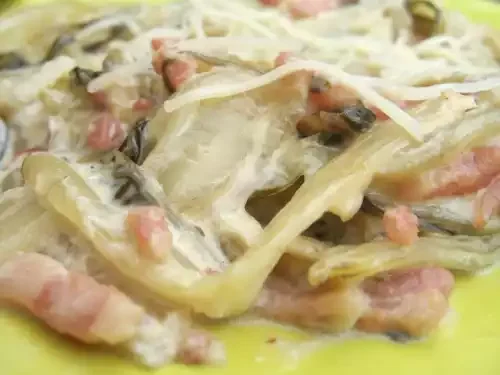
This is a creamy, French-style take on carbonara, made with tender chard stalks, smoked bacon and a gently warmed egg-and-cream sauce. It is a useful way to make the stalks the centre of the meal while keeping the leaves for another dish.
Ingredients
- 800 gchard stalks
- 100 gsmoked bacon lardons (or standard lardons)
- 200 mlsingle cream
- 1egg yolk
- to tastegrated Gruyère (optional)
- a littleoil
Instructions
- 1
Prepare the chard
Wash the chard and remove the stalks, setting the leaves aside for another use, such as a tart.
- 2
Cook the stalks
Cut the stalks into pieces and cook them in boiling water or steam them.
- 3
Fry with bacon
When the stalks are very tender, which takes about 1 hour when steaming, transfer them to a large frying pan with a little oil and the lardons. Fry for a few minutes, until the bacon is cooked.
- 4
Mix the sauce
Meanwhile, warm the cream until just lukewarm. Beat the egg yolk with a fork, then gradually pour in the cream, mixing well.
- 5
Finish the dish
Stir the cream mixture into the chard and cook for about 3 more minutes.
- 6
Add the cheese
Scatter over a little grated Gruyère just before serving, if you like.
What is chard carbonara?
Carbonara is an Italian pasta dish, while this recipe is a French-style variation that uses chard stalks instead of pasta. It brings together smoked bacon, cream and egg yolk for a rich sauce.
Stalks only: the recipe keeps the leaves for another meal and cooks the stalks until tender. That makes their soft texture the focus of this version.
Nutrition and macros by portion
The nutrition label shows one serving as written: 300 calories, 11g protein, 9g carbs, 25g fat.
| Portion | Adjustment | kcal | Protein | Carbs | Fat |
|---|---|---|---|---|---|
| Lighter | Use less cream | 210 kcal | 8g | 6g | 18g |
| This serving | As written | 300 kcal | 11g | 9g | 25g |
| Hungry | Add potatoes on the side | 450 kcal | 17g | 14g | 38g |
The chard provides most of the carbohydrates and fibre, while the lardons, cream, egg yolk and optional Gruyère contribute much of the fat and protein. Serve it with a portion of potatoes or bread and extra vegetables if you want a more balanced, filling plate.
Choosing and preparing the chard
Stalks: choose firm, fresh-looking stems and wash them well, especially around any ridges where grit can collect.
Leaves: keep them for a separate recipe rather than adding them here, as the method is designed for the slower-cooking stalks.
Getting the texture right
Tenderness: cook the stalks until a knife passes through them easily. The recipe allows about 1 hour for steaming, though the exact time depends on the size of the pieces.
Moisture: drain boiled stalks well before frying so excess water does not dilute the cream sauce.
Mixing the egg and cream
Gentle heat: warm the cream only until lukewarm before mixing it gradually into the beaten yolk. This helps the two combine smoothly.
Final cooking: stir the sauce into the pan and cook for about 3 minutes, mixing well so it coats the chard.
Browning the lardons
Pan space: use a large frying pan so the chard and bacon can be stirred together without spilling.
Doneness: fry the lardons for a few minutes until cooked, as directed, before adding the cream mixture.
Serving the dish
Cheese: add a little grated Gruyère at the table or just before serving; it is optional and adds a savoury finish.
To serve: offer the chard alongside bread or potatoes if you want a more substantial meal, or pair it with a crisp salad for contrast.
Recipe notes & tips
- Cut the stalks into evenly sized pieces so they cook at a similar rate.
- If boiling the stalks, drain them thoroughly before they go into the frying pan.
- Warm the cream gently rather than bringing it to a boil.
- Pour the cream into the egg yolk gradually while stirring.
- Keep the chard moving as you combine it with the sauce so it is evenly coated.
Variations
- Use standard lardons: swap them for the smoked kind for a milder bacon flavour.
- Add black pepper: grind some over the finished dish for a sharper savoury note.
- Include the leaves separately: cook them for another meal, such as a tart, rather than mixing them into this recipe.
- Try another hard cheese: replace the optional Gruyère with a similar grated cheese.
- Serve with potatoes: add boiled or steamed potatoes on the side for a heartier meal.
Common mistakes to avoid
- Undercooked stalks: cook them until very tender before frying, as the pan stage is brief.
- Watery chard: drain boiled stalks well so their cooking water does not thin the sauce.
- Hot cream: let it become lukewarm before adding it to the yolk to help prevent the egg from setting too quickly.
- Adding cream all at once: pour it in gradually while stirring for a smoother mixture.
- Skipping the final stir: mix thoroughly after adding the sauce so it coats the stalks evenly.
How to store
Refrigerate leftovers in a covered container and use within 2 days. Reheat gently in a pan over low heat, stirring often; avoid boiling the sauce.
Frequently asked questions
Can I cook the chard stalks in water instead of steaming them?
Yes. The recipe allows either boiling or steaming; cook the stalks until very tender and drain them well if boiled.
How long do the stalks take to steam?
The method gives about 1 hour, until they are very tender. Check them as they cook, since the time can vary with the size of the pieces.
Can I use the chard leaves too?
The recipe uses only the stalks and suggests saving the leaves for another dish, such as a tart.
Can I leave out the Gruyère?
Yes. It is listed as optional, so you can serve the dish without it.
Can I use regular bacon lardons?
Yes. The recipe specifically allows standard lardons in place of smoked ones.
How can I tell when the sauce is ready?
After mixing it with the chard, cook for about 3 minutes, stirring until the sauce is combined and coats the stalks.
Cook it from the original
This recipe comes from ptitchef.com. Their page has the author’s own photos, notes and tips — the best place to cook it from.
Open the recipe on ptitchef.com