
Zingy Lemon Fish
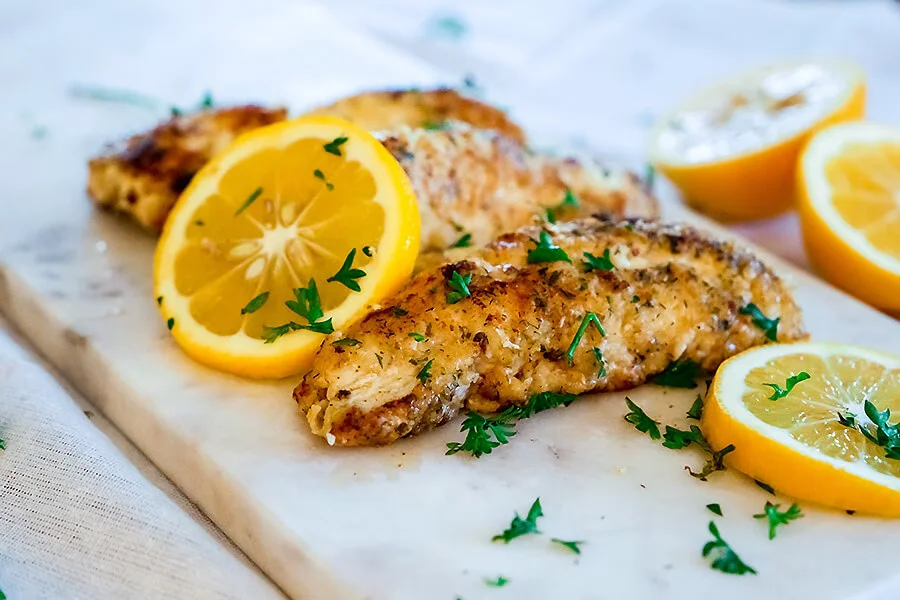
Gurnard fillets are coated in seasoned almond flour, then pan-fried in butter and lemon juice until golden. This quick fish dish makes a bright, savoury main with a crisp coating and a buttery pan dressing.
Ingredients
- 25 g (1/4 cup)almond flour
- 5 ml (1 teaspoon)dried dill
- 5 ml (1 teaspoon)dried chives
- 5 ml (1 teaspoon)onion powder
- 2.5 ml (1/2 teaspoon)garlic powder
- to tastesalt and pepper
- 43 g (3 tablespoons)butter
- 15 ml (1 tablespoon)lemon juice
- 198 g (7 ounces)fresh gurnard fish fillets
Instructions
- 1
Mix the coating
On a large dinner plate, combine the almond flour, dill, chives, onion powder, garlic powder, salt and pepper. Spread the mixture across the plate.
- 2
Coat the fish
Press each fillet into the flour mixture, turn it over and coat the other side thoroughly. Transfer the coated fillets to a separate plate. If preparing ahead, cover and keep them in the fridge until ready to cook.
- 3
Heat butter and lemon
Warm half the butter and half the lemon juice in a large pan over medium-high heat. The pan should be hot enough to brown the coating, but take care not to burn the butter or make the lemon juice bitter.
- 4
Cook the first side
Cook the fish for approximately 3 minutes. Gently move the pan so the fillets pick up the lemon butter, and add more butter or lemon juice if the pan starts to dry out.
- 5
Turn and finish
Add the remaining butter and lemon juice to the pan, then turn the fish and cook for another 3 minutes. Swirl the pan gently; the coating should be golden brown and the fish should look as though it is cooking through.
- 6
Check for doneness
Test the fish with a fork and remove it from the pan when it is almost done, as it will continue cooking off the heat. If serving with steamed vegetables, pour the butter and crunchy coating pieces over them as a dressing.
What is zingy lemon fish?
This is a pan-fried fish dish: gurnard fillets are coated with seasoned almond flour and cooked with butter and lemon juice. The recipe does not specify a particular cuisine or regional origin.
The method brings together a crisp, savoury coating and a sharp, buttery pan sauce. Cooking the fish in two batches of lemon butter helps flavour both sides.
Nutrition and macros by portion
The nutrition label shows one serving as written: 357 calories, 21g protein, 3g carbs, 29g fat.
| Portion | Adjustment | kcal | Protein | Carbs | Fat |
|---|---|---|---|---|---|
| Lighter | Use less butter | 250 kcal | 14g | 2g | 21g |
| This serving | As written | 357 kcal | 21g | 3g | 29g |
| Hungry | Add another fillet | 536 kcal | 31g | 5g | 44g |
The almond flour supplies most of the carbohydrates, while the butter provides most of the fat; the fish contributes the protein. Serve a fillet with steamed vegetables to add a vegetable side and round out the plate.
The almond flour coating
Dry coating: almond flour is combined with dill, chives, onion powder and garlic powder before the fish is added. Press the fillets into the mixture so it adheres across the surface.
Seasoning: salt and pepper are added to taste, so season the flour mixture before coating. A plate gives you room to spread the mixture and turn the fillets without crowding them.
Cooking with butter and lemon
First addition: start with half the butter and lemon juice over medium-high heat. Keep the pan moving gently, and watch that the butter does not burn.
Second addition: add the rest of the butter and lemon juice when you turn the fish. The liquid should remain in the pan to flavour the coating rather than cook away completely.
Look for a golden coating
Colour: the coating should turn golden brown as the fish cooks. If the pan looks dry, follow the method and add a little more butter or lemon juice as needed.
Doneness: check the fish with a fork and take it off the heat when it is almost done. Residual heat will continue to cook it, so avoid waiting until it seems fully cooked in the pan.
Preparing the fish ahead
Make-ahead coating: the method allows you to coat the fillets in advance and hold them in the fridge until cooking time. Keep them on a separate plate while they wait.
Cooking time: the stated timing is approximately 3 minutes on each side. Use the colour of the coating and the fork check as well as the clock, since fillets can vary.
Serving the pan dressing
Vegetables: steamed vegetables are a useful match for the lemon-butter coating. Pour the buttery pan juices and crisp coating pieces over them, as suggested in the method.
On the side: serve the fish straight from the pan while the coating is at its crispest. Keep any extra side dishes simple so the lemon and herbs remain noticeable.
Recipe notes & tips
- Spread the coating mixture out on the plate so each fillet can be covered evenly.
- Press the almond flour mixture onto both sides of the fish to help it adhere.
- Keep the heat at medium-high, but watch closely so the butter does not burn.
- Swirl the pan gently during cooking to keep the fish in contact with the lemon butter.
- Have any steamed vegetables ready before you finish the fish so the pan dressing can be used straight away.
Variations
- Fresh herbs: use chopped fresh dill and chives in place of the dried herbs.
- More lemon: serve with extra lemon juice at the table for a sharper finish.
- Other white fish: use another fresh white fish fillet if gurnard is unavailable, adjusting the cooking time for its thickness.
- Vegetable side: spoon the pan butter over steamed vegetables as a simple accompaniment.
- Herb change: replace the dill with another dried herb you enjoy, keeping the other seasonings.
Common mistakes to avoid
- Burnt butter: keep an eye on the pan over medium-high heat and add the fish once the butter and lemon are hot.
- Patchy coating: press and turn each fillet in the flour mixture until both sides are well covered.
- Dry pan: swirl the pan as the fish cooks and add more butter or lemon juice if needed.
- Overcooked fish: check it with a fork and remove it when almost done, allowing for carry-over cooking.
- Soggy coating: avoid letting the cooked fish sit in the pan longer than necessary after it is done.
How to store
Refrigerate leftovers in a covered container and use within 2 days. Reheat gently in a pan until warmed through; the coating may soften, and the fish can dry out if heated for too long.
Frequently asked questions
Can I coat the fish in advance?
Yes. The method says to coat the fillets, put them on a separate plate and hold them in the fridge until ready to cook.
How long should I cook the fillets?
Cook for approximately 3 minutes on each side. Check with a fork and remove the fish when it is almost done, as it will continue cooking.
What can I use instead of gurnard?
A fresh white fish fillet can be used instead. Cooking time may vary according to the thickness of the fillets.
How do I stop the butter from burning?
Use medium-high heat and keep watch while the butter and lemon juice heat. The pan should be hot enough to brown the coating, not so hot that the butter burns.
What should I serve with zingy lemon fish?
The method suggests steamed vegetables, with the buttery crunchy pieces from the pan poured over them as a dressing.
Can I use bottled lemon juice?
The recipe calls for lemon juice and does not specify whether it must be freshly squeezed. Use the same measured amount.
Cook it from the original
This recipe comes from ruled.me. Their page has the author’s own photos, notes and tips — the best place to cook it from.
Open the recipe on ruled.me