
White asparagus carbonara
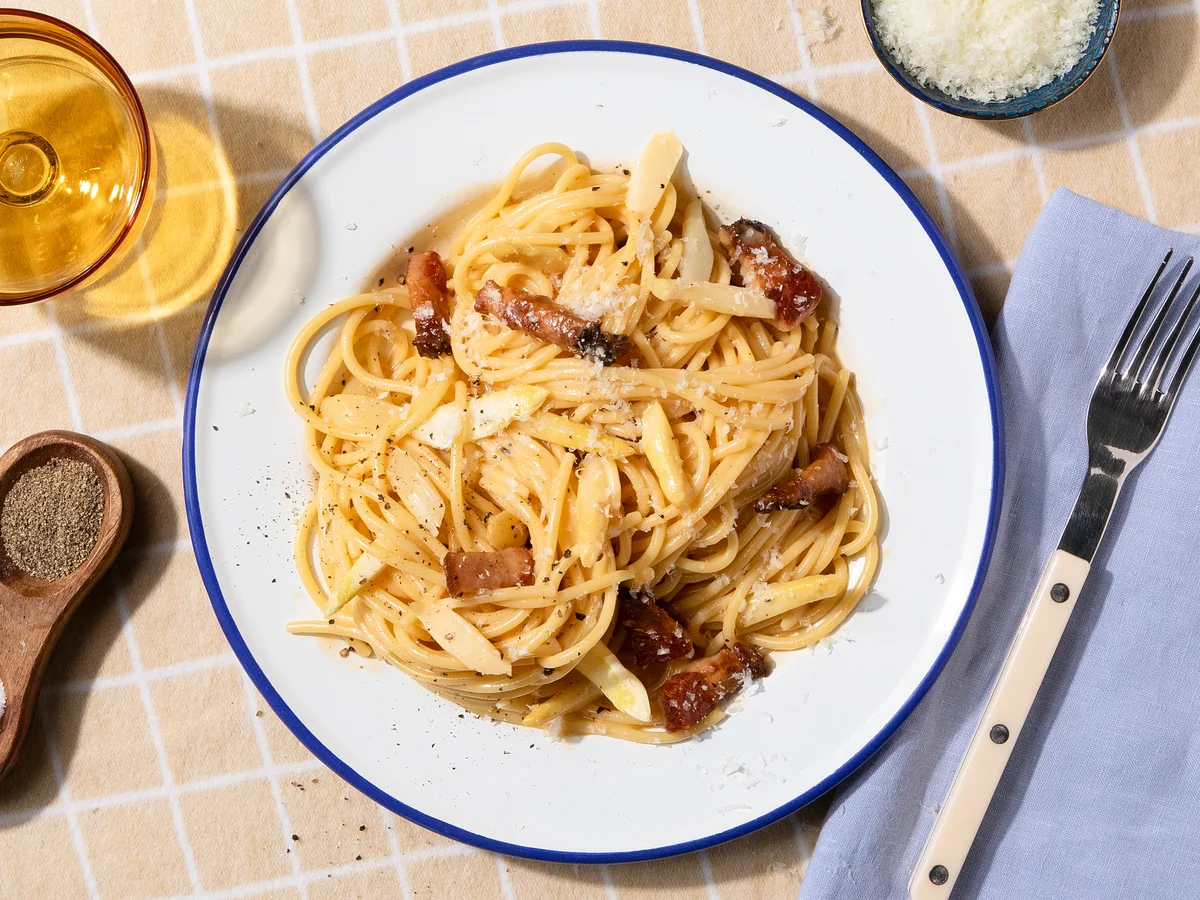
This spring take on Italian carbonara pairs spaghetti and white asparagus with crisp guanciale and a rich Pecorino-and-egg sauce. It comes together in about 20 minutes, with pasta water helping the sauce turn smooth and creamy.
Ingredients
- 255 g (9 oz)spaghetti
- 255 g (9 oz)white asparagus
- 128 g (4.5 oz)guanciale
- 4egg yolks
- 50 g (1.75 oz)grated Pecorino cheese
- to tastesalt
- to tasteblack pepper
Instructions
- 1
Prepare the ingredients
Bring a pot of salted water to the boil for the spaghetti. While it heats, cut the guanciale into cubes about 1 cm thick. Trim the asparagus ends, peel the spears and cut them into medallions about 1 cm thick. In a large bowl, whisk the egg yolks and Pecorino into a thick paste, then season with a pinch of salt and a generous amount of pepper.
- 2
Cook the pasta
When the water boils, add the spaghetti and cook for about 8 minutes, or until al dente. Meanwhile, heat a large frying pan over medium-high heat and fry the guanciale for about 4 minutes, until golden brown. Add the asparagus medallions to the pan and cook for about 4 minutes more, until tender.
- 3
Combine and serve
Drain the spaghetti, reserving some pasta water. Take the pan off the heat, add the spaghetti and toss. Slowly whisk pasta water into the egg mixture until it becomes creamy, adding more if it is too thick. Add the contents of the pan to the bowl and mix well. Serve with extra Pecorino on top.
What is white asparagus carbonara?
Carbonara is an Italian pasta dish associated with Rome, typically made with eggs, Pecorino and cured pork such as guanciale. This version brings white asparagus into the pan for a seasonal variation.
The asparagus adds a tender, mild vegetal note alongside the salty cheese and rich guanciale. The egg mixture and starchy pasta water form the sauce without needing cream.
Nutrition and macros by portion
The nutrition label shows one serving as written: 1106 calories, 39g protein, 89g carbs, 79g fat.
| Portion | Adjustment | kcal | Protein | Carbs | Fat |
|---|---|---|---|---|---|
| Lighter | Use less guanciale | 774 kcal | 27g | 62g | 55g |
| This serving | As written | 1106 kcal | 39g | 89g | 79g |
| Hungry | Add another portion | 1659 kcal | 59g | 134g | 119g |
Most of the carbohydrates come from the spaghetti, while the guanciale, egg yolks and Pecorino contribute much of the fat; the eggs and cheese also provide protein. Balance the plate with a simple green salad or extra vegetables alongside the pasta.
Choose and prepare the asparagus
White asparagus: peel the spears before cutting them into medallions, as the outer skin can be fibrous. Trim the woody ends so the pieces cook evenly.
Even pieces: aim for medallions about 1 cm thick, as directed in the method. They cook briefly in the pan alongside the guanciale.
Build the sauce gently
Egg and Pecorino: whisk the yolks and cheese into a thick paste, then loosen it gradually with reserved pasta water. Adding the water slowly helps you control the consistency.
Off the heat: take the pan away from the hob before combining the hot pasta and the sauce. This helps prevent the egg from scrambling.
Look for the right texture
Guanciale: cook it until golden brown after about 4 minutes, so the cubes are crisp at the edges. Add the asparagus and give it about 4 minutes more, checking that it is tender.
Pasta: cook the spaghetti for about 8 minutes, or until al dente. The finished sauce should coat the strands; add a little more reserved pasta water if it feels too thick.
Keep the timing in step
Start the guanciale and asparagus while the spaghetti cooks, as the method allows both tasks to happen at the same time. Prepare the egg-and-cheese mixture while the water comes to the boil.
Before draining, set aside some pasta water. It is easiest to emulsify into the sauce while warm, and you can add it gradually as needed.
What to serve alongside it
Serve the pasta straight away with extra Pecorino, as the sauce is at its silkiest when freshly mixed. A simple green salad or lightly dressed leaves make a fresh contrast.
Because the pasta already includes guanciale and cheese, keep any side dish simple. Crusty bread is another option for a more substantial meal.
Recipe notes & tips
- Reserve pasta water before draining, as it is essential for loosening the egg-and-cheese mixture.
- Grate the Pecorino finely so it mixes smoothly with the egg yolks.
- Cut the guanciale and asparagus into evenly sized pieces for more consistent cooking.
- Keep the pan off the heat when you combine the pasta with the egg sauce.
- Add pasta water a little at a time so the sauce does not become too thin.
Variations
- Use pancetta: swap it for guanciale if that is what you have available.
- Add peas: stir in a small handful with the asparagus for another spring vegetable.
- Try another hard cheese: use finely grated Parmesan in place of some or all of the Pecorino.
- Add lemon zest: finish with a little finely grated zest for a brighter note.
- Make it vegetarian: omit the guanciale and cook the asparagus in a little olive oil.
Common mistakes to avoid
- Skipping the asparagus peel: the outer layer can be tough, so peel the spears before slicing.
- Overcooking the spaghetti: stop when it is al dente, as it will be tossed with the hot ingredients.
- Adding the egg mixture over heat: the eggs can scramble, so take the pan off the hob first.
- Pouring in pasta water all at once: add it gradually to reach a creamy consistency without making the sauce watery.
- Forgetting to reserve pasta water: save some before draining so you can loosen the sauce.
How to store
For the best texture, serve this carbonara immediately. If you have leftovers, refrigerate them in a sealed container and eat within 2 days; reheat gently in a pan with a splash of water, stirring until hot.
Frequently asked questions
Can I use green asparagus instead?
Yes. Trim the ends and cut it into similar-sized pieces. Cook until tender, checking as it may need a different amount of time.
How do I know when the asparagus is cooked?
After about 4 minutes in the pan, it should be tender when pierced but still hold its shape.
Why does the recipe use egg yolks rather than whole eggs?
The yolks make a rich, thick base for the Pecorino sauce. Pasta water loosens it to a creamy consistency.
Can I make the sauce ahead?
It is best mixed just before serving, when the pasta and reserved water are hot. The sauce may thicken or lose its smooth texture if left to stand.
What can I use instead of guanciale?
Pancetta is a suitable alternative. Cook it until golden brown, as you would the guanciale.
Do I need to add cream?
No. The method uses egg yolks, Pecorino and reserved pasta water to make the sauce creamy.
Cook it from the original
This recipe comes from kitchenstories.com. Their page has the author’s own photos, notes and tips — the best place to cook it from.
Open the recipe on kitchenstories.com