
Panna cotta
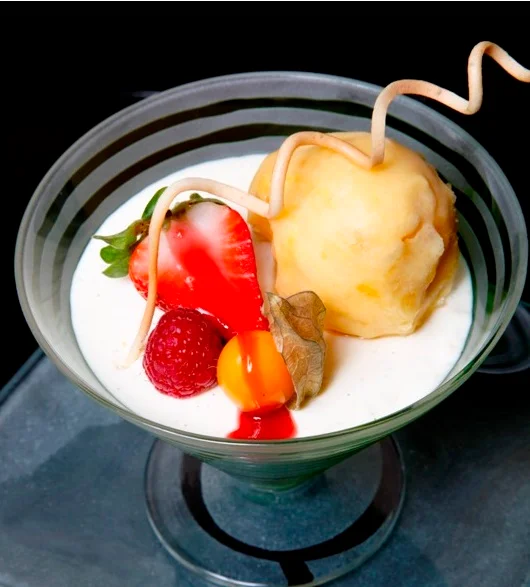
Panna cotta is a gently set cream dessert flavoured with vanilla and citrus. It is served chilled in individual glasses, making it a simple make-ahead choice for a special meal.
Ingredients
- 1000 mlcream
- 200 gsugar
- 1orange
- 1lemon
- 1 podvanilla
- 15 gpowdered gelatine
Instructions
- 1
Heat the mixture
Put the cream, sugar, orange, lemon and vanilla in a pan, leaving out the gelatine. Heat until the mixture comes to the boil.
- 2
Add the gelatine
Dissolve the gelatine, then take the pan off the heat and stir it into the cream mixture thoroughly. Strain the mixture.
- 3
Fill the glasses
Pour the strained mixture into serving glasses.
- 4
Chill until set
Refrigerate the glasses for 2 hours.
- 5
Add a garnish
If you like, decorate with strawberries or cranberries before serving.
What is panna cotta?
Panna cotta means “cooked cream” in Italian and is associated with Piedmont in northern Italy. It is made by gently heating sweetened cream and setting it with gelatine.
This version pairs vanilla with orange and lemon for a citrus-scented finish. Pouring it into glasses keeps serving straightforward and avoids the need to unmould it.
Nutrition and macros by portion
The nutrition label shows one serving as written: 1415 calories, 11g protein, 78g carbs, 122g fat.
| Portion | Adjustment | kcal | Protein | Carbs | Fat |
|---|---|---|---|---|---|
| Lighter | Use smaller serving glasses | 990 kcal | 8g | 55g | 85g |
| This serving | As written | 1415 kcal | 11g | 78g | 122g |
| Hungry | Serve a larger glass | 2123 kcal | 17g | 117g | 183g |
Most of the energy and fat come from the cream, while the sugar supplies most of the carbohydrates; the gelatine contributes some protein. Serve a glass with fresh fruit, or pair it with a lighter main course to balance the meal.
The flavouring ingredients
Cream: the high proportion of cream gives the dessert its rich, smooth character. Use cream suitable for heating, and warm it gently rather than letting it boil hard.
Citrus and vanilla: these are heated with the cream to flavour it. The recipe does not specify whether to use citrus zest, juice or whole fruit, so follow the original preparation you have available.
Getting the gelatine right
Gelatine: dissolve the powdered gelatine before adding it to the pan off the heat, as directed. Stir thoroughly so it is evenly distributed through the cream.
Straining: this gives the mixture a smoother finish and catches any small pieces of flavouring or undissolved material.
How to tell when it is set
Chilling: allow the glasses the full 2 hours in the fridge. The panna cotta should be softly set rather than liquid when you gently move a glass.
Serving glasses: individual portions are convenient for serving and keep the delicate set intact. Avoid moving the glasses around while the mixture is chilling.
Plan the timing
The method is brief, but the dessert needs 2 hours in the refrigerator to set. Make it ahead of the meal so there is no need to rush the chilling stage.
Let the mixture cool slightly before placing the glasses in the fridge, while keeping the preparation sequence and setting time in mind.
Serving ideas
Serve the panna cotta chilled in its glass, with strawberries or cranberries as an optional garnish. Their fresh, tart flavour can contrast with the sweet, creamy dessert.
After a rich meal, offer a small glass alongside fresh fruit or coffee rather than adding a heavy accompaniment.
Recipe notes & tips
- Stir the gelatine in thoroughly after taking the pan off the heat.
- Strain the mixture before pouring it into the glasses for a smoother texture.
- Set the filled glasses on a level shelf in the refrigerator.
- Allow the full 2 hours of chilling time before serving.
- Add the optional fruit garnish just before serving.
Variations
- Berry topping: finish each glass with strawberries or cranberries.
- Vanilla-forward: use the vanilla pod as the main flavour and keep the citrus subtle.
- Orange accent: use orange as the more prominent citrus note.
- Lemon accent: let the lemon provide a sharper counterpoint to the sweet cream.
Common mistakes to avoid
- Boiling too vigorously: heat the cream mixture until it reaches the boil, rather than letting it bubble hard.
- Adding gelatine over the heat: take the pan off the heat first, then stir the dissolved gelatine in.
- Skipping the straining: strain the mixture before filling the glasses for a more even finish.
- Chilling for too little time: give the panna cotta the full 2 hours to set.
- Moving the glasses: leave them level and undisturbed in the fridge while they chill.
How to store
Cover the glasses and keep them refrigerated; for best texture, eat within 2 days. This dessert is served cold, so there is no need to reheat it.
Frequently asked questions
How long does panna cotta need to set?
This recipe specifies 2 hours in the refrigerator. Check that the centres are softly set before serving.
Can I make panna cotta ahead?
Yes. Prepare it in the glasses and refrigerate them, covered, until serving.
Why should I strain the mixture?
Straining helps remove small pieces or lumps and gives the panna cotta a smoother texture.
Can I serve it without unmoulding?
Yes. The method calls for pouring the mixture into serving glasses, so you can serve it directly from them.
What can I use to garnish it?
The recipe suggests strawberries or cranberries. Add them just before serving.
Cook it from the original
This recipe comes from kitchen.sayidaty.net. Their page has the author’s own photos, notes and tips — the best place to cook it from.
Open the recipe on kitchen.sayidaty.net