
Betawi gado-gado
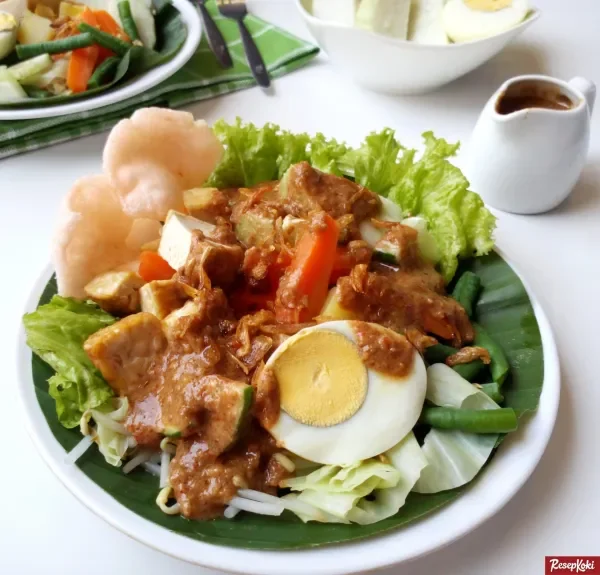
Betawi gado-gado is an Indonesian salad of cooked and fresh vegetables, lontong, tofu and tempeh, brought together with a rich peanut and coconut sauce. It makes a colourful meal with contrasting textures and a choice of crunchy prawn crackers on the side.
Ingredients
- 2potatoes
- 1carrot
- 8 leaveslettuce
- 1cucumber
- 100 glong beans
- 100 gbean sprouts, trimmed
- 1cabbage
- 1lontong
- 1 blocktempeh
- 2tofu pieces
- 700 mlcoconut milk, from ½ coconut
- 200 gskin-on peanuts
- 4 leaveslime leaves, torn
- 50 gpalm sugar, finely sliced
- 30 ml (2 tbsp)sweet soy sauce
- 5 ml (1 tsp)caster sugar
- 5 ml (1 tsp)tamarind
- 10 ml (2 tsp)salt
- 30 ml (2 tbsp)oil for frying and sautéing
- 8curly red chillies, briefly boiled
- 4 clovesgarlic, briefly fried
- 2.5 ml (½ tsp)toasted shrimp paste
- 3 cmaromatic ginger (kencur)
- to tastefried shallots
- to tasteprawn crackers
- to tasteboiled eggs
Instructions
- 1
Prepare the vegetables
Peel the potatoes and carrot, then wash all the vegetables. Cut the potatoes and carrot into medium dice, roughly slice the cabbage and cut the long beans into pieces.
- 2
Blanch the sprouts
Bring a pan of water to the boil. Ladle out a little boiling water to pour over the bean sprouts, then drain them and set aside.
- 3
Cook the vegetables
Boil the potatoes, carrot, cabbage and long beans in the pan until cooked. Lift them out, drain and set aside. Cut the cucumber into pieces, then roughly slice the lettuce or leave the leaves whole.
- 4
Fry tofu and tempeh
Crush one garlic clove with salt and a little water, then soak the tempeh and tofu in the mixture. Fry them in hot oil until cooked, drain, and cut into medium dice.
- 5
Cut the lontong
Cut the lontong into medium dice and set aside.
- 6
Grind the peanuts
Wash the peanuts, fry them in hot oil and drain. Leave them to cool, then grind them in a blender until fine.
- 7
Prepare the tamarind
Mix the tamarind with 45 ml (3 tbsp) hot water. Strain the mixture and keep the liquid.
- 8
Fry the spice paste
Heat the oil and sauté the ground spices with the lime leaves until fragrant.
- 9
Build the sauce
Stir in the ground peanuts. Add the coconut milk, palm sugar, sweet soy sauce and salt, and mix well as the sauce comes to the boil.
- 10
Thicken the sauce
Stir in the tamarind liquid and cook until the sauce thickens. Taste and adjust the seasoning, then take it off the heat.
- 11
Assemble the plates
Arrange the lontong, potatoes, tofu, tempeh and vegetables on plates. Add boiled egg halves, pour over as much peanut sauce as you like, then finish with fried shallots and serve with prawn crackers.
What is Betawi gado-gado?
Gado-gado is an Indonesian mixed salad, associated with Java, in which vegetables are served with a ground-peanut dressing. The Betawi style takes its name from the Betawi people of Jakarta and is often served with lontong, a compressed rice cake.
This version combines boiled vegetables with fresh cucumber and lettuce, fried tofu and tempeh, and a coconut-enriched peanut sauce. That mix gives each plate soft, crisp and creamy elements.
Nutrition and macros by portion
The nutrition label shows one serving as written: 720 calories, 24g protein, 75g carbs, 38g fat.
| Portion | Adjustment | kcal | Protein | Carbs | Fat |
|---|---|---|---|---|---|
| Lighter | More vegetables, less sauce | 504 kcal | 17g | 53g | 27g |
| This serving | As written | 720 kcal | 24g | 75g | 38g |
| Hungry | Add extra lontong | 1080 kcal | 36g | 113g | 57g |
The peanuts, coconut milk and frying oil contribute most of the fat, while the lontong, potatoes and sweetened sauce supply much of the carbohydrate. Peanuts, tofu, tempeh and egg provide the main protein. For a more balanced plate, serve a generous share of the vegetables and use the sauce and crackers to taste.
Prepare the vegetables
Even pieces: cut the potato and carrot to a similar medium size so they cook at roughly the same pace. Keep the cabbage in larger pieces so it does not disappear among the other vegetables.
Brief cooking: the recipe calls for the bean sprouts to be steeped separately, while the other vegetables are boiled. Drain everything well to keep excess water from thinning the sauce.
Fry the tofu and tempeh
Seasoning soak: the tofu and tempeh are briefly soaked in salted, garlicky water before frying. Drain them sufficiently before they go into the hot oil, to limit spluttering.
Golden edges: fry until the pieces are cooked and lightly browned, then drain before cutting. This gives the soft salad ingredients a firmer, savoury contrast.
Make the peanut sauce
Fine peanuts: cool the fried peanuts before grinding, and aim for a fine, even texture. The coconut milk and ground peanuts form the sauce’s rich base.
Fragrant spices: sauté the ground spices with the torn lime leaves before adding the peanuts and coconut milk. Stir as the mixture heats so the sauce cooks evenly.
Get the texture right
Tender vegetables: cook the vegetables until done but avoid leaving the cabbage and long beans in the boiling water too long. They should still have some bite.
Thickened sauce: add the strained tamarind liquid and cook until the sauce thickens. It should coat the ingredients rather than run straight to the bottom of the plate.
Serve it with contrast
Build the plate: place the lontong, cooked vegetables, tofu and tempeh alongside the fresh cucumber and lettuce. Add the boiled egg and spoon over the peanut sauce to suit each serving.
Finish at the table: fried shallots add savoury crunch, while prawn crackers bring a crisp accompaniment. Serve the sauce warm and the crackers separately so they stay crunchy.
Recipe notes & tips
- Cut the potatoes and carrot into similar-sized pieces so they cook at a similar rate.
- Drain the blanched and boiled vegetables well before plating.
- Let the fried peanuts cool before grinding them.
- Stir the sauce as it heats to help prevent it catching on the pan.
- Add the peanut sauce gradually so you can control how much coats the salad.
- Keep the prawn crackers separate until serving to preserve their crunch.
Variations
- Extra greens: add more lettuce or long beans while keeping the same sauce.
- Rice instead of lontong: serve with cooked rice if lontong is unavailable.
- More heat: add extra curly red chilli to the ground spices.
- Crunchier topping: scatter on extra fried shallots just before serving.
- Egg-free: leave out the boiled egg and serve the remaining components as written.
Common mistakes to avoid
- Overcooking the greens: cabbage and long beans lose their bite; remove them once tender.
- Wet vegetables: water dilutes the dressing; drain them thoroughly before assembling.
- Grinding hot peanuts: warm peanuts can turn oily; let them cool first.
- Lumpy sauce: add the coconut milk while stirring the ground peanuts into it evenly.
- Sauce too thin: continue cooking until it thickens, stirring as it heats.
- Soft crackers: add prawn crackers only at the table so they stay crisp.
How to store
Store the sauce, vegetables and fried tofu and tempeh separately in covered containers in the fridge and use within 2 days. Reheat the sauce gently, stirring until smooth; serve the fresh cucumber, lettuce and crackers separately, and assemble just before eating.
Frequently asked questions
What is lontong?
Lontong is compressed rice cooked in a wrapped shape and cut into pieces. If you cannot find it, serve the gado-gado with rice as suggested in the recipe description.
Can I prepare the sauce ahead?
Yes. Make it ahead and refrigerate it separately, then reheat it gently while stirring before serving.
How do I keep the vegetables from going soft?
Avoid boiling them for longer than needed, especially the cabbage and long beans. Drain them as soon as they are cooked.
Can I use ready-made peanut butter?
The recipe uses fried whole peanuts ground until fine. Peanut butter would change the texture and seasoning, so adjust the sauce carefully if you use it.
Can I serve gado-gado with rice?
Yes. Rice can be served instead of lontong, or alongside the vegetables and sauce.
How should I serve the prawn crackers?
Serve them alongside the salad and add them just before eating so they retain their crunch.
Cook it from the original
This recipe comes from resepkoki.id. Their page has the author’s own photos, notes and tips — the best place to cook it from.
Open the recipe on resepkoki.id