
Grandma's Scone Recipe
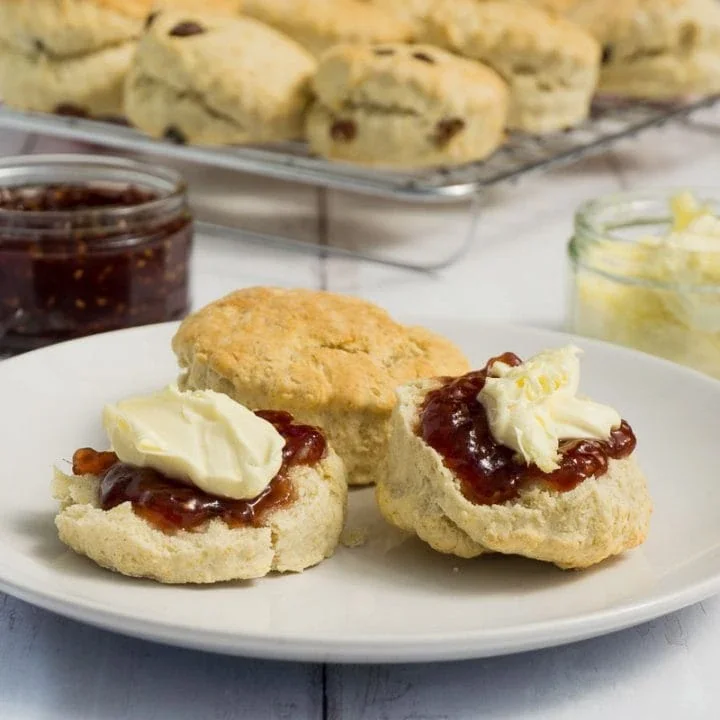
These simple British scones have a tender, lightly crumbly texture and take about 12 minutes to bake. Keep them plain or add fruit, cheese or another flavour to suit the occasion.
Ingredients
- 500 g (4 cups)self-raising flour
- 4 tspbaking powder
- 100 gbutter
- Approximately 350 ml (1.5 cups)milk
Instructions
- 1
Heat the oven
Preheat the oven to approximately 180°C fan or 200°C conventional.
- 2
Sift dry ingredients
Sift the flour and baking powder into a bowl.
- 3
Add the butter
Slice the butter thinly or grate it into the bowl.
- 4
Rub in butter
Use your fingers to rub the butter into the flour.
- 5
Mix in milk
Add the milk gradually, using a fork to bring the mixture together.
- 6
Turn out dough
Tip the mixture onto a floured mat or work surface.
- 7
Bring dough together
Use your fingertips to bring the dough together further, then flatten it out.
- 8
Cut the scones
Cut the dough into even triangles or squares, or use a biscuit cutter.
- 9
Brush the tops
If you like, brush the tops with milk or egg; this is optional.
- 10
Bake until ready
Bake in the middle of the oven for approximately 10–15 minutes, depending on its heat. The usual baking time is around 12 minutes. Check that the bottom of one scone is slightly browned.
- 11
Cool on rack
Transfer the scones to a wire rack to cool.
- 12
Store the scones
Keep them in an airtight container or wrap them in a tea towel to help them stay soft.
What are British scones?
Scones are a familiar part of British baking, often served with tea and eaten split with a topping. This straightforward version uses self-raising flour, butter and milk for a soft, lightly crumbly bake.
The recipe keeps the base plain, so it works for sweet or savoury additions. A little extra baking powder is included even though self-raising flour already contains raising agent.
Nutrition and macros by portion
The nutrition label shows one serving as written: 149 calories, 4g protein, 22g carbs, 5g fat.
| Portion | Adjustment | kcal | Protein | Carbs | Fat |
|---|---|---|---|---|---|
| Lighter | Smaller scone portion | 104 kcal | 3g | 15g | 4g |
| This serving | As written | 149 kcal | 4g | 22g | 5g |
| Hungry | Larger scone portion | 224 kcal | 6g | 33g | 8g |
The flour supplies most of the carbohydrates, while the butter contributes much of the fat and the flour and milk provide some protein. For a more balanced plate, pair a scone with a protein-rich topping and some fruit or vegetables.
The flour and raising agent
Self-raising flour: this provides the main structure and helps the scones rise. Sifting it with the baking powder distributes the raising agent through the mixture.
Baking powder: the recipe adds 4 tsp despite using self-raising flour. Follow the stated quantity for this version.
Rub in the butter gently
Butter: slicing it thinly or grating it makes it easier to work into the flour. Rub it in with your fingertips until the mixture looks evenly combined.
Light handling: once the milk goes in, bring the mixture together with a fork and fingertips rather than kneading it extensively. This keeps the dough tender.
Getting the dough ready
Milk: add it gradually, since the recipe gives an approximate amount and the dough may come together before every drop is used. Aim for dough that holds together when gently pressed.
Shaping: turn the mixture onto a floured surface, bring it together and flatten it. Cut even pieces so they are ready to bake at roughly the same time.
How to tell when they are baked
Oven setting: bake at approximately 180°C fan or 200°C conventional, in the middle of the oven. The suggested baking window is 10–15 minutes, with around 12 minutes as a usual guide.
Doneness: check that the bottom of one scone is slightly browned. Ovens vary, so use that cue alongside the timing rather than relying on the clock alone.
Choose a shape and finish
Cutting: triangles and squares both work, or use a biscuit cutter for round scones. Keep the pieces similar in size for more even baking.
Topping: brushing the tops with milk or egg is optional. The recipe does not require a glaze for the scones to bake.
Serving ideas
Sweet scones: serve plain or add fruit to the dough before shaping. They go well with a cup of tea and a sweet spread.
Savoury scones: add cheese or another savoury flavour to the mixture. Serve alongside soup or as part of a light lunch.
Recipe notes & tips
- Grate cold butter into the flour if slicing it thinly feels fiddly.
- Add the milk in stages because the amount needed can vary.
- Handle the dough gently once the milk has been added.
- Cut pieces evenly so they bake at a similar rate.
- Start checking at around 10 minutes, as oven temperatures vary.
- Cool the scones on a wire rack before storing them.
Variations
- Add fruit: fold fruit into the flour mixture before adding the milk.
- Make them cheesy: mix grated cheese into the dry ingredients for a savoury batch.
- Try another flavour: add a suitable flavouring to the dough before shaping.
- Keep them plain: leave out additions for a simple base scone.
- Change the shape: cut squares or triangles instead of using a cutter.
Common mistakes to avoid
- Adding all the milk at once: pour it in gradually so you can stop when the dough comes together.
- Overworking the dough: use a fork and fingertips to bring it together gently.
- Uneven pieces: cut scones to a similar size so they bake evenly.
- Skipping the doneness check: look for a slightly browned bottom as well as the baking time.
- Storing while warm: let the scones cool on a wire rack before sealing them away.
How to store
Once cool, store the scones in an airtight container or wrap them in a tea towel to help keep them soft. Rewarm briefly in the oven if you prefer them warm.
Frequently asked questions
Can I make these scones sweet or savoury?
Yes. The recipe is designed as a plain base, and you can add fruit, cheese or another flavour to suit your preference.
Do I need the baking powder if I use self-raising flour?
The recipe includes 4 tsp of baking powder even though self-raising flour already contains raising agent. It is part of this version.
How much milk should I add?
The recipe calls for approximately 350 ml. Add it gradually and stop when the mixture comes together.
Can I brush the tops before baking?
Yes. Brushing with milk or egg is optional; the recipe says it is not necessary.
How long do the scones take to bake?
Bake them for approximately 10–15 minutes at 180°C fan or 200°C conventional. Around 12 minutes is the usual guide, but check for a slightly browned bottom.
How should I keep the scones soft?
After they have cooled, store them in an airtight container or wrap them in a tea towel.
Cook it from the original
This recipe comes from scottishscran.com. Their page has the author’s own photos, notes and tips — the best place to cook it from.
Open the recipe on scottishscran.com