
Classic Buxton Pudding Recipe
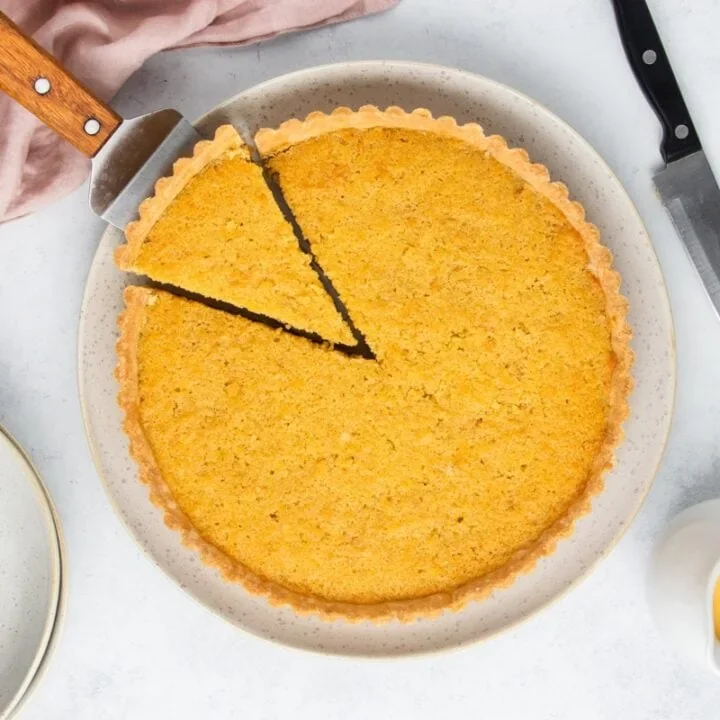
Buxton Pudding is a British tart with a crisp shortcrust pastry case, a layer of raspberry jam and a buttery breadcrumb sponge topping. It makes a comforting bake for sharing, especially served warm with custard, cream or ice cream.
Ingredients
- 200 gplain flour
- 2 tbspcaster sugar
- 125 gunsalted butter, cold and cubed
- 1egg yolk
- 2 tbspcold water
- 150 gunsalted butter, at room temperature
- 150 gcaster sugar
- 150 gstale white bread (about 4 slices)
- 3 mediumeggs
- 7 tbspraspberry jam
Instructions
- 1
Mix the dry ingredients
Put the flour and 2 tbsp caster sugar in a food processor and briefly mix to combine.
- 2
Add the butter
Add the cold, cubed butter and pulse until the mixture looks like breadcrumbs. Alternatively, rub the butter into the flour by hand in a mixing bowl.
- 3
Make the pastry
Transfer the mixture to a stand mixer fitted with a dough hook. Add the egg yolk and cold water, then mix until a thick dough forms. Shape it into a ball by hand and chill in the fridge for 30 minutes.
- 4
Line the tin
Heat the oven to 180°C. Roll out the dough on a lightly floured surface and place it in a 23 cm fluted tart tin, pressing it into the base and sides. Trim some excess dough, leaving a slight overhang.
- 5
Blind bake the case
Prick the pastry base all over with a fork. Cover it with baking paper, fill with baking beans or dry rice or lentils, and bake for 15 minutes.
- 6
Finish baking pastry
Take out the baking beans and paper, then bake for a further 10 minutes, until the pastry is cooked through.
- 7
Prepare the breadcrumbs
Trim off the overhanging pastry with a sharp knife and leave the case to cool slightly while you prepare the filling. Blitz the bread in a food processor to make breadcrumbs.
- 8
Cream butter and sugar
Beat the room-temperature butter and 150 g caster sugar in a stand mixer until smooth and fluffy, about 4 minutes. You can also use a wooden spoon or electric whisk.
- 9
Add the eggs
Beat in the eggs one at a time, mixing after each addition until combined.
- 10
Fold in crumbs
Fold the breadcrumbs into the mixture.
- 11
Spread the jam
Spread the raspberry jam evenly over the pastry base, taking it right to the edges.
- 12
Add the topping
Spoon the filling over the jam and smooth it out to cover the layer completely.
- 13
Bake the pudding
Bake at 160°C for 35–40 minutes, until the sponge topping is golden.
- 14
Serve warm
Serve warm with custard, whipped cream or ice cream.
What is Buxton Pudding?
Buxton Pudding is a Derbyshire bake named after the spa town of Buxton. It brings together a shortcrust pastry case, jam and a sponge-like topping that uses breadcrumbs.
Bakewell, another Derbyshire town a little over ten miles away, is known for a similar pudding made with puff pastry and an almond topping. This version gets its character from raspberry jam and a crumb-enriched sponge.
Nutrition and macros by portion
The nutrition label shows one serving as written: 440 calories, 6g protein, 50g carbs, 25g fat.
| Portion | Adjustment | kcal | Protein | Carbs | Fat |
|---|---|---|---|---|---|
| Lighter | Smaller slice, less cream | 308 kcal | 4g | 35g | 18g |
| This serving | As written | 440 kcal | 6g | 50g | 25g |
| Hungry | Larger slice | 660 kcal | 9g | 75g | 38g |
The pastry and sponge topping supply most of the carbohydrates from flour, sugar and bread, while butter contributes much of the fat. Eggs add protein, with smaller amounts also coming from the flour and bread. Pair a slice with fruit or serve it after a meal that includes vegetables and a protein-rich main.
Build a crisp pastry case
Cold butter: pulsing it into the flour leaves small pieces that help make the pastry tender. Stop when the mixture resembles breadcrumbs rather than blending it into a paste.
Chill the dough: 30 minutes in the fridge makes it easier to roll and handle. Leave a slight overhang when lining the tin, as the pastry may shrink during baking.
Blind baking matters
Prick the base: the fork holes help release steam as the pastry bakes. Baking paper and beans, rice or lentils hold the base in place during the first 15 minutes.
Remove the weights: bake the case for another 10 minutes so it cooks through before the moist filling goes in. Let it cool slightly before adding the jam.
Breadcrumbs give the topping its character
Stale white bread: blitz it into fine, even crumbs so it folds easily into the sponge mixture. The crumbs are an intentional part of this traditional-style topping, not a substitute for flour.
Room-temperature butter: beat it with the sugar for about 4 minutes until fluffy. This helps make a smooth base for the eggs and breadcrumbs.
Layer jam and sponge carefully
Raspberry jam: spread it across the whole pastry base and right up to the edges for an even layer in each slice.
Sponge mixture: spoon it over the jam and smooth it gently to cover the filling. Spread without pressing hard, so the layers stay distinct.
Check the bake before serving
Oven stages: the pastry is first baked at 180°C, while the filled pudding bakes at the lower temperature of 160°C. Keep those settings distinct as you move between stages.
Doneness cue: look for a golden sponge after 35–40 minutes. The pudding is served warm, when the jam and topping are especially inviting alongside custard, whipped cream or ice cream.
Recipe notes & tips
- Keep the pastry butter cold until you pulse or rub it into the flour.
- Chill the pastry for the full 30 minutes before rolling it out.
- Use baking beans, dry rice or lentils to weigh down the pastry during the first bake.
- Make fine breadcrumbs from the stale bread so they fold evenly into the topping.
- Add each egg separately and beat it in before adding the next.
- Check the pudding at 35 minutes and bake for up to 40 minutes until the topping is golden.
Variations
- Change the jam: use another smooth fruit jam in place of raspberry.
- Add a citrus note: mix a little finely grated lemon zest into the butter and sugar.
- Serve with custard: pour warm custard over each slice for a classic pudding-style serving.
- Use a hand method: rub the pastry butter in by hand and beat the sponge with a wooden spoon or electric whisk.
- Make individual portions: divide the pastry and filling among smaller tart tins, checking them as they bake.
Common mistakes to avoid
- Overworking the pastry: stop mixing once the dough comes together so the case stays tender.
- Skipping the chill: refrigerate the dough for 30 minutes to make it easier to roll and line the tin.
- Leaving out the baking weights: line the pastry with paper and fill it with beans, rice or lentils for the first bake.
- Adding eggs all at once: beat them in one at a time so the mixture combines evenly.
- Leaving gaps in the jam: spread it right to the edges before adding the sponge topping.
- Baking by colour alone: begin checking at 35 minutes and allow up to 40 minutes at 160°C.
How to store
Once cool, cover the pudding and keep it in the fridge for up to 3 days. Reheat individual slices gently in the oven or microwave until warm.
Frequently asked questions
Why does the sponge topping contain breadcrumbs?
Breadcrumbs are a defining ingredient in this Buxton Pudding topping. They give it a texture that differs from a sponge made only with flour.
Can I make the pastry without a food processor?
Yes. Rub the cold butter into the flour and sugar by hand until it resembles breadcrumbs, then continue with the egg yolk and cold water as directed.
What can I use instead of baking beans?
Dry rice or lentils can be used to weigh down the pastry during blind baking. Keep them for this purpose rather than using them as cooked food afterwards.
How do I know when the pudding is baked?
The topping should look golden after 35–40 minutes at 160°C. If it is not golden at 35 minutes, continue baking and check again.
Can I serve Buxton Pudding cold?
Yes. It is specified to be served warm, but leftovers can also be eaten cold.
What should I serve with it?
The recipe suggests custard, whipped cream or ice cream. Choose one to serve alongside a warm slice.
Cook it from the original
This recipe comes from scottishscran.com. Their page has the author’s own photos, notes and tips — the best place to cook it from.
Open the recipe on scottishscran.com