
Raised pork pie
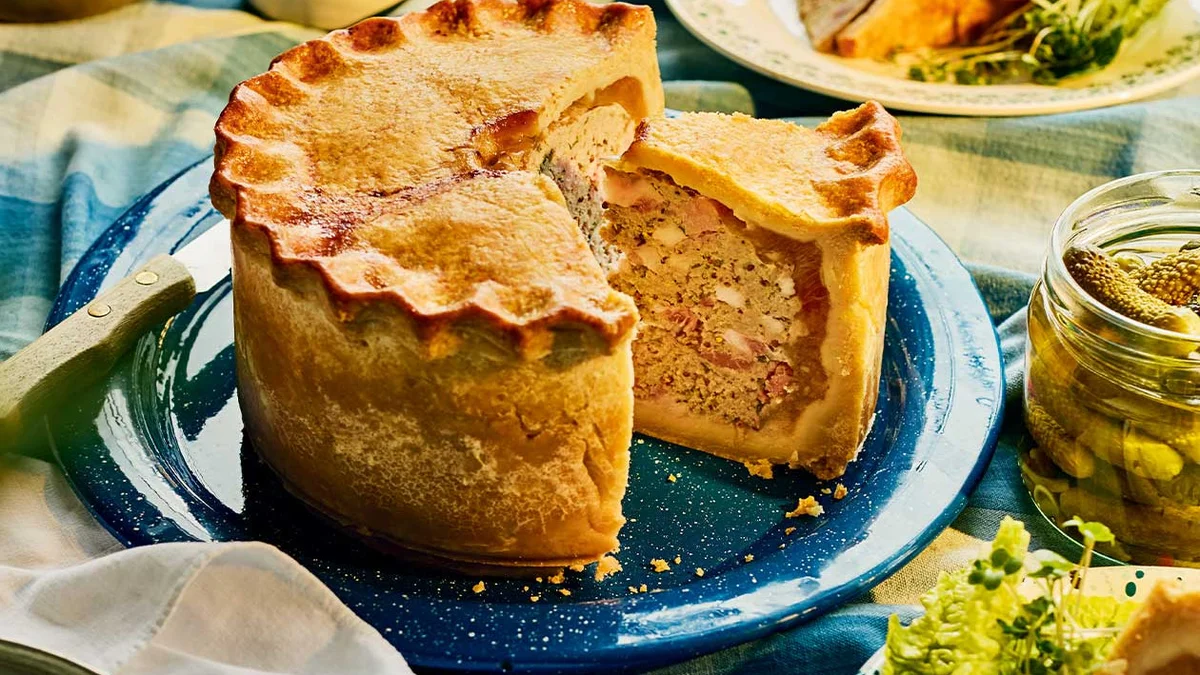
This British raised pork pie combines seasoned pork and smoked bacon with a sturdy hot water crust, finished with a mango chutney and chicken-stock jelly. It takes time to bake and chill, but makes a generous centrepiece for picnics or a meal with pickles and salad.
Ingredients
- 1 x 500 g pack10%-fat pork mince
- 2 x 160 g packssmoked bacon lardons
- 2 tbspgarlic paste
- 2 tbspginger paste
- 2 tbspwholegrain mustard
- 10 gsage leaves, picked and finely chopped
- 2 tspfennel seeds
- 1/2 tspfine salt
- 160 glard
- 3 sprigsthyme
- 360 g, plus extra to dustplain flour
- 100 gstrong white bread flour
- 1 mediumegg, to glaze
- 200 mlchicken stock
- 4platinum-grade gelatine leaves
- 3 tbspsmooth mango chutney
Instructions
- 1
Mix the filling
Combine the pork mince, bacon lardons, garlic paste, ginger paste, wholegrain mustard, sage, fennel seeds and fine salt in a large bowl. Mix thoroughly and set aside. Heat the oven to 210°C, fan 190°C, gas 6½.
- 2
Make the pastry
Put the lard and thyme sprigs in a saucepan with 175 ml hot tap water. Bring to a simmer over a medium heat, stirring now and then, until the lard has melted. Meanwhile, mix both flours in a large bowl with a pinch of salt. Remove and discard the thyme, then pour the hot liquid into the flour. Mix until combined and knead by hand for a couple of minutes, just until smooth; avoid overworking the dough.
- 3
Line the tin
Set aside a quarter of the pastry for the lid. Roll out the rest on a lightly floured surface to the thickness of a one-pound coin, then use it to line a deep, round tin measuring 16.5 cm in diameter and about 6 cm high. Press the pastry firmly into the corners, keep it an even thickness, and leave an overhang. Patch any gaps if needed. Pack in the pork mixture and pat it level.
- 4
Add the lid
Roll the reserved pastry into a circle larger than the top of the tin. Lightly beat the egg and brush it around the pastry rim, then place the lid on top. Trim away excess pastry and crimp the edges together. Make a 2–3 cm steam hole in the centre of the lid with a small cutter or the wide end of a piping nozzle.
- 5
Bake the pie
Put a foil-lined tray below the middle oven shelf to catch drips, then bake the pie for 30 minutes. Brush it with more beaten egg and lower the oven to 160°C, fan 140°C, gas 3. Bake for another 1 hour 45 minutes to 2 hours, until golden and juices begin to bubble through the steam hole. Remove from the oven and leave to cool completely.
- 6
Make the jelly
Pour the cold chicken stock into a saucepan and heat over a medium heat until steaming. Soak the gelatine leaves in cold water for 5 minutes. Stir the mango chutney into the steaming stock. Squeeze excess water from the gelatine, add it to the hot stock and stir until dissolved. Pour the liquid into a jug, then slowly fill the cooled pie through the hole, using a funnel if useful. You may not need all the stock; stop when no more will fit. Chill overnight to set the jelly, then cut into wedges to serve.
What is a raised pork pie?
Raised pork pie is a British savoury pie traditionally shaped with a firm hot water crust that can hold a meat filling. It is often served cold, making it a natural fit for picnics and buffet tables.
This version pairs pork and smoked bacon with aromatic sage, fennel, ginger and mustard. Mango chutney adds a sweet, tangy note to the jelly poured into the baked pie.
Nutrition and macros by portion
The nutrition label shows one serving as written: 516 calories, 27g protein, 38g carbs, 28g fat.
| Portion | Adjustment | kcal | Protein | Carbs | Fat |
|---|---|---|---|---|---|
| Lighter | Smaller wedge, more salad | 361 kcal | 19g | 27g | 20g |
| This serving | As written | 516 kcal | 27g | 38g | 28g |
| Hungry | Larger wedge | 774 kcal | 41g | 57g | 42g |
The pork and bacon provide most of the protein, while the pastry flours supply much of the carbohydrate. Lard contributes much of the fat, with additional fat from the meat and bacon. Serve a wedge with salad and pickles to add freshness alongside the pie.
Building flavour in the filling
Pork and bacon: The mince forms the main filling, while smoked lardons bring a savoury, smoky flavour. Mix them thoroughly with the seasonings so each wedge has an even distribution.
Seasonings: Sage, fennel, ginger, garlic and wholegrain mustard give the meat its distinctive character. Chop the sage finely so it blends readily into the mixture.
Why hot water crust works
Hot liquid: Melting the lard with water makes a pliable pastry that can be pressed into a deep tin. Pour it into the flour while hot, then knead only until the dough is smooth.
Shaping: Leave pastry over the rim when lining the tin so there is enough to join and crimp the lid. The dough can be patched if it tears, but aim for an even layer throughout.
Sealing and venting the pie
Crimped edge: Brushing beaten egg around the rim helps the lid adhere to the pastry case. Press the two layers together firmly to make a neat seal.
Steam hole: A 2–3 cm opening in the lid lets steam escape during baking. It also provides a route for pouring in the jelly once the pie is completely cool.
Baking and doneness cues
Two temperatures: The first 30 minutes at 210°C, fan 190°C, gas 6½ helps the pastry start to colour. The lower setting of 160°C, fan 140°C, gas 3 is used for the longer bake.
Look for a golden crust and juices beginning to bubble through the hole before taking the pie out. The recipe then calls for the pie to cool completely before adding the stock mixture.
Setting the mango jelly
Gelatine: Soak the leaves in cold water for 5 minutes, then squeeze out the excess before stirring them into the steaming stock. Stir until they have fully dissolved.
Filling the pie: Pour the jelly mixture slowly through the lid opening, stopping when no more will fit. Chill the pie overnight so the jelly can set before slicing.
Serving and timing
This pie is best planned ahead: it needs a long bake, time to cool completely and an overnight chill for the jelly. Cut it into wedges once set.
Serve with pickles and a side salad, as suggested, for a fresh contrast to the rich pastry and savoury filling. It also works well as part of a picnic spread.
Recipe notes & tips
- Keep the dough an even thickness as you line the tin so the pastry cooks consistently.
- Use the pastry offcuts to patch any gaps in the case before adding the filling.
- Crimp the lid and base together firmly to help keep the filling enclosed.
- Set a foil-lined tray beneath the pie to catch any drips during baking.
- Let the pie cool completely before adding the jelly mixture.
- Pour the jelly slowly through the steam hole to avoid spilling.
Variations
- More herbs: Adjust the sage seasoning to suit your preference.
- Chutney note: Use the specified smooth mango chutney for a fruity, tangy jelly.
- Wholegrain mustard: Keep it in the filling for a gentle mustard flavour and texture.
- Picnic plate: Serve wedges with pickles and a side salad.
- Smaller pies: Divide the mixture and pastry into smaller tins, adjusting the bake to suit their size.
Common mistakes to avoid
- Overworking the dough: Knead only until smooth so the pastry does not become tough.
- Uneven pastry: Keep the lining an even thickness to help it bake consistently.
- Loose lid: Brush the rim with beaten egg and crimp the pastry layers firmly together.
- Skipping the steam hole: Cut a 2–3 cm opening in the lid to let steam escape.
- Adding jelly too soon: Cool the pie completely before pouring in the stock mixture.
- Slicing before chilling: Leave the pie in the fridge overnight so the jelly can set.
How to store
Store leftovers in the fridge for up to 4 days. Keep the pie covered and chilled; serve cold or reheat individual portions thoroughly if preferred, noting that the jelly will melt when heated.
Frequently asked questions
Can I make the pie ahead?
Yes. It needs to cool completely, then chill overnight so the jelly sets, so making it the day before serving works well.
How do I know when the pie is baked?
The pastry should be golden, and juices should begin to bubble through the steam hole after the longer bake.
Do I need to use all the stock mixture?
No. Pour it in slowly and stop when no more can be added to the pie.
What does the steam hole do?
It allows steam to escape during baking and gives you an opening for pouring in the jelly after cooling.
How long does the pie keep?
Store it in the fridge for up to 4 days.
What should I serve with raised pork pie?
Serve generous wedges with pickles and a side salad.
Cook it from the original
This recipe comes from sainsburysmagazine.co.uk. Their page has the author’s own photos, notes and tips — the best place to cook it from.
Open the recipe on sainsburysmagazine.co.uk