
Salmon carpaccio
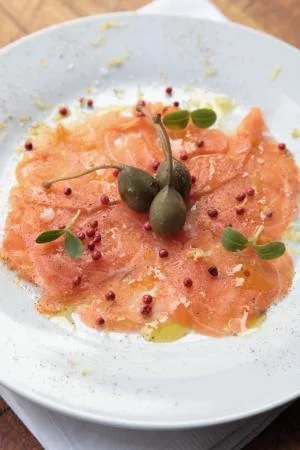
A Scandinavian-inspired cold starter of finely sliced salmon dressed with Arbequina olive oil, lemon, caperberries and pink pepper. Briefly chilling the fish makes it easier to slice thinly, and the fresh, herbal finish suits a summer lunch or festive meal.
Ingredients
- 160 gsalmon fillet
- 12caperberries
- 12 sprigsborage cress
- 1lemon
- 120 mlArbequina olive oil
- 1 tsp (5 ml)pink peppercorns
- to tastecoarse sea salt
- to tasteblack pepper
Instructions
- 1
Chill and slice
Briefly freeze the salmon until firm enough to slice easily. Use a slicing knife to cut it into the thinnest slices you can, arranging them straight away on a chilled plate. Drizzle with olive oil and season with coarse sea salt and black pepper.
- 2
Finish and serve
Arrange the caperberries over the middle of the salmon and scatter over the pink peppercorns. Finish with lemon zest and a few borage or watercress leaves, then serve with toast.
What is salmon carpaccio?
Carpaccio is a dish of very thinly sliced ingredients, often served raw with a simple dressing. This version pairs salmon with citrus, olive oil and caperberries for a fresh, savoury starter.
The Scandinavian-inspired combination keeps the fish at the centre, while the pepper, herbs and lemon add contrast. Its short preparation makes it well suited to a meal where you want an elegant first course without cooking.
Nutrition and macros by portion
The nutrition label shows one serving as written: 455 calories, 10g protein, 2g carbs, 46g fat.
| Portion | Adjustment | kcal | Protein | Carbs | Fat |
|---|---|---|---|---|---|
| Lighter | Use less olive oil | 319 kcal | 7g | 1g | 32g |
| This serving | As written | 455 kcal | 10g | 2g | 46g |
| Hungry | Add more toast | 683 kcal | 15g | 3g | 69g |
The salmon supplies most of the protein, while the generous olive oil contributes most of the fat and energy. The fish and any toast provide the main carbohydrates, with the lemon and caperberries adding only small amounts; serve with a leafy salad and a modest amount of toast for a more balanced plate.
Choosing the fish and oil
Salmon: Use very fresh, good-quality fish intended to be eaten raw. Ask your fishmonger for advice on suitability and safe handling, and keep it chilled until you are ready to prepare it.
Olive oil: Arbequina oil is mild and smooth, so it complements rather than overwhelms the salmon. Drizzle it over the slices just before serving for a glossy finish.
Getting thin slices
Firm fish: A short spell in the freezer firms the salmon enough to make slicing easier. It should be firm, not frozen solid; the time needed depends on the thickness of the fillet and your freezer.
Sharp knife: Use a long, sharp slicing knife and draw it through the fish in steady strokes. Arrange each slice on a cold plate as you go, so the delicate pieces stay neat.
Balancing the finish
Caperberries: Their briny, tangy flavour offsets the richness of the salmon and oil. Place them in the centre as directed, or cut larger ones in half for easier eating.
Citrus and herbs: Finely grate the lemon zest over the dish for fragrance without adding too much juice. Borage cress gives a gentle herbal note; watercress is a suitable alternative with a more peppery character.
Serving and timing
Prepare the garnish while the salmon firms in the freezer, then slice and dress the fish close to serving time. The recipe takes about 10 minutes in total, although the brief freezing time can vary.
Serve the carpaccio cold with crisp toast, which gives the soft fish a crunchy contrast. Keep the toast separate until serving so it stays crisp.
Recipe notes & tips
- Chill the serving plate before arranging the salmon.
- Use a sharp slicing knife for cleaner, thinner pieces.
- Grate only the yellow outer zest of the lemon, avoiding the bitter white pith.
- Taste a caperberry before seasoning, as its brininess can affect how much salt the dish needs.
- Add the herbs just before serving to keep them fresh-looking.
Variations
- Use watercress: Swap in watercress leaves for a sharper, peppery herbal finish.
- Add lemon juice: Squeeze a little over the fish at the table for a brighter, tangier plate.
- Change the pepper: Use freshly cracked black pepper in place of pink peppercorns for a more direct heat.
- Serve with rye toast: Choose thin, crisp rye toast for a deeper, savoury accompaniment.
- Use capers: Replace the caperberries with a smaller scattering of capers for a more concentrated briny accent.
Common mistakes to avoid
- Freezing the fish solid: It becomes difficult to slice neatly; freeze only until the fillet is firm enough to handle.
- Using a blunt knife: It can tear the salmon; sharpen the blade and slice with steady strokes.
- Slicing too far ahead: The delicate pieces can lose their fresh appearance; cut and dress the fish shortly before serving.
- Over-seasoning: Caperberries are already briny; taste them before adding the coarse salt.
- Adding too much lemon pith: It can taste bitter; zest lightly and avoid the white layer beneath the peel.
How to store
This dish is best assembled and eaten immediately. Keep any undressed salmon covered and refrigerated, following the fishmonger’s guidance for raw fish; do not keep leftovers at room temperature.
Frequently asked questions
Can I prepare the salmon ahead of time?
You can briefly firm the fish in the freezer shortly before slicing, but it is best to slice and dress it close to serving. Keep it chilled throughout preparation.
Can I use watercress instead of borage cress?
Yes. The recipe allows either; watercress has a more pronounced peppery flavour.
How thin should the salmon slices be?
Aim for wafer-thin slices that are easy to arrange on the plate. Briefly firming the salmon first makes this easier.
Can I use a different olive oil?
Yes. Choose a good-quality, mild olive oil so the flavour does not overpower the fish.
What should I serve with salmon carpaccio?
Crisp toast is the suggested accompaniment. A simple leafy salad also works well alongside it.
Is this dish cooked?
No. The salmon is served raw; briefly freezing it in this recipe is to firm it for slicing, not a cooking step. Use fish suitable for raw consumption and follow safe handling advice.
Cook it from the original
This recipe comes from njam.tv. Their page has the author’s own photos, notes and tips — the best place to cook it from.
Open the recipe on njam.tv