
Alsatian tartine
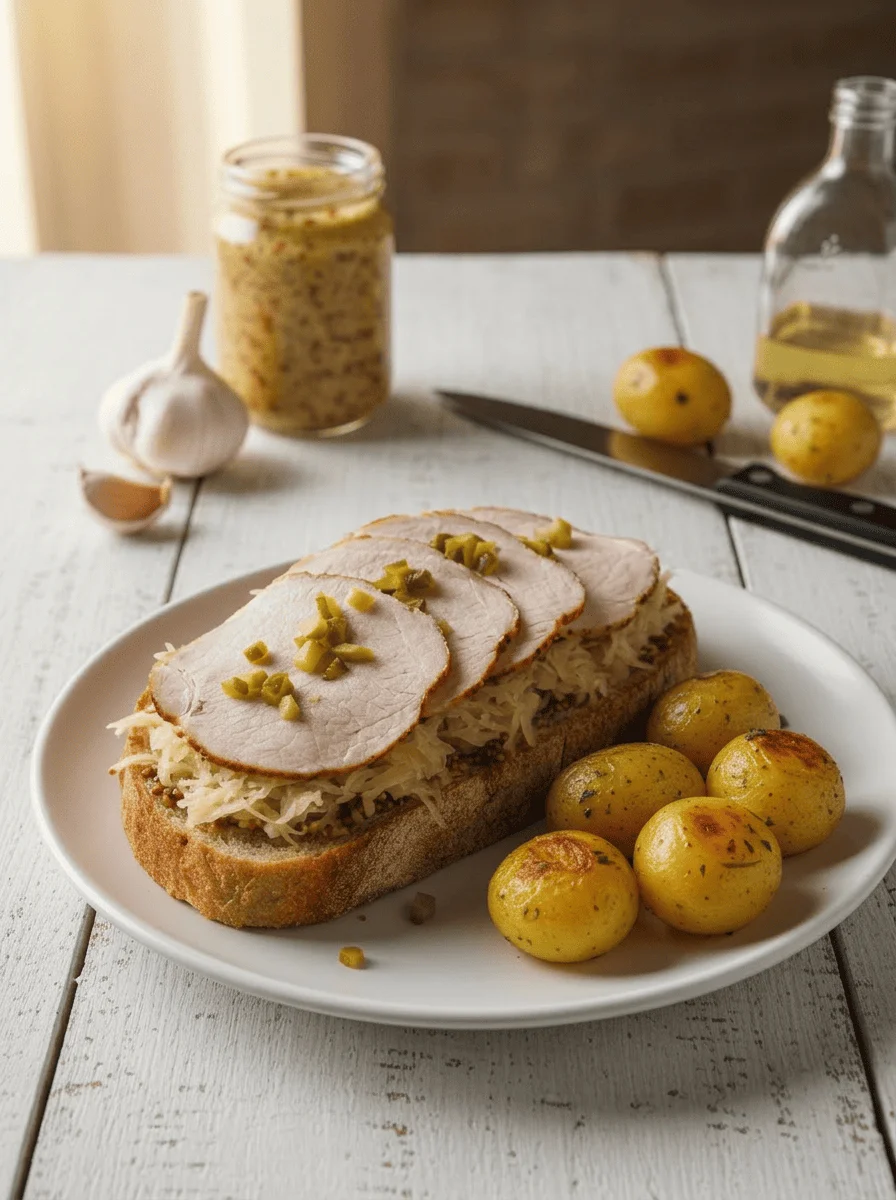
This Alsatian tartine layers homemade rye bread with mustard cream, sauerkraut, roast pork and gherkins, with warm new potatoes on the side. It makes a hearty meal with a tangy, creamy topping and plenty of contrasting textures.
Ingredients
- 500 grye bread flour
- 375 mlwater
- 1½ tspsalt
- 1 sachetdried baker’s yeast
- 200 gcooked roast pork
- 150 gsauerkraut
- 200 gthick crème fraîche
- 3 tbspwholegrain mustard
- 6gherkins
- 8new potatoes
Instructions
- 1
Make the bread
For a bread machine, add the cold water, salt, flour and yeast to the pan in that order, then run the wholemeal bread programme. To make the dough by hand, mix the flour and salt in a large bowl. Make a well, add the yeast and gradually pour in the warm water. Mix with a wooden spoon, then knead for 6 minutes until smooth and pliable. Cover with a clean tea towel and leave in a warm place for 30 minutes. Turn the dough onto a floured work surface, flatten it into a square and fold the corners into the centre. Shape into a ball, place on a lightly oiled baking tray, cover and leave to rise for 40 minutes. Preheat the oven to 240°C 15 minutes before the end of the rise. Slash the top, dust with a little flour and bake at 220°C for 35 minutes with a small ovenproof dish of water in the oven. Leave the loaf to cool for 2 hours before cutting 4 thick slices.
- 2
Prepare toppings
Boil the potatoes in their skins for 15–20 minutes; they should remain firm. In a bowl, mix the crème fraîche with the wholegrain mustard and a little pepper. Drain the sauerkraut well, roughly chop it and mix it with 3 tablespoons of the mustard cream. Thinly slice the roast pork and cut the gherkins into rounds.
- 3
Assemble tartines
Spread the sauerkraut mixture over the 4 slices of rye bread. Arrange the thin slices of roast pork on top, followed by a few gherkin rounds.
- 4
Serve with potatoes
Serve the tartines with the potatoes while they are still warm, and put the remaining mustard cream alongside.
What is an Alsatian tartine?
A tartine is an open-faced sandwich: a slice of bread topped with savoury ingredients. This version takes its cues from Alsace in eastern France, pairing rye bread with sauerkraut, pork and mustard.
The combination works because the pork and crème fraîche bring richness, while sauerkraut and gherkins add a sharp, salty contrast. Warm new potatoes turn the tartines into a filling meal.
Nutrition and macros by portion
The nutrition label shows one serving as written: 825 calories, 29g protein, 119g carbs, 24g fat.
| Portion | Adjustment | kcal | Protein | Carbs | Fat |
|---|---|---|---|---|---|
| Lighter | Use less mustard cream | 578 kcal | 20g | 83g | 17g |
| This serving | As written | 825 kcal | 29g | 119g | 24g |
| Hungry | Add another tartine | 1238 kcal | 44g | 179g | 36g |
The rye bread and potatoes provide most of the carbohydrates, while crème fraîche contributes much of the fat. Roast pork supplies most of the protein, with smaller amounts from the bread and dairy; serve with a generous side of vegetables if you want a more balanced plate.
The rye bread base
Flour and yeast: the recipe makes the rye loaf from scratch, using a bread machine or the hand method. The hand method includes kneading, rising and cooling before the loaf is sliced.
Thick slices: cut four substantial slices once the loaf has cooled for 2 hours. A well-cooled loaf is easier to slice neatly and gives the toppings a sturdy base.
Balancing the mustard cream
Mustard and crème fraîche: stirring them together makes a creamy, tangy sauce for both the sauerkraut and the finished meal. The method seasons it with a little pepper.
Sauerkraut: drain it thoroughly and chop it roughly before mixing in 3 tablespoons of the sauce. This helps keep the bread from becoming soggy and spreads the flavour through the topping.
Keeping the potatoes firm
Boiling: cook the potatoes in their skins for 15–20 minutes, as directed. Start checking towards the shorter end of that range so they do not become too soft.
Doneness: they should be tender enough to eat but still firm. Keeping the skins on during cooking helps the potatoes hold their shape.
Building each tartine
Sauerkraut first: spread the creamy mixture over the bread, then add the thinly sliced pork. This order keeps the pork visible and makes the topping easier to portion.
Gherkins last: scatter the rounds over the pork just before serving. Their sharpness lifts the richer cream and meat.
Planning the timing
The listed total time is 35 minutes, but the hand-made bread method also specifies 30 minutes of resting, 40 minutes of rising, 35 minutes of baking and 2 hours of cooling. Allow for those stages if following that method from scratch.
Bread machine option: the recipe gives a wholemeal bread programme as an alternative for mixing and baking the loaf. Once the bread is ready and cool, the toppings and potatoes are prepared separately.
What to serve alongside
New potatoes: serve them warm beside the tartines, with the remaining mustard cream on the side. Their mild flavour balances the sauerkraut and gherkins.
Portioning: divide the toppings across the four bread slices, then serve two potatoes per person if the potatoes are similar in size.
Recipe notes & tips
- Drain the sauerkraut well so excess liquid does not soften the bread.
- Slice the cooked pork thinly so it is easy to eat on the tartines.
- Let the loaf cool for the full 2 hours before slicing, as the method specifies.
- Keep the potatoes in their skins while boiling to help them stay intact.
- Set aside the remaining mustard cream to serve at the table.
Variations
- Use leftover pork: thinly slice cooked roast pork that you already have.
- Adjust the mustard: use a little less wholegrain mustard for a milder cream.
- Add fresh herbs: scatter chopped parsley over the tartines just before serving.
- Serve extra sauerkraut: offer some on the side for a sharper, more cabbage-forward plate.
Common mistakes to avoid
- Wet sauerkraut: drain it thoroughly before mixing it with the cream to avoid a soggy topping.
- Overcooked potatoes: check them between 15 and 20 minutes so they stay firm.
- Warm bread slicing: wait for the full 2-hour cooling period for cleaner slices.
- Too much topping: spread the mixture evenly over the four slices so each tartine is manageable.
- Skipping the rise: when making the dough by hand, allow the stated 30-minute rest and 40-minute rise.
How to store
Store leftover toppings and potatoes separately in covered containers in the fridge and use within 3 days. Reheat the potatoes until hot; assemble the tartines just before serving, as topped bread can become soggy in storage.
Frequently asked questions
Can I use shop-bought rye bread?
Yes. The method makes a rye loaf from scratch, but ready-made rye bread can be used to assemble the tartines. The recipe calls for four slices.
Can I prepare the bread dough by hand?
Yes. Mix and knead it for 6 minutes, leave it for 30 minutes, shape it and then let it rise for 40 minutes before baking.
How do I know when the potatoes are done?
They cook for 15–20 minutes and should be cooked through but still firm. Check them during that window to avoid overcooking.
Can I make the mustard cream ahead?
You can mix the crème fraîche and mustard ahead and refrigerate it. Keep some aside for serving, and mix 3 tablespoons into the drained sauerkraut as directed.
Why is the bread cooled for 2 hours?
The method specifies this cooling time before slicing. It helps the loaf firm up enough to cut into four thick slices.
Can I serve the tartines cold?
The method serves them with the potatoes still warm. The tartines can be eaten at room temperature, but warm potatoes and freshly assembled toppings best follow the recipe.
Cook it from the original
This recipe comes from francine.com. Their page has the author’s own photos, notes and tips — the best place to cook it from.
Open the recipe on francine.com