
Fudge
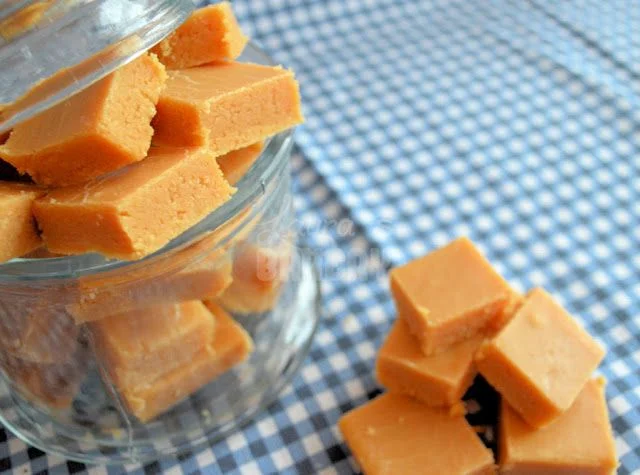
This simple homemade fudge is made by boiling sugar, butter and condensed milk, then beating in vanilla until the mixture thickens. Cut it into small squares for an easy sweet treat to share.
Ingredients
- 250 gcaster sugar
- 50 gunsalted butter
- 100 mlcondensed milk
- 1 tbspvanilla extract
Instructions
- 1
Prepare the tin
Grease a 20 × 20 cm baking tin and line it with baking paper, ready for the fudge.
- 2
Cook the mixture
Put the sugar, butter and condensed milk in a saucepan and bring to the boil. Cook over a low heat, stirring from time to time, until a sugar thermometer reads 115°C; this should take 5–10 minutes. Without a thermometer, drop a little mixture into iced water: it is ready if it holds its shape.
- 3
Beat in vanilla
Take the pan off the heat, beat in the vanilla and continue beating until the fudge visibly thickens. Pour it into the prepared tin and leave it to cool.
- 4
Cut into squares
Once the fudge has cooled, cut it into squares.
What is fudge?
Fudge is a rich, sweet confection made by cooking sugar with dairy until it sets into a soft, sliceable block. It is associated with British and American sweet-making traditions, though versions vary widely.
This straightforward version uses condensed milk to bring the mixture together, with vanilla for flavour. Cooking to the right temperature and beating as it cools are the keys to its texture.
Nutrition and macros by portion
The nutrition label shows one serving as written: 70 calories, 0g protein, 15g carbs, 2g fat.
| Portion | Adjustment | kcal | Protein | Carbs | Fat |
|---|---|---|---|---|---|
| Lighter | Cut smaller squares | 49 kcal | 0g | 11g | 1g |
| This serving | As written | 70 kcal | 0g | 15g | 2g |
| Hungry | Serve two squares | 105 kcal | 1g | 23g | 3g |
Most of the carbohydrates come from the sugar and condensed milk; the butter and condensed milk provide most of the fat, with only a little protein from the milk. Serve a square with fresh fruit or alongside a meal that includes vegetables and a source of protein for a more balanced plate.
The ingredients that matter
Condensed milk: its concentrated sweetness and creamy consistency help form the fudge. Use condensed milk, not evaporated milk, which has a thinner texture and is not sweetened in the same way.
Sugar and butter: these make up the base of the mixture. Measure them accurately so the balance stays consistent.
Getting the temperature right
Thermometer: cook the mixture until it reaches 115°C, keeping the thermometer tip in the mixture without touching the pan base. This temperature helps the fudge set once cooled.
Iced water: if you do not have a thermometer, drop a small amount of the mixture into iced water. It should hold its shape; handle the hot mixture carefully.
Beat until it thickens
After taking the pan off the heat, stir in the vanilla and keep beating until the mixture looks noticeably thicker. This change in texture is the cue to pour it into the tin.
Work steadily at this stage, as the mixture will become harder to pour as it cools and thickens.
Cooling and cutting
Let the fudge cool fully in the lined tin before slicing, so the squares can hold their shape. A sharp knife makes cleaner cuts; wipe it between slices if the fudge sticks.
How to serve it
Serve small squares with tea or coffee, or add them to a mixed sweet platter. Because the fudge is rich, small pieces are often enough alongside fruit or another lighter snack.
Recipe notes & tips
- Line the tin with baking paper so the set fudge is easier to lift out.
- Use a heavy-based saucepan to help the mixture heat more evenly.
- Keep the heat low after the mixture comes to the boil and stir occasionally.
- Use a thermometer if you have one for a clear temperature cue.
- Beat the mixture until visibly thicker before pouring it into the tin.
Variations
- Chocolate: stir in chopped chocolate after taking the pan off the heat.
- Chopped nuts: fold in toasted nuts just before pouring the fudge into the tin.
- Sea salt: sprinkle a little flaky salt over the surface before it sets.
- Coffee: add a small amount of strong instant coffee with the vanilla.
- Dried fruit: mix in chopped dried fruit after beating the fudge until thick.
Common mistakes to avoid
- Guessing the cooking stage: use a thermometer at 115°C or check that a drop in iced water holds its shape.
- Cooking too quickly: high heat can make the mixture catch; keep it at a low boil.
- Skipping the lining: grease and line the tin so the fudge releases more easily.
- Pouring too late: transfer the mixture when it has thickened but is still pourable.
- Cutting while warm: let the fudge cool fully first so the squares hold together.
How to store
Store the cut fudge in an airtight container in a cool, dry place for up to 2 weeks. Separate layers with baking paper to help prevent sticking; it does not need reheating.
Frequently asked questions
Can I make this without a sugar thermometer?
Yes. Drop a little of the hot mixture into iced water; it should hold its shape. Take care when testing, as the mixture is very hot.
Why has my fudge not set?
It may not have reached the required cooking temperature, or it may need more time to cool. For the next batch, cook to 115°C and allow it to cool fully before cutting.
Why is my fudge grainy?
Sugar crystals can form if the mixture is disturbed too much while boiling. Stir occasionally rather than continuously during cooking.
How long does the fudge take to cool?
The recipe does not specify a cooling time. Leave it until fully cool and firm before cutting.
Can I freeze homemade fudge?
Yes. Wrap it well or store it in an airtight freezer-safe container. Thaw it while still wrapped to limit condensation on the surface.
Cook it from the original
This recipe comes from laurasbakery.nl. Their page has the author’s own photos, notes and tips — the best place to cook it from.
Open the recipe on laurasbakery.nl