
Sachertorte
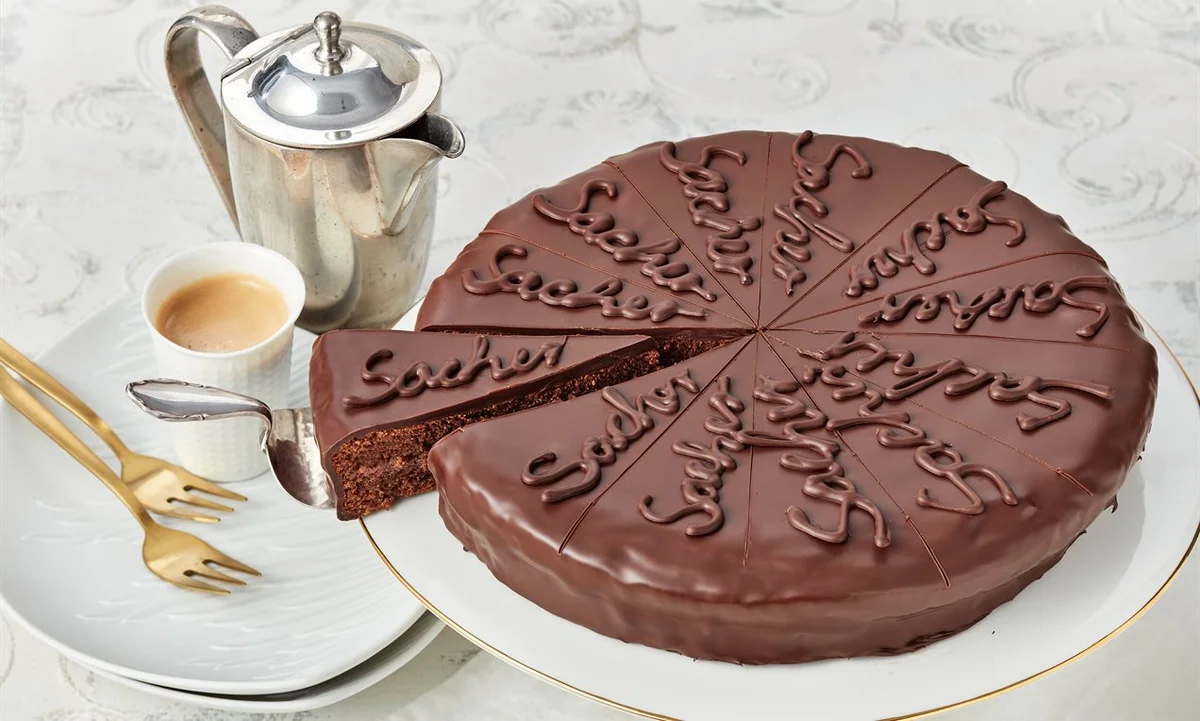
Sachertorte is a rich chocolate cake layered with apricot jam and finished with a smooth chocolate glaze. It makes a special-occasion dessert, with a pleasantly fruity centre balancing the deep chocolate flavour.
Ingredients
- 150 gdark chocolate
- 6 egg whites (medium)egg whites
- 160 gsoft butter or margarine
- 160 gsugar
- 1 sachetvanilla sugar
- 6 egg yolks (medium)egg yolks
- 100 gbreadcrumbs
- 125 gapricot jam
- 90 gsugar
- 125 mlwater
- 300 gdark chocolate
- 50 gdark chocolate
Instructions
- 1
Prepare the tin
Roughly chop 150 g of chocolate and melt it in a heatproof bowl over a gently simmering water bath. Line a springform tin with baking parchment and preheat the oven; the source recipe does not specify a temperature.
- 2
Mix the batter
Whisk the egg whites until very stiff. In a mixing bowl, beat the butter or margarine until smooth. Gradually beat in 160 g sugar and the vanilla sugar until combined, then add the egg yolks one at a time, mixing on high speed. Stir in the melted chocolate and breadcrumbs on medium speed, then gently fold in the egg whites. Transfer the batter to the prepared tin and level the surface. Bake on the oven rack; the source recipe does not give a baking time or temperature.
- 3
Cool the cake
Remove the cake from the tin and turn it out onto a wire rack lined with baking parchment. Leave it to cool.
- 4
Fill with jam
Carefully peel away the parchment that baked against the cake. Slice the cake horizontally into two layers. Spread the apricot jam over the bottom layer, then place the top layer on it.
- 5
Make the glaze
Heat 90 g sugar with 125 ml water in a saucepan until the sugar dissolves. Remove the pan from the heat. Roughly chop 300 g chocolate and gradually stir it into the syrup until melted and glossy. Pour the glaze into the centre of the cake, then gently move the cake so it flows over the top and sides. Tap the cake lightly on its serving plate to even the surface, then leave the glaze to set.
- 6
Add the writing
Melt 50 g chocolate in a bowl over a water bath. Mark the cake into 12 portions. Put the melted chocolate into a paper piping cone or a small freezer bag, snip off a small corner and write “Sacher” on each portion. Chill the cake until serving.
What is Sachertorte?
Sachertorte is an Austrian chocolate cake traditionally finished with apricot jam and a smooth chocolate coating. This version layers jam inside the cake and adds a chocolate inscription to each of its 12 portions.
The contrast is what makes it work: a substantial chocolate sponge meets bright, fruity jam and a firm glaze. Allowing the cake to cool before filling helps the layers stay neat.
Nutrition and macros by portion
The nutrition label shows one serving as written: 495 calories, 8g protein, 52g carbs, 28g fat.
| Portion | Adjustment | kcal | Protein | Carbs | Fat |
|---|---|---|---|---|---|
| Lighter | Smaller slice, more fruit | 347 kcal | 6g | 36g | 20g |
| This serving | As written | 495 kcal | 8g | 52g | 28g |
| Hungry | Larger slice | 743 kcal | 12g | 78g | 42g |
Chocolate, butter and egg yolks contribute much of the fat, while the sugar, breadcrumbs and jam provide most of the carbohydrates. Eggs, chocolate and breadcrumbs also contribute protein. Serve a slice with fresh fruit, or alongside a lighter meal, to balance the rich cake.
Choosing the chocolate
Sponge chocolate: use dark chocolate and melt it gently, so it blends smoothly into the butter-and-yolk mixture. Let it cool slightly before mixing in, rather than adding it piping hot.
Glaze chocolate: the larger quantity is stirred into sugar syrup off the heat. Chop it fairly evenly so it melts without leaving lumps.
Keeping the sponge light
Stiff whites: whisk the egg whites until they hold their shape. Fold them in carefully with a broad spatula, using slow strokes so the batter keeps as much air as possible.
Breadcrumbs: these join the melted chocolate in the batter and give the cake its characteristic texture. Mix them in on medium speed before folding in the whites.
Layering without crumbling
Cool completely: the recipe calls for the cake to cool before you remove the parchment and cut it horizontally. A warm sponge is more likely to tear or crumble as you separate the layers.
Spread evenly: cover the bottom layer with apricot jam, taking it close to the edge without pressing hard. Set the top layer down gently to keep the cake level.
Getting a glossy coating
Dissolve the sugar: heat the sugar and water until no sugar remains visible, then take the pan off the heat before adding the chopped chocolate. Stir until the mixture looks smooth and glossy.
Let it flow: pour the glaze into the middle and move the cake gently so it reaches the edges and runs down the sides. A light tap on the serving plate helps settle the coating into an even layer.
Timing and serving
The stated total time is 110 minutes, but the method does not give an oven temperature or baking duration. Follow the baking guidance supplied with your tin or oven, and use the cake’s doneness rather than an invented timing.
Serve the cake in 12 portions once the glaze has set. A little unsweetened whipped cream or fresh fruit can make a pleasant accompaniment.
Recipe notes & tips
- Use a clean bowl and beaters for the egg whites so they whip to a firm foam.
- Chop the chocolate finely for more even melting.
- Fold the whites in gently rather than beating them into the batter.
- Wait until the cake is fully cool before slicing it into layers.
- Pour the glaze in one go and move the cake gently to cover the sides.
- Chill the finished cake until the glaze is set before cutting.
Variations
- Add orange: spread a thin layer of orange marmalade alongside the apricot jam.
- Use a different preserve: swap in smooth raspberry jam for a sharper fruit note.
- Make it dairy-free: use a suitable dairy-free baking block instead of butter, and check the chocolate labels.
- Skip the inscription: leave the top plain for a simple glazed finish.
- Add cream: serve each slice with unsweetened whipped cream.
Common mistakes to avoid
- Overheating the chocolate: it can become grainy; melt it gently over barely simmering water.
- Adding hot chocolate: it can affect the batter; let it cool slightly before mixing it in.
- Deflating the egg whites: vigorous stirring loses their air; fold them through gently.
- Cutting the cake warm: the layers may crumble; cool it completely before slicing.
- Pouring glaze that is too thick: it may not cover the sides; stir until the chocolate has melted and the glaze flows smoothly.
- Moving the cake roughly: the sponge or coating can shift; use gentle movements to spread the glaze.
How to store
Keep the cake covered in the refrigerator for up to 3 days. Bring slices towards room temperature before serving; avoid reheating, as it can soften the glaze.
Frequently asked questions
What size springform tin should I use?
The source recipe does not specify a tin size. Use a springform tin suited to the quantity of batter and follow its baking guidance.
What oven temperature and baking time should I use?
Neither is stated in the supplied method. Check the original publisher’s recipe or use reliable guidance for your tin and oven rather than guessing.
How can I tell when the cake has cooled enough to fill?
It should be completely cool to the touch before you peel off the parchment and slice it. If it is still warm, the layers are more likely to break.
Can I make Sachertorte ahead?
Yes. Once the glaze has set, cover and refrigerate it, then serve within 3 days for the best texture.
Why is my chocolate glaze not glossy?
Make sure the sugar has dissolved in the water and that the chocolate melts fully after the pan is removed from the heat. Stir steadily until the mixture is smooth.
Can I use margarine instead of butter?
Yes. The recipe lists soft butter or margarine as alternatives for the sponge.
Cook it from the original
This recipe comes from oetker.de. Their page has the author’s own photos, notes and tips — the best place to cook it from.
Open the recipe on oetker.de