
Ghana Sugar Bread Rolls
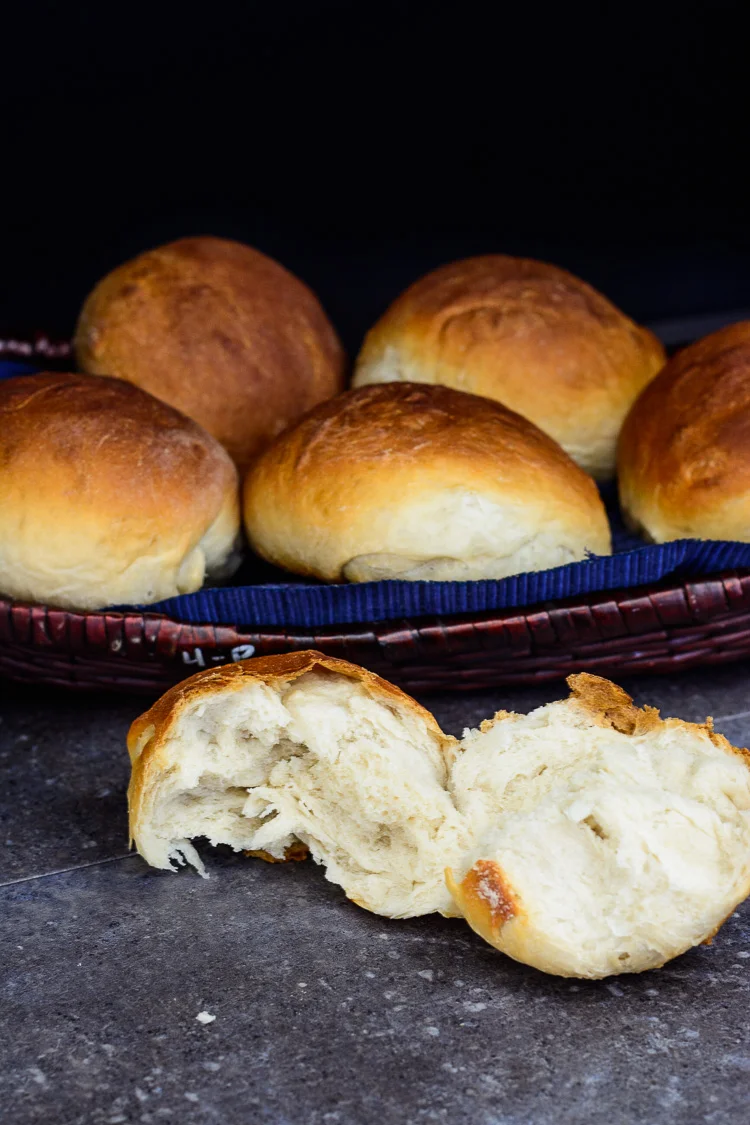
Ghana sugar bread rolls are sweet, dense and chewy, with a soft crumb and a lightly browned crust. Make them when you want a simple, satisfying bread to serve for breakfast or alongside a cup of tea.
Ingredients
- 390 g (2⅔ cups)bread flour
- ½ cup (about 100 g)sugar
- ¾ cup (about 90 g)scalded flour
- 2¼ tsp (1 sachet, about 7 g)active dry yeast
- 1 tspsalt
- ⅛ tspascorbic acid
- 240 ml (1 cup)warm water
- 1 tspsugar, for activating the yeast
- A littlevegetable oil, for greasing the bowl
Instructions
- 1
Activate the yeast
Put 240 ml (1 cup) of warm water, between 40.5°C and 46°C (105°F and 115°F), in a small bowl. Whisk in 1 tsp of sugar and the yeast until dissolved, then leave for 10 minutes.
- 2
Check the yeast
After 10 minutes, look for a foamy mixture with bubbles. If it has not bubbled, the yeast may be inactive; discard the mixture and start again with fresh yeast.
- 3
Mix and knead
Combine the bread flour, sugar, salt and ascorbic acid in a mixing bowl. Add the scalded flour and activated yeast, then knead for 15 minutes, until the dough feels smooth and is not sticky.
- 4
Let dough rise
Lightly grease a bowl with vegetable oil and place the dough inside. Cover it and leave in a warm place until doubled in size, usually about 1 hour.
- 5
Knead again
Turn the doubled dough onto a clean work surface and knead it for 5 minutes.
- 6
Heat the oven
Preheat the oven to 177°C (350°F).
- 7
Shape and prove
Divide the dough into 6 even balls and place them in a baking pan. Cover with plastic wrap and leave to rise until doubled in size.
- 8
Bake the rolls
Bake in the preheated oven for 30–35 minutes. Let the bread cool for at least 5 minutes before serving.
What is Ghana sugar bread?
Ghana sugar bread, also called sweet bread, is a Ghanaian bread known for its sweet flavour and close, chewy texture. It can be shaped as a loaf or as individual rolls.
This version makes six rolls, so they are easy to portion and serve warm or cooled. The combination of sugar and a firm, well-kneaded dough gives them their characteristic hearty bite.
Nutrition and macros by portion
The nutrition label shows one serving as written: 346 calories, 9g protein, 69g carbs, 1g fat.
| Portion | Adjustment | kcal | Protein | Carbs | Fat |
|---|---|---|---|---|---|
| Lighter | Serve a smaller roll | 242 kcal | 6g | 48g | 1g |
| This serving | As written | 346 kcal | 9g | 69g | 1g |
| Hungry | Serve two rolls | 519 kcal | 14g | 103g | 2g |
Most of the carbohydrates come from the bread flour and sugar, while the flour also supplies much of the protein. The recipe contains very little added fat apart from the small amount of oil used to grease the bowl. Pair a roll with eggs or another protein-rich savoury food for a more balanced plate.
The flour and dough
Bread flour: its higher gluten-forming potential helps the dough develop structure during kneading. The recipe also calls for scalded flour; use it as specified rather than substituting another ingredient.
Kneading: work the dough for the full 15 minutes, aiming for a smooth surface and a dough that is no longer sticky. The second, shorter knead follows the first rise.
Getting the yeast started
Warm water: keep it within the recipe’s 40.5–46°C range so it is warm enough to activate the yeast without being too hot.
Foam: after 10 minutes, bubbles and foam are signs that the yeast has activated. If the mixture stays flat, follow the recipe and start over with fresh yeast.
Rising and shaping
First rise: cover the lightly oiled bowl and leave the dough somewhere warm until it has doubled, usually about 1 hour. Judge it by its size rather than the clock alone.
Even rolls: divide the dough into six similarly sized balls so they rise and bake at a similar pace. Cover the pan for the second rise and wait until the balls have doubled.
Baking and doneness
Oven temperature: preheat to 177°C before baking so the rolls go into an already hot oven. Bake for 30–35 minutes as directed.
Cooling: let the baked rolls rest for at least 5 minutes before serving. This brief pause makes them easier to handle straight from the pan.
How to serve the rolls
Serve a roll on its own or with tea for a simple snack or breakfast. For a fuller plate, pair it with eggs or another savoury accompaniment.
The rolls are also handy alongside soup or a savoury stew, where their sweetness contrasts with savoury flavours.
Recipe notes & tips
- Measure the warm water with a thermometer if you are unsure whether it is within the stated range.
- Give the dough enough time to double during each rise, even if that takes longer than expected.
- Knead on a clean surface and avoid adding extra flour unless the dough is genuinely difficult to handle.
- Divide the dough as evenly as possible so the six rolls bake at a similar rate.
- Start checking the rolls at 30 minutes, within the recipe’s stated baking window.
Variations
- Serve with butter: split a roll and spread it while still warm.
- Add a savoury side: serve with eggs for a contrast to the sweet bread.
- Make a loaf: shape the dough as one loaf instead, allowing for a different baking time and checking for doneness.
- Serve with soup: use the rolls alongside a savoury soup or stew.
- Enjoy plain: serve the rolls without toppings to focus on their sweet, chewy crumb.
Common mistakes to avoid
- Water too hot: keep it between 40.5°C and 46°C so it does not hinder yeast activation.
- Inactive yeast: if the mixture has not foamed after 10 minutes, discard it and repeat with fresh yeast.
- Under-kneading: knead for the full 15 minutes initially, until the dough feels smooth and is not sticky.
- Rushing the first rise: wait until the dough has doubled rather than relying only on the usual 1-hour estimate.
- Uneven shaping: make the six dough balls similar in size so they bake more evenly.
- Skipping the second rise: cover the shaped rolls and wait until they have doubled before baking.
How to store
Store cooled rolls in an airtight container at room temperature and eat within 2–3 days. Reheat briefly in a low oven or microwave until warmed through.
Frequently asked questions
How do I know whether the yeast is active?
After 10 minutes in the warm water and sugar, it should look foamy and show bubbles. If it remains flat, start again with fresh yeast.
How long should the dough take to rise?
The first rise usually takes about 1 hour, but wait until the dough has doubled. The shaped rolls also need to double, and the recipe does not give a fixed time for that rise.
Can I make the rolls without ascorbic acid?
The recipe includes ⅛ tsp of ascorbic acid. Leaving it out changes the formula, so the result may differ from the intended version.
Can I bake the dough as one loaf?
The method is written for six rolls. A loaf will be thicker and may need a different baking time, so check it carefully rather than assuming the roll timing will apply.
Why are my rolls dense?
A dense result can come from yeast that did not activate or dough that did not rise enough. Check for foam before mixing and allow both rises to reach the stated doubled size.
Can I prepare the dough ahead?
This method specifies room-temperature rises and does not give instructions for an overnight prove. For the most predictable result, follow the rise and bake schedule as written.
Cook it from the original
This recipe comes from yummymedley.com. Their page has the author’s own photos, notes and tips — the best place to cook it from.
Open the recipe on yummymedley.com