
Chewy red bean cakes (nostalgic snack)
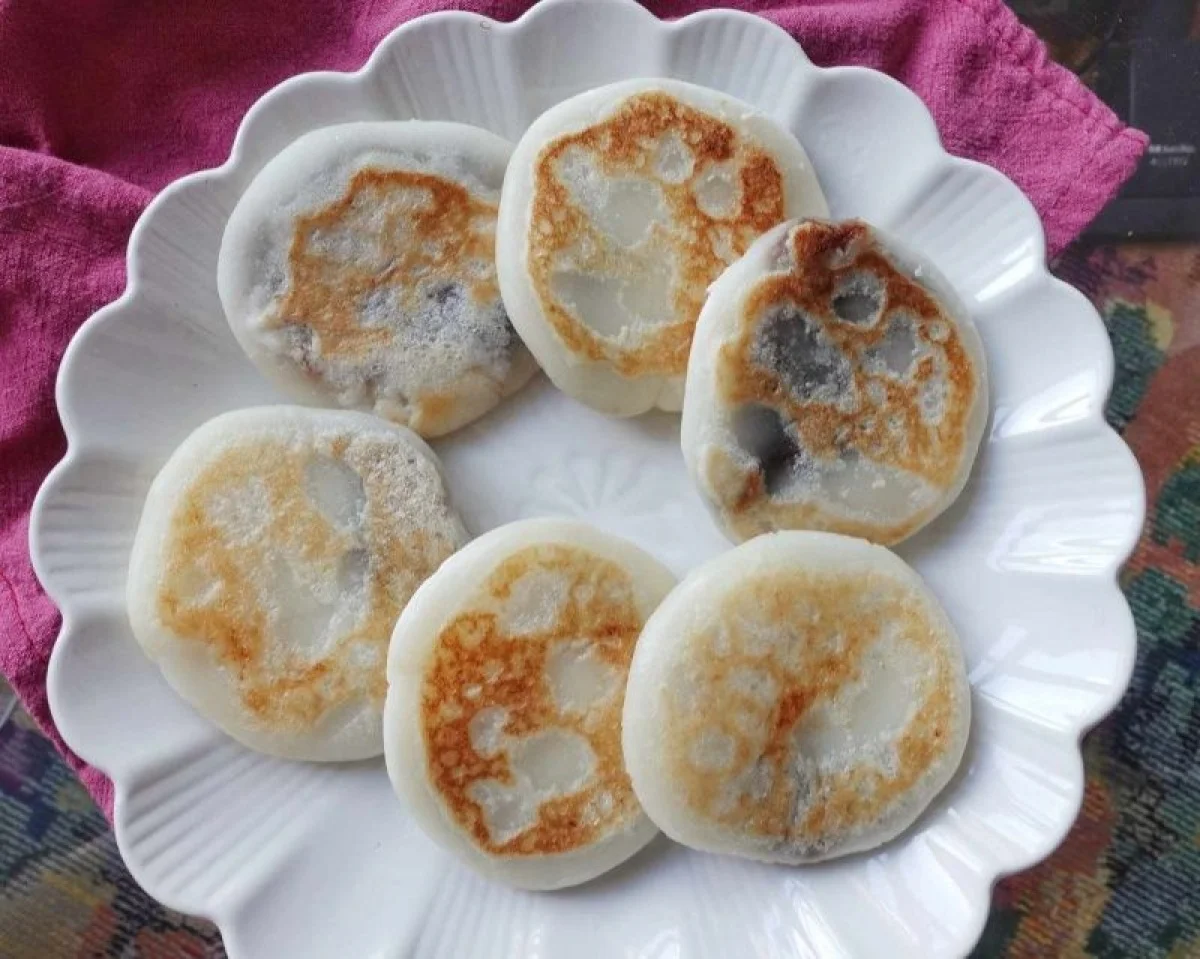
These chewy Chinese-style rice cakes are filled with sweet red bean paste and pan-fried until golden. They make a nostalgic, straightforward snack with a soft, stretchy centre and crisped edges.
Ingredients
- 150 gred bean paste
- 160 gglutinous rice flour
- 145 mlboiling water
- 40 gsugar
- 35 mlvegetable oil
Instructions
- 1
Shape the filling
Divide the red bean paste into 8–10 portions, roll each into a ball and set aside.
- 2
Dissolve the sugar
Stir the sugar into the boiling water until completely dissolved, then add the vegetable oil and mix well.
- 3
Make the dough
Pour the sugary water quickly into the glutinous rice flour, stirring continuously. Knead until it forms a dough; if it seems too dry, add a little water.
- 4
Fill the cakes
Divide the dough into ten portions. Flatten each one, wrap it around a portion of filling, roll into a ball and flatten again.
- 5
Pan-fry until golden
Heat a little oil in a flat frying pan. Fry the cakes over low to medium heat until both sides are golden.
What are chewy red bean cakes?
These are small filled cakes made with glutinous rice flour, giving them a soft, elastic chew rather than a crumbly texture. Sweet red bean paste provides the centre.
This version keeps the ingredients simple and cooks the cakes in a frying pan, making the nostalgic snack easy to prepare at home.
Nutrition and macros by portion
The nutrition label shows one serving as written: 402 calories, 7g protein, 72g carbs, 11g fat.
| Portion | Adjustment | kcal | Protein | Carbs | Fat |
|---|---|---|---|---|---|
| Lighter | Use less oil | 281 kcal | 5g | 50g | 8g |
| This serving | As written | 402 kcal | 7g | 72g | 11g |
| Hungry | Serve an extra cake | 603 kcal | 10g | 108g | 16g |
The glutinous rice flour supplies most of the carbohydrates, while the vegetable oil contributes most of the fat; the red bean paste adds some protein and carbohydrate. Pair a cake with fresh fruit or another unsweetened side to round out the snack.
The dough’s key ingredients
Glutinous rice flour: this is what gives the cakes their characteristic chewy texture; ordinary rice flour will not behave in the same way.
Sugar water: dissolving the sugar in boiling water before mixing it into the flour helps distribute the sweetness through the dough. Add it quickly while stirring, as directed.
Getting the filling inside
Red bean paste: shape it into 8–10 balls before handling the dough so the filling is ready to use.
Sealing: flatten a dough portion, enclose a filling ball and roll it smooth before flattening the cake. Keep the filling covered by the dough to help prevent leaks in the pan.
Watch the dough texture
The dough should come together when kneaded. If it feels too dry, the method allows for a little extra water; add it sparingly so the dough does not become difficult to shape.
The cakes are flattened before frying, so aim for an even shape to help both sides cook at a similar rate.
Frying over gentle heat
Use low to medium heat and a little oil in a flat pan. The cakes are ready when both sides have turned golden.
Gentle heat gives the centres time to warm through while the outsides colour. Keep an eye on them as they cook, since the method does not specify an exact frying time.
Serving the cakes
Serve the cakes warm, when their centres are soft and chewy. They can be enjoyed as a snack or as part of a simple dessert spread.
For a more balanced plate, pair a cake with fresh fruit and unsweetened tea rather than adding another sweet side.
Recipe notes & tips
- Divide the red bean paste before starting the dough so the filling is ready when needed.
- Stir continuously as you pour the hot sugar water into the flour.
- If the dough is too dry to bring together, add just a little water at a time.
- Seal the dough around the filling before rolling each cake smooth.
- Keep the pan at low to medium heat and turn the cakes once the first side is golden.
Variations
- Add sesame: sprinkle sesame seeds over the cakes before frying.
- Change the shape: make smaller cakes by dividing the dough into more portions.
- Adjust the filling: use a little less red bean paste in each cake for a thinner centre.
- Serve with fruit: add sliced fresh fruit alongside the warm cakes.
- Try a different oil: use another neutral vegetable oil for frying.
Common mistakes to avoid
- Dry dough: add a little water at a time until it comes together.
- Uneven cakes: flatten each portion to a similar thickness so both sides cook evenly.
- Exposed filling: seal the dough fully around the paste before flattening.
- Heat too high: lower the hob setting so the outsides do not colour too quickly.
- Crowded pan: fry in batches if needed so the cakes can be turned easily.
How to store
These cakes are best eaten freshly cooked. If needed, keep leftovers in an airtight container in the fridge for up to 2 days and reheat gently in a lightly oiled pan until warmed through.
Frequently asked questions
Can I use ordinary rice flour instead of glutinous rice flour?
No, the glutinous rice flour is what gives these cakes their chewy texture. Ordinary rice flour will produce a different result.
How many portions should I make?
The method divides the dough into ten portions and the filling into 8–10. Use similarly sized portions and adjust the amount of filling to suit.
What if my dough feels too dry?
Add a little water and knead again, repeating sparingly until the dough comes together.
How do I know when the cakes are cooked?
Fry them over low to medium heat until both sides are golden, as described in the method.
Can I prepare them ahead?
They are best freshly fried for their soft, chewy texture. You can portion the filling in advance, then make and cook the cakes when ready to serve.
Cook it from the original
This recipe comes from cook1cook.com. Their page has the author’s own photos, notes and tips — the best place to cook it from.
Open the recipe on cook1cook.com