
Yakitori with SAORI® teriyaki sauce
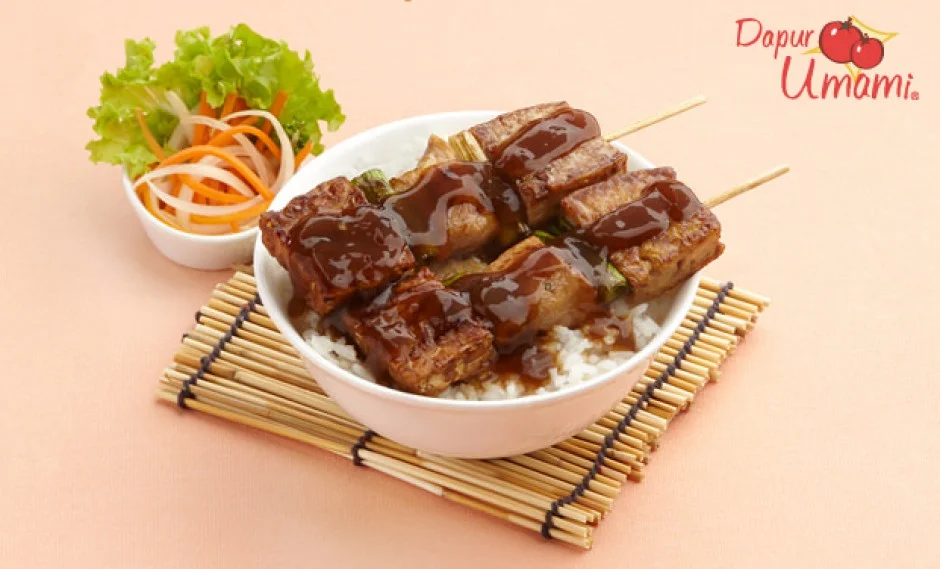
Yakitori-style skewers combine chicken, tempeh, tofu and spring onion with a glossy teriyaki sauce. They make a straightforward grilled meal, served with white rice and extra sauce.
Ingredients
- 100 gchicken fillet
- 100 gtempeh
- 150 gtofu
- 4spring onions
- 30 mlcooking oil
- 2 sachets (100 ml)SAORI® Teriyaki Sauce
- 15 ml, dissolved in 45 ml watercornflour
- as neededaccompaniments
- as neededcooked white rice
Instructions
- 1
Prepare the ingredients
Cut the chicken and tempeh into large cubes. Cut the spring onions into 3 cm pieces and set them aside.
- 2
Assemble the skewers
Put the spring onion, tempeh, chicken and tofu in a bowl with 1 sachet of teriyaki sauce and mix. Thread the ingredients onto skewers in alternating order.
- 3
Grill the skewers
Cook the skewers in a frying pan until done, then remove them. Heat water.
- 4
Thicken the sauce
Add the remaining sachet of teriyaki sauce and bring it to the boil. Stir in the cornflour mixture and cook until the sauce is cooked through and thickened. Serve with the accompaniments and teriyaki sauce.
What is yakitori?
Yakitori is a Japanese style of grilled chicken served on skewers. This version takes a broader approach, alternating chicken with tempeh, tofu and spring onion.
The teriyaki sauce gives the skewers a savoury-sweet glaze, while a second portion is thickened to serve alongside. White rice makes a simple base for the skewers and sauce.
Nutrition and macros by portion
The nutrition label shows one serving as written: 230 calories, 14g protein, 14g carbs, 13g fat.
| Portion | Adjustment | kcal | Protein | Carbs | Fat |
|---|---|---|---|---|---|
| Lighter | Less rice, more vegetables | 161 kcal | 10g | 10g | 9g |
| This serving | As written | 230 kcal | 14g | 14g | 13g |
| Hungry | Larger rice serving | 345 kcal | 21g | 21g | 20g |
Chicken, tempeh and tofu provide most of the protein, while the rice is the main source of carbohydrates. The cooking oil and teriyaki sauce contribute most of the fat, though the sauce and rice quantities for serving are not specified. Balance the plate with a vegetable accompaniment, keeping the amount of rice suited to your meal.
Choosing the ingredients
Chicken: Cut it into large, even cubes so the pieces are easy to thread and cook at a similar pace.
Tempeh and tofu: These bring different textures to the skewers. Handle the tofu gently when threading so it does not break apart.
Spring onion: Cut the stalks into 3 cm lengths, as directed, to make them easy to alternate with the other ingredients.
Threading the skewers
Alternating the chicken, tempeh, tofu and spring onion distributes the different ingredients across each skewer. Leave a little space between pieces rather than packing them tightly, so the pan can heat their surfaces.
Grilling in a frying pan
Cook the skewers in the pan until the chicken is fully cooked and the other ingredients are heated through. Turn them as needed for even contact with the pan; the method does not specify an exact cooking time.
The method also says to heat water after removing the skewers, but does not give an amount or explain how it is used. Keep the sauce step separate and follow the listed sauce and cornflour instructions.
Getting the sauce right
Use one sachet to coat the skewer ingredients before threading, then reserve the other for the serving sauce. Bring the latter to the boil before adding the cornflour mixture.
Add the cornflour dissolved in water and cook until the sauce thickens. Stir as it heats so the mixture is evenly incorporated.
Serving the skewers
Serve the skewers with white rice and the thickened teriyaki sauce. The recipe also lists accompaniments but does not specify which ones, so choose any that suit the meal.
Recipe notes & tips
- Cut the chicken and tempeh into similarly sized cubes for more even cooking.
- Use firm tofu if available, and thread it carefully to help it stay intact.
- Alternate the ingredients along each skewer as the recipe directs.
- Keep the second sachet of sauce for the thickened serving sauce.
- Stir the cornflour mixture before adding it to the hot sauce.
Variations
- Vegetable side: Serve with steamed or stir-fried vegetables as an accompaniment.
- Rice choice: Use brown rice instead of white rice if preferred.
- Softer tofu: Choose a firmer tofu so it is easier to thread onto skewers.
- Pan method: Cook the skewers in batches if they do not fit comfortably in the frying pan.
- Extra spring onion: Add more spring onion to the skewers for a stronger allium flavour.
Common mistakes to avoid
- Uneven pieces: Cut the chicken and tempeh into consistent cubes so they cook at a similar rate.
- Broken tofu: Thread the tofu gently and avoid pushing the skewer through too quickly.
- Crowded pan: Cook the skewers in batches if needed so they can make contact with the pan.
- Sauce lumps: Stir the cornflour into the water until smooth before adding it to the sauce.
- Overcooked chicken: Check that the chicken is cooked through, then take the skewers off the heat.
How to store
Refrigerate leftover skewers and sauce in separate airtight containers for up to 3 days. Reheat until piping hot, adding a little water to the sauce if it has become too thick.
Frequently asked questions
Can I make the skewers without wooden sticks?
Yes. Cook the chicken, tempeh, tofu and spring onion together in the pan, turning the pieces as they cook.
How do I know when the chicken is cooked?
Check the largest chicken piece is cooked through, with no raw-looking centre. Cooking time will vary with the size of the pieces and the heat of the pan.
Can I prepare the skewers ahead?
You can cut and assemble the ingredients ahead and refrigerate them covered. Cook them close to serving time for the best texture.
Why is the cornflour mixed with water first?
Dissolving it in water makes it easier to stir into the sauce smoothly and helps avoid dry lumps.
What should I serve with yakitori?
The recipe specifies white rice and additional accompaniments. Vegetables make a simple side if you want to add one.
Cook it from the original
This recipe comes from dapurumami.com. Their page has the author’s own photos, notes and tips — the best place to cook it from.
Open the recipe on dapurumami.com