
Classic Lancashire Lamb Hot Pot
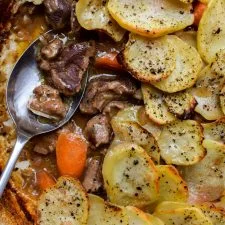
Classic Lancashire lamb hot pot is a slow-baked casserole of browned lamb and carrots in thyme gravy, finished with a layer of sliced potatoes. It makes a warming British supper, with crisp, golden edges on top and tender vegetables underneath.
Ingredients
- 1 generous gluglight oil
- 300 g (10.5 oz)diced stewing lamb
- to tastefreshly ground salt and black pepper
- 1onion
- 1/2 tbspplain flour
- 400 ml (14 oz), made from 1/2 a stock cubechicken or vegetable stock
- 2thyme sprigs
- 1dried bay leaf
- 1 generous shakeWorcestershire sauce
- 2 large (approximately 165 g / 5.5 oz)carrots
- 350 g (12 oz)fist-sized potatoes
- 1 large knob, or as neededbutter or olive oil spray
Instructions
- 1
Brown the lamb
Preheat the oven to 180°C (355°F). Heat the oil in a 2-litre shallow casserole dish or a non-stick frying pan over a medium-high heat. Season the lamb well and brown it gently, then lift it out with a slotted spoon and set aside.
- 2
Soften the onion
While the lamb browns, peel and finely chop the onion. Add it to the pan with a generous few grinds of salt, lower the heat to medium and fry gently for about 10 minutes, until soft and beginning to colour. Add a little oil if it sticks, or a splash of stock if the pan looks at risk of burning rather than simply browning.
- 3
Make the gravy
Stir in the flour and cook for 1 minute, then pour in half the stock. Scrape the browned bits from the pan into the sauce with a wooden spoon or spatula, then stir in the remaining stock, thyme, bay leaf, a generous shake of Worcestershire sauce, the peeled and chunked carrots, and the browned lamb. Season well and bring to the boil. Cover and bake for 30 minutes; if using a frying pan, transfer the mixture to a baking dish and cover it tightly with foil.
- 4
Prepare potatoes
Peel the potatoes and slice them thinly. Set them aside and melt the butter if using it.
- 5
Add potato topping
Take off the casserole lid and remove the thyme sprigs and bay leaf. Stir the lamb mixture, then arrange the potato slices in a spiral over the top. Brush them with melted butter or spritz with oil spray, and season with a little salt and plenty more pepper.
- 6
Bake until golden
Return the casserole to the oven uncovered and bake for a final 40 minutes.
What is Lancashire hot pot?
Lancashire hot pot is a British lamb casserole traditionally topped with sliced potatoes and baked until the filling is tender and the top is browned. This version brings together lamb, carrots and a thyme-scented gravy in a compact two-serving bake.
Browning the lamb and scraping the pan before adding the stock gives the gravy a savoury base, while the potato topping cooks uncovered to develop colour.
Nutrition and macros by portion
The nutrition label shows one serving as written: 610 calories, 30g protein, 45g carbs, 35g fat.
| Portion | Adjustment | kcal | Protein | Carbs | Fat |
|---|---|---|---|---|---|
| Lighter | Use oil spray, skip butter | 427 kcal | 21g | 31g | 25g |
| This serving | As written | 610 kcal | 30g | 45g | 35g |
| Hungry | Add extra potatoes | 915 kcal | 45g | 68g | 53g |
The potatoes, carrots, onion and flour provide most of the carbohydrates, while the lamb contributes most of the protein and a substantial share of the fat. Oil and the optional butter add further fat, so serve a moderate portion with plenty of green vegetables to balance the plate.
Build flavour in the pan
Lamb: Brown the pieces gently before stewing so they develop colour, then set them aside while the onion cooks.
Onion: Give it about 10 minutes over medium heat to soften and start colouring. If the pan looks close to catching, loosen it with a splash of stock rather than letting the browned bits burn.
Gravy: Flour thickens the stock, and scraping the pan after adding the first half helps bring the browned lamb flavour into the sauce.
Choose and slice the potatoes
Potatoes: Use fist-sized potatoes and slice them thinly so they can cook through during the uncovered bake. Aim for slices of fairly even thickness for a more uniform topping.
Arrangement: Overlap the slices in a spiral across the filling. A coating of melted butter or a spritz of oil helps the exposed surface brown.
Follow the two-stage bake
Covered stage: Bake the lamb, carrots and gravy for 30 minutes at 180°C (355°F) before adding the potato topping. Keeping the dish covered at this point lets the filling cook without the surface drying out.
Uncovered stage: After topping the casserole, bake it for another 40 minutes. The potatoes should be tender when pierced and golden in places; if they need longer, keep an eye on their colour.
Check the texture
Filling: The carrots and lamb should be tender, and the gravy should coat the ingredients rather than look watery. The recipe gives the filling a covered 30-minute bake before the potatoes go on.
Topping: The potato slices should be soft through the middle with browned edges. If the top colours before the potatoes are tender, cover the dish loosely while it finishes cooking.
What to serve alongside
The hot pot can make a complete, hearty main, but a green vegetable such as peas or cabbage adds freshness alongside the rich gravy. Serve it straight from the casserole while the potato topping is still crisp.
For a lighter-feeling plate, add extra greens rather than more potato or gravy.
Recipe notes & tips
- Brown the lamb in batches if the pan is crowded, so it colours rather than steams.
- Use a wooden spoon to scrape up the browned bits after adding the first half of the stock.
- Keep the onion over medium heat and add a splash of stock if the pan begins to catch.
- Slice the potatoes evenly so they finish cooking at roughly the same time.
- Remove the thyme sprigs and bay leaf before arranging the potato topping.
- Check that the potatoes are tender before serving, not just browned on top.
Variations
- Use vegetable stock: Choose it instead of chicken stock for a different savoury base.
- Add mushrooms: Stir sliced mushrooms into the filling with the carrots.
- Try rosemary: Use a small sprig in place of the thyme for a more pronounced herbal note.
- Use oil spray: Replace the butter on top with olive oil spray for a lighter finish.
- Add peas: Serve peas on the side for a fresh, sweet contrast to the gravy.
Common mistakes to avoid
- Crowding the pan: The lamb may steam instead of browning; work in batches if needed.
- Burning the onion: Lower the heat or add a splash of stock if the pan is catching.
- Skipping the pan scrape: Scrape up the browned bits after adding stock so they flavour the gravy.
- Making thick potato slices: Thin, even slices are more likely to cook through in the final bake.
- Covering the final bake: Leave the dish uncovered for the last 40 minutes so the potato topping can brown.
- Serving too soon: Check the potatoes for tenderness before bringing the casserole to the table.
How to store
Cool leftovers promptly, cover and refrigerate for up to 3 days. Reheat in a covered ovenproof dish at 180°C until piping hot throughout; the potato topping may be less crisp after reheating.
Frequently asked questions
Can I use a frying pan instead of a casserole dish?
Yes. Brown the lamb and cook the onion in the frying pan, then transfer the filling to a baking dish and cover tightly with foil for the first 30 minutes in the oven.
Can I prepare the hot pot ahead?
You can prepare the lamb filling ahead and chill it, then add the sliced potatoes before baking. If the filling is cold, allow extra time in the oven and check that it is hot throughout.
How thin should I slice the potatoes?
Slice them thinly and keep the slices as even as you can. This helps the potato layer cook consistently during the uncovered 40-minute bake.
Can I use vegetable stock?
Yes. The recipe allows either chicken or vegetable stock, made from half a stock cube.
How can I tell when the hot pot is ready?
The potatoes should be tender when pierced and browned on top, and the lamb and carrots should be tender in the gravy.
Can I freeze leftovers?
Yes, freeze cooled portions in a suitable airtight container. Defrost in the fridge before reheating thoroughly; the potato topping may soften.
Cook it from the original
This recipe comes from rachelphipps.com. Their page has the author’s own photos, notes and tips — the best place to cook it from.
Open the recipe on rachelphipps.com