
Pan-Fried Pork With Leeks
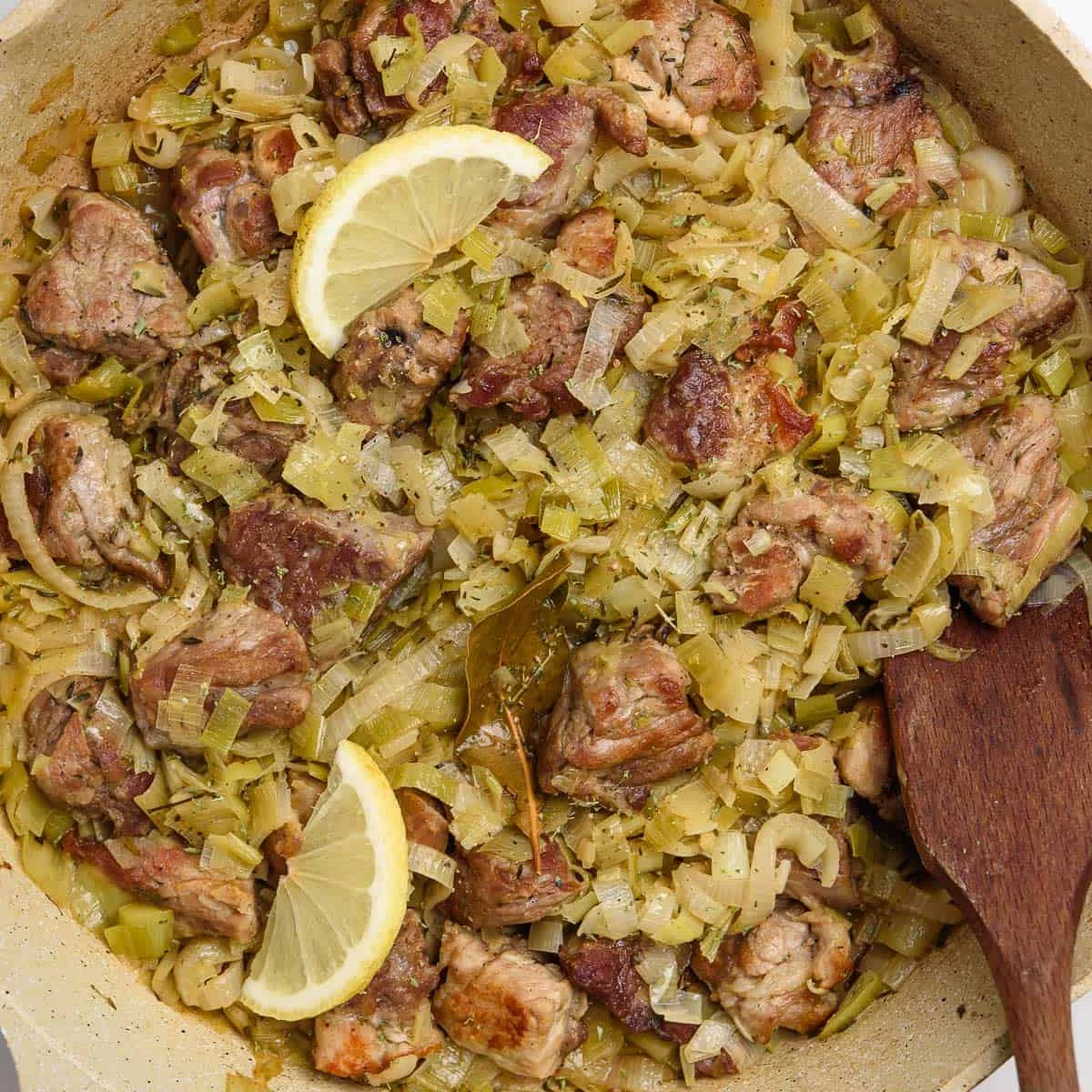
Prasotigania is a Greek pan-fried pork dish with leeks cooked until soft in a lemony, herb-scented pan sauce. It makes a hearty meal for two, with bright citrus balancing the rich pork.
Ingredients
- 2 tablespoonsolive oil
- 500 gboneless pork neck or shoulder, cut into 3 cm chunks
- 2/3 teaspoonground coriander
- to tastesalt
- to tasteblack pepper
- 350 gleeks, mostly the white part, chopped
- 60 mlwhite wine
- 3 tablespoonsfresh lemon juice
- 2/3 teaspoondried thyme
- zest of 1/3 lemonlemon zest
- 1bay leaf
- to tastedried oregano, to serve
- to tasteextra lemon, to serve
Instructions
- 1
Season the pork
Season the pork chunks with salt, pepper and ground coriander.
- 2
Heat the oil
Set a non-stick pan over high heat and heat the olive oil.
- 3
Brown the pork
Add the pork and sear it until browned on both sides, about 6–8 minutes.
- 4
Soften the leeks
Reduce the heat to medium and add the leeks. Season them with a little salt and cook, stirring occasionally, until completely soft.
- 5
Add wine and lemon
Pour in the lemon juice and white wine. Cook until the liquid has evaporated.
- 6
Add hot water
Pour in 60 ml hot water and turn the heat to low.
- 7
Simmer covered
Add the lemon zest and bay leaf, cover the pan and simmer until the water has evaporated.
- 8
Check the pork
Pierce a piece of pork with a knife to check that it is tender. If it needs longer, add a splash more water and simmer again.
- 9
Finish and serve
Serve with dried oregano sprinkled over the top and extra lemon if you like.
What is prasotigania?
Prasotigania is a Greek-style pan dish of pork and leeks; its name combines the Greek words for leek and frying pan. This version builds flavour by browning the pork first, then cooking the leeks until soft and mellow.
Lemon, wine and herbs bring a sharp, fragrant contrast to the pork. The result is comforting but not heavy-tasting.
Nutrition and macros by portion
The nutrition label shows one serving as written: 921 calories, 45g protein, 28g carbs, 68g fat.
| Portion | Adjustment | kcal | Protein | Carbs | Fat |
|---|---|---|---|---|---|
| Lighter | Trim visible pork fat | 645 kcal | 31g | 20g | 48g |
| This serving | As written | 921 kcal | 45g | 28g | 68g |
| Hungry | Add bread or potatoes | 1382 kcal | 68g | 42g | 102g |
The pork supplies most of the protein and fat, while the leeks and wine contribute some of the carbohydrates; the olive oil adds further fat. For a more balanced plate, serve a portion with plenty of vegetables or salad alongside.
Choose and cut the pork
Pork shoulder: its fat and connective tissue suit a covered simmer and help the chunks become tender. Pork neck is another good option.
Even chunks: cut the meat into 3 cm pieces so they brown at a similar pace and are easy to check for tenderness.
Give the pork room to brown
Hot pan: heat the oil well before adding the pork, then leave the pieces long enough to colour on each side. Browning gives the finished dish a deeper savoury flavour.
Work in batches if the pan is crowded; too much pork at once can release moisture and steam rather than sear.
Cook the leeks until soft
White and pale-green parts: these soften into the base of the dish, while the tougher dark-green leaves can be saved for stock. Rinse chopped leeks carefully because grit can hide between their layers.
Gentle stirring: cook them over medium heat until fully soft before adding the wine and lemon. This lets their sweetness mellow rather than leaving them firm or sharp.
Reduce the pan liquid
Wine and lemon: cook them down before adding the hot water, as directed, so their flavours concentrate around the pork and leeks.
Covered simmer: keep the heat low after adding water and check the pan towards the end. The aim is tender pork and softened leeks with the liquid cooked away, not a dry or scorching pan.
Check tenderness and balance
Knife test: pierce a pork chunk; it should feel tender rather than resistant. If it is still firm, add a small splash of water and continue simmering.
Fresh finish: dried oregano and extra lemon are added at serving, so each can be adjusted to taste. The lemon lifts the rich meat and soft leeks.
What to serve alongside
Bread or potatoes: either makes a useful partner for the pork and any flavour left in the pan. Rice is another mild option.
A crisp green salad can add freshness alongside the soft leeks. Serve the dish hot, with the extra lemon on the table.
Recipe notes & tips
- Pat the pork dry before seasoning to help it brown.
- Use a pan large enough to keep the pork in a single layer while searing.
- Clean the leeks thoroughly after chopping to remove any trapped grit.
- Keep the heat low during the covered simmer so the pan does not dry out too quickly.
- Add extra lemon at the table rather than increasing it in the pan if you want to adjust each serving.
Variations
- Use pork shoulder: choose it for a particularly tender result after simmering.
- Add more thyme: increase the herb slightly for a stronger savoury note.
- Make it brighter: serve with extra lemon wedges for a sharper finish.
- Serve with rice: spoon the pork and leeks over rice to make the meal more substantial.
- Add black pepper: finish with freshly ground pepper at the table.
Common mistakes to avoid
- Crowding the pan: the pork may steam instead of brown; sear it in batches if needed.
- Using high heat throughout: the leeks can catch before they soften; reduce the heat to medium after browning the pork.
- Leaving grit in the leeks: rinse the chopped pieces well before cooking.
- Skipping the tenderness check: simmer the pork longer with a splash of water if a knife meets resistance.
- Letting the pan run dry too soon: keep the heat low and add a little more water if the pork needs extra time.
How to store
Refrigerate leftovers in a covered container and use within 3 days. Reheat gently in a covered pan over low heat, adding a splash of water if needed, until hot throughout.
Frequently asked questions
Can I use pork shoulder instead of pork neck?
Yes. Both are suitable for this dish; cut the meat into 3 cm chunks and simmer until tender.
How do I know when the leeks are soft enough?
They should be completely softened and mellow, with no firm bite. Stir occasionally as they cook over medium heat.
Can I use stock instead of water?
The method calls for hot water. Stock can add extra savoury flavour, but it will change the seasoning, so taste before adding more salt.
What should I serve with prasotigania?
Try bread, potatoes or rice, with a green salad or vegetables alongside.
What if the pork is still tough when the water has evaporated?
Add a splash more water, cover the pan and simmer a little longer, then check again with a knife.
Cook it from the original
This recipe comes from realgreekrecipes.com. Their page has the author’s own photos, notes and tips — the best place to cook it from.
Open the recipe on realgreekrecipes.com