
Chocolate Peanut Butter Lava Cake
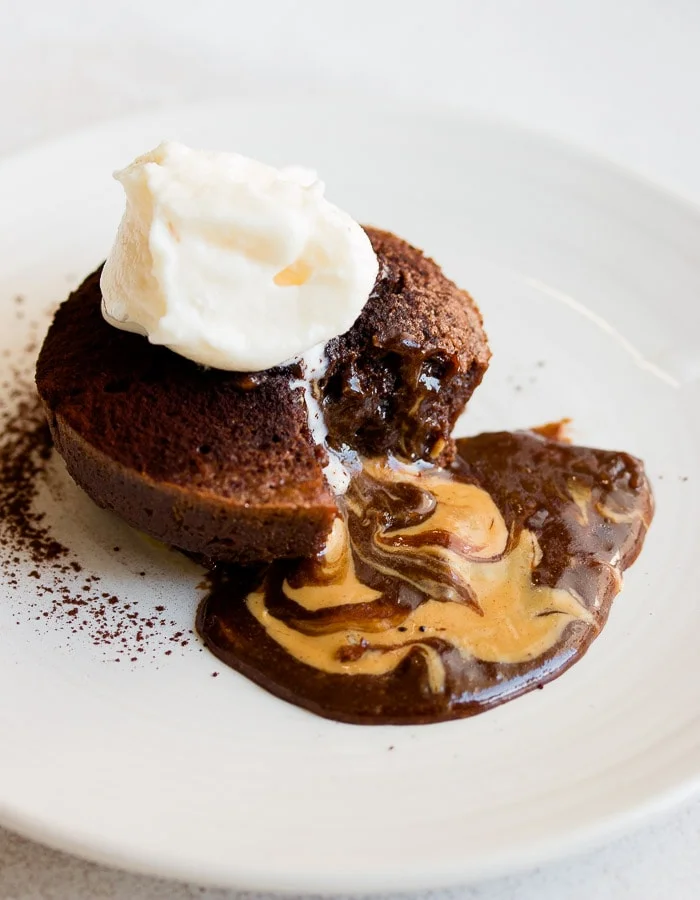
These individual chocolate cakes have a soft, molten centre with creamy peanut butter tucked inside. They make an easy, special-occasion dessert, and the short bake keeps the middle gooey.
Ingredients
- 150 gdark chocolate, coarsely chopped
- 115 g, plus extra for greasingunsalted butter, cut into cubes
- 3 largeeggs
- 80 ggranulated sugar
- 0.6 g (⅛ teaspoon)salt
- 35 gplain flour
- 60 g (about 2 teaspoons per cake)smooth peanut butter
- To tastecocoa powder, for dusting
Instructions
- 1
Prepare the ramekins
Heat the oven to 200°C. Generously butter 4–5 ramekins, depending on their size, then dust them with cocoa powder. Tap out the excess.
- 2
Melt chocolate
Melt the chocolate and butter together in a microwave, heating in 20–30-second bursts, or in a heatproof bowl set over a pan of gently simmering water. Take the bowl off the heat and leave the mixture to cool for 5 minutes.
- 3
Mix the batter
Whisk the eggs and sugar together in a small bowl until combined. Stir this into the chocolate mixture, then add the salt and flour and fold just until incorporated.
- 4
Fill and bake
Divide the batter among the prepared ramekins. Put a heaped teaspoon of peanut butter in the centre of each, then press it gently into the batter with the back of the teaspoon so that part of it remains visible. Bake for 11–13 minutes, until a thin crust forms on top and the centre still jiggles slightly when the ramekin is shaken gently.
- 5
Turn out and serve
To release the cakes, run a thin knife around each edge straight away and invert onto serving plates; if they are too hot to handle, let them cool for 5 minutes first. Leave the inverted ramekins in place for a few seconds, then lift them off gently. Serve immediately, with a dusting of icing sugar or cocoa powder, or with whipped cream or ice cream if you like.
What is a chocolate lava cake?
A lava cake is a small chocolate cake baked until its outer layer sets while the centre stays soft and molten. It is a modern individual dessert rather than a traditional regional pudding.
This version adds peanut butter to the middle, giving the rich chocolate centre a creamy, savoury-sweet note. Ramekins make it easy to bake and serve each cake separately.
Nutrition and macros by portion
The nutrition label shows one serving as written: 655 calories, 11g protein, 57g carbs, 45g fat.
| Portion | Adjustment | kcal | Protein | Carbs | Fat |
|---|---|---|---|---|---|
| Lighter | Smaller cake, less peanut butter | 458 kcal | 8g | 40g | 31g |
| This serving | As written | 655 kcal | 11g | 57g | 45g |
| Hungry | Serve with ice cream | 983 kcal | 17g | 86g | 68g |
The chocolate, sugar and flour provide most of the carbohydrates, while butter and peanut butter account for much of the fat. Eggs, chocolate and peanut butter contribute protein. Balance the rich cake with fresh fruit or serve a smaller cake alongside a lighter dessert plate.
Choosing the chocolate and peanut butter
Chocolate: Use dark or bittersweet chocolate that you enjoy eating, since its flavour carries through the cakes. Chop it into fairly small pieces so it melts evenly with the butter.
Peanut butter: Smooth peanut butter is easy to spoon into the centre and press partway into the batter. A heaped teaspoon per cake gives you a distinct filling without needing to mix it through.
Getting the batter right
Melted mixture: Let the chocolate and butter stand for 5 minutes off the heat before combining them with the eggs. This brief rest helps avoid adding the egg mixture to a very hot base.
Flour: Fold it in only until the last streaks disappear. Mixing more than necessary can make the cakes less tender.
Judging the bake
The suggested bake is 11–13 minutes, but ramekin size affects how quickly the cakes set. Start checking at 11 minutes, especially if using smaller dishes.
Look for a thin set crust and a centre that gives a slight wobble when gently shaken. The cakes continue to set as they stand, so avoid waiting until the middle is firm.
Greasing and turning out
Cocoa coating: Butter the ramekins generously, then dust their insides with cocoa and tap out the excess. This prepares the sides for turning out without leaving a conspicuous flour coating on the chocolate cakes.
Releasing: Run a thin knife around the edge while the cakes are still hot, unless they are too hot to handle. Letting them stand in the inverted ramekins for a few seconds gives the sides a moment to loosen.
What to serve with them
Serve the cakes as soon as they come out of their ramekins, while the centres are warm and soft. A light dusting of icing sugar or cocoa is enough for a simple finish.
For a more indulgent plate, add whipped cream or ice cream. Their cool, soft texture contrasts with the warm chocolate and peanut butter filling.
Recipe notes & tips
- Grease each ramekin thoroughly, including the base and sides.
- Use a bowl that fits over the simmering-water pan without touching the water.
- Fold in the flour gently and stop as soon as it is combined.
- Keep the peanut butter in the centre so each cake has a distinct filling.
- Check the cakes at 11 minutes because ramekin sizes can vary.
- Serve immediately for the softest centre.
Variations
- Add a pinch of cinnamon: stir it into the flour for a warm spice note.
- Use crunchy peanut butter: spoon it into the centres for a little texture.
- Try almond butter: use the same amount for a different nutty filling.
- Add flaky salt: scatter a small pinch over the cakes just before serving.
- Finish with berries: serve fresh raspberries or strawberries alongside each cake.
Common mistakes to avoid
- Overbaking: the centre can set rather than stay molten; begin checking at 11 minutes.
- Skipping the cocoa dusting: the cakes may cling to the ramekins; butter and dust them thoroughly.
- Adding eggs to very hot chocolate: the mixture may become difficult to combine; let it cool for 5 minutes first.
- Overmixing the flour: the cakes can lose their tender texture; fold only until combined.
- Pressing in all the peanut butter: it may disappear into the batter; leave part of the filling visible.
- Turning out too soon to handle: hot ramekins are awkward to grip; leave the cakes for 5 minutes if needed.
How to store
These cakes are best eaten straight away, while the centres are still soft. If needed, cover and refrigerate leftovers for up to 2 days, then reheat briefly in the microwave; the centre may not be as molten after reheating.
Frequently asked questions
Can I make these cakes ahead?
They are best baked just before serving. You can prepare the ramekins and measure the ingredients ahead, then mix and bake when you are ready.
How do I know when the cakes are done?
The top should have a thin crust, while the centre should wobble slightly when you gently shake a ramekin. Begin checking at 11 minutes.
Can I use a different nut butter?
Yes. Smooth almond or cashew butter can be used in the same amount, though the flavour will change.
Do I have to turn the cakes out?
No. You can serve them in their ramekins if you prefer. Let them stand briefly before eating, as the dishes will be very hot.
Why did my centre set?
The cakes may have baked for too long, or the ramekins may be smaller than those used for the recipe. Check early and take them out while the middle still jiggles.
Can I freeze the cakes?
Freezing is not ideal for preserving the molten centre and texture. For the best result, bake and serve them fresh.
Cook it from the original
This recipe comes from prettysimplesweet.com. Their page has the author’s own photos, notes and tips — the best place to cook it from.
Open the recipe on prettysimplesweet.com