
Pesto Genovese
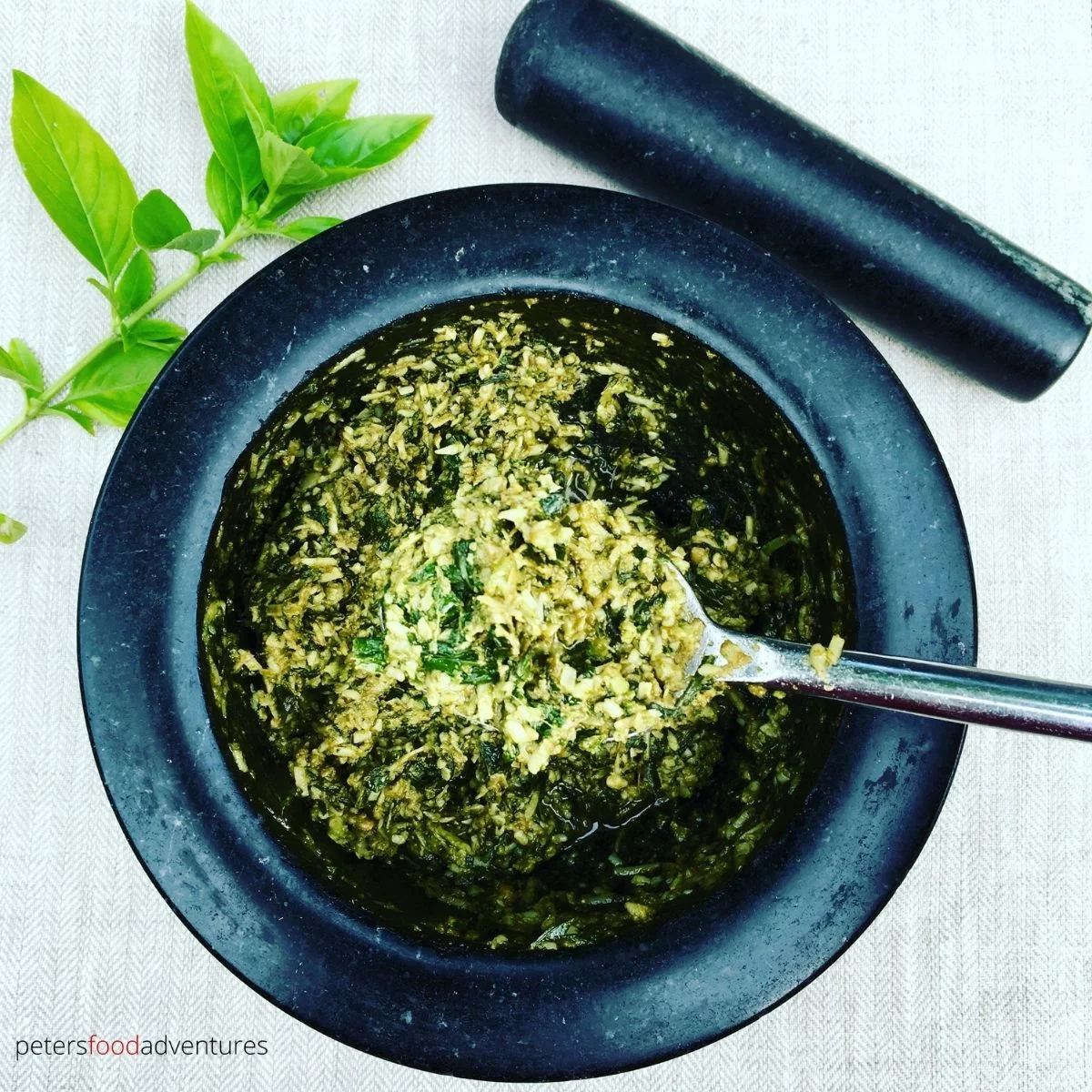
Pesto Genovese is a fresh Italian basil sauce made with pine nuts, garlic, Parmigiano Reggiano and olive oil. Make it by hand for a coarse, textured finish or use a food processor for a quicker, smoother sauce.
Ingredients
- 30 g (1 1/2 cups)fresh basil leaves
- 2garlic cloves
- 34 g (1/4 cup), toastedpine nuts
- 75 g (3/4 cup), gratedParmigiano Reggiano (Parmesan cheese)
- 60 ml (1/4 cup)extra-virgin olive oil
- to tastesalt and pepper
Instructions
- 1
Pound the ingredients
For the mortar-and-pestle method, put the pine nuts, basil and garlic in the mortar. Pound and grind them together until they form a paste.
- 2
Mix in cheese
Add the olive oil and cheese, then mix them into the paste. Season with salt and pepper to taste.
- 3
Add basil and garlic
For the food-processor method, put the basil and garlic in the processor.
- 4
Pulse the mixture
Pulse for about 30 seconds. Add the pine nuts and process for another 30 seconds.
- 5
Add the cheese
Add the Parmigiano Reggiano and pulse until it is mixed through.
- 6
Drizzle in oil
With the processor running, slowly drizzle in the olive oil until the pesto comes together.
- 7
Season and serve
Season with salt and pepper to taste, then serve.
What is Pesto Genovese?
Pesto Genovese is a basil-based sauce associated with Genoa, in the Liguria region of Italy. Its name comes from pestare, meaning to pound or crush, a nod to the traditional mortar-and-pestle method.
This version keeps to the classic combination of basil, garlic, pine nuts, hard cheese and olive oil. The ingredients are few, so good-quality basil and Parmigiano Reggiano make a noticeable difference.
Nutrition and macros by portion
The nutrition label shows one serving as written: 262 calories, 11g protein, 3g carbs, 25g fat.
| Portion | Adjustment | kcal | Protein | Carbs | Fat |
|---|---|---|---|---|---|
| Lighter | Use less olive oil | 183 kcal | 8g | 2g | 18g |
| This serving | As written | 262 kcal | 11g | 3g | 25g |
| Hungry | Serve a larger spoonful | 393 kcal | 17g | 5g | 38g |
Most of the energy and fat in a serving come from the olive oil and pine nuts, while the Parmesan contributes fat and protein. Basil and garlic add relatively little; pair a modest spoonful of pesto with pasta and vegetables, or use it to dress a protein-rich dish.
Choosing the ingredients
Basil: use fresh, fragrant leaves and remove any tough stems. Handle them gently so they stay bright and aromatic.
Pine nuts: toasting is specified here and adds a deeper, nutty flavour. Let them cool before blending or pounding.
Cheese and oil: finely grated Parmigiano Reggiano mixes in readily, while extra-virgin olive oil gives the sauce its richness and helps bring it together.
Mortar or food processor
Mortar and pestle: pound the pine nuts, basil and garlic until they form a paste, then mix in the oil and cheese. This route gives you more control over the texture.
Food processor: pulse the basil and garlic first, then add the pine nuts and cheese in turn. Drizzle the oil in slowly while the machine runs, stopping once the pesto is combined.
Getting the texture right
Pound or pulse only until the ingredients come together; the method does not call for a completely smooth sauce. With the processor, short pulses help you check the texture as you go.
Add the olive oil gradually in the processor rather than pouring it in all at once. The finished pesto should be cohesive and spoonable, not separated into oil and solids.
Seasoning and serving
Salt and pepper are added to taste, so season after mixing and taste before adding more. The cheese contributes saltiness, which is worth bearing in mind.
Toss the pesto with pasta, or spoon it over vegetables, grilled bread or roasted tomatoes. If using it with pasta, a little pasta cooking water can help it coat the noodles.
Timing and make-ahead
The recipe takes about 20 minutes from start to finish, including either preparation method. The food processor reduces the pounding, while the mortar method gives you a hands-on way to control the grind.
You can make the pesto ahead and refrigerate it in a covered container. A thin layer of olive oil over the surface can help limit air contact while it is stored.
Recipe notes & tips
- Pat the basil leaves dry after washing so excess water does not dilute the sauce.
- Let the toasted pine nuts cool before adding them to the mortar or processor.
- Grate the cheese finely so it blends evenly into the pesto.
- Taste before adding salt, as the Parmesan is already savoury.
- Scrape down the food-processor bowl if ingredients stick to its sides.
Variations
- Walnut swap: replace the pine nuts with walnuts for a different nutty flavour.
- Pecorino blend: replace some of the Parmesan with grated Pecorino for a sharper, saltier result.
- Lemon lift: add a little lemon zest for a brighter finish.
- Milder garlic: use one garlic clove for a gentler flavour.
- Chunkier texture: use the mortar and pestle and stop grinding while the sauce still has texture.
Common mistakes to avoid
- Wet basil: excess water can thin the pesto; dry the leaves well before using them.
- Over-processing: long blending can make the texture too smooth; pulse briefly and check as you go.
- Adding oil too quickly: the sauce may not combine evenly; drizzle it in slowly with the processor running.
- Salting too early: Parmesan adds savouriness; taste the finished mixture before adjusting the seasoning.
- Using hot pine nuts: they can warm the basil; allow them to cool after toasting.
How to store
Keep the pesto in a covered container in the fridge and use within 3–4 days. Press it down and cover the surface with a thin film of olive oil; stir before serving. It is usually best served cold or at room temperature rather than reheated.
Frequently asked questions
Can I make this pesto without a food processor?
Yes. Use a mortar and pestle to pound the pine nuts, basil and garlic into a paste, then mix in the oil and cheese.
Should I toast the pine nuts?
The recipe calls for toasted pine nuts. Cool them before adding them so they do not warm the basil.
Why is my pesto bitter?
Over-processing or a particularly strong olive oil can contribute to bitterness. Use short pulses and taste the oil before making the sauce.
How much pesto should I use for pasta?
Start with a spoonful per portion and add more to taste. A splash of pasta cooking water can help it coat the pasta.
Can I freeze Pesto Genovese?
Yes. Freeze it in a small airtight container or in portions, then thaw it in the fridge before serving.
Cook it from the original
This recipe comes from petersfoodadventures.com. Their page has the author’s own photos, notes and tips — the best place to cook it from.
Open the recipe on petersfoodadventures.com