
Feta Omelette With Onions
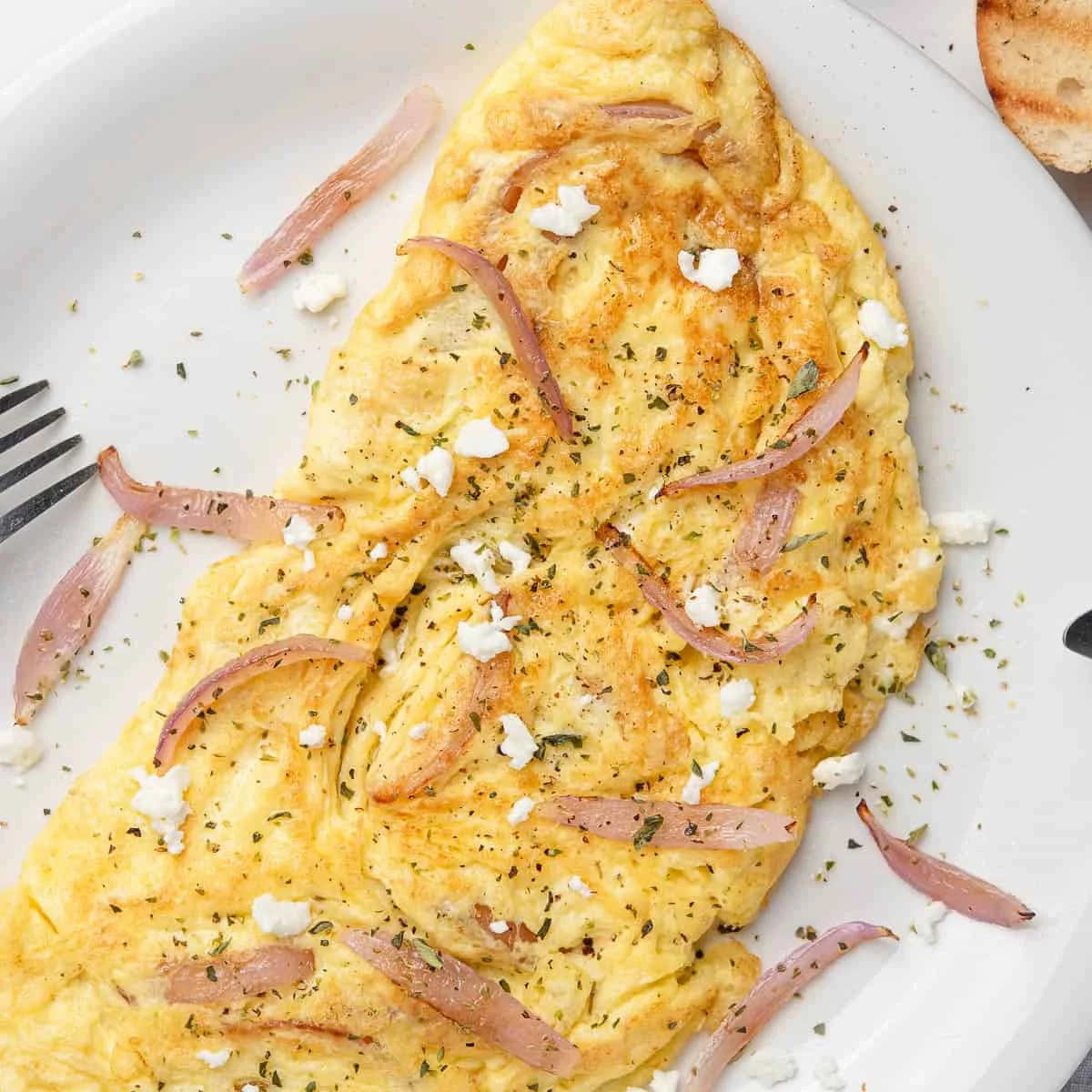
This Greek-inspired omelette pairs softly set eggs and crumbled feta with briefly sautéed red onion, finished with dried oregano and black pepper. It is a quick, savoury meal with sweet onion and salty cheese in every bite.
Ingredients
- 3free-range eggs
- 45 ml (3 tablespoons)olive oil
- 50 g (1.7 oz)feta cheese, crumbled into small pieces
- 30 g (1 oz), cut into 5 mm (¼-inch) thick stripsred onion
- to tastedried Greek oregano, to serve
- to tastesalt
- to tastefreshly ground pepper
Instructions
- 1
Beat the eggs
Beat the eggs vigorously for 1 minute. Stir in the feta and season very lightly with salt.
- 2
Heat the oil
Heat the olive oil in a non-stick frying pan over high heat.
- 3
Cook the onion
Add the onion and reduce the heat to medium. Cook for 45 seconds, stirring often.
- 4
Fold the omelette
Pour in the egg mixture and leave it for 10 seconds. With a rubber or wooden spatula, draw the eggs from the edges towards the centre, making ruffles in the middle and letting runny egg flow into the gaps. Repeat a few times until the eggs are almost set. Slide the spatula underneath, or use two forks, and fold the omelette carefully but quickly. Turn off the heat and leave it to cook for 1 minute more. Transfer it to a plate, using the spatula underneath to help.
- 5
Finish and serve
Sprinkle the omelette with dried Greek oregano and freshly ground pepper before serving.
What is a feta omelette?
An omelette is a dish of beaten eggs cooked in a pan and folded around or over its fillings. This version takes a Greek-inspired flavour from feta and dried oregano, with red onion bringing a little sweetness.
The method keeps the eggs soft while the feta is mixed through rather than used as a separate filling. The quick cooking time suits a simple breakfast, lunch or light supper.
Nutrition and macros by portion
The nutrition label shows one serving as written: 705 calories, 24g protein, 6g carbs, 65g fat.
| Portion | Adjustment | kcal | Protein | Carbs | Fat |
|---|---|---|---|---|---|
| Lighter | Use less olive oil | 493 kcal | 17g | 4g | 46g |
| This serving | As written | 705 kcal | 24g | 6g | 65g |
| Hungry | Serve with toast | 1058 kcal | 36g | 9g | 98g |
The eggs and feta provide most of the protein, while the eggs and olive oil account for much of the fat; the onion contributes a small amount of carbohydrate. Serve it with salad or vegetables for a more balanced plate, or add toast if you would like a more filling meal.
Choosing the ingredients
Feta: Small crumbles distribute the cheese through the eggs, so each portion of the omelette gets some salty, tangy flavour.
Red onion: Thin strips cook quickly in the pan and soften slightly before the eggs go in. Keep them around 5 mm thick as specified so they cook in the short time available.
Oregano: Dried Greek oregano is added at the end, where its aroma stays noticeable against the eggs and feta.
Getting the texture right
Eggs: Beating them vigorously for a full minute helps make the mixture more uniform. Once they are in the pan, pull the edges inwards to create soft folds and let uncooked egg fill the spaces.
Doneness: Stop this movement when the eggs are almost set, then fold the omelette and let residual heat finish cooking it for 1 minute off the heat. This timing gives a tender result rather than a dry, browned one.
Managing the heat
Onion first: Start with the oil over high heat, then reduce to medium as soon as the onion is added. Stir often during its 45 seconds in the pan.
Eggs next: After pouring in the mixture, wait 10 seconds before drawing the eggs towards the centre. The cooking happens quickly, so have a spatula ready before you begin.
Folding and serving
Use a rubber or wooden spatula to pull the egg inwards, then slide it carefully underneath to fold. Two forks are an alternative for folding, but work swiftly once the eggs are almost set.
Serve straight away with oregano and freshly ground pepper on top. Toast or a simple salad can accompany it if you want to make the meal more substantial.
Keeping the omelette soft
The omelette is at its softest when eaten just after cooking. The brief rest off the heat is part of the method, so avoid leaving it in the pan for longer than directed.
The recipe relies on a non-stick pan and a flexible spatula to make folding easier. If the omelette sticks, loosen it gently from the edges before sliding underneath.
Recipe notes & tips
- Crumble the feta into small pieces before beating the eggs so it is ready to mix in.
- Use a non-stick frying pan to help the omelette release cleanly.
- Keep stirring the onion during its 45 seconds of cooking.
- Have the spatula ready before pouring in the eggs, as the cooking moves quickly.
- Turn off the heat once the omelette is folded and allow the stated 1 minute of residual cooking.
Variations
- Add fresh herbs: Scatter chopped parsley over the omelette with the oregano.
- Add spinach: Wilt a small handful in the pan after the onion and before adding the eggs.
- Use spring onion: Replace the red onion with thinly sliced spring onion.
- Add chilli: Finish with a pinch of chilli flakes for a little heat.
- Serve with tomatoes: Pair the omelette with sliced fresh tomatoes on the side.
Common mistakes to avoid
- Overcooking the onion: Stir it often and stop after 45 seconds so it does not dominate the quick-cooking omelette.
- Adding too much salt: Season the eggs very lightly because feta is already salty.
- Waiting too long to move the eggs: Begin pulling them towards the centre after the 10-second pause.
- Cooking until fully firm in the pan: Fold when the eggs are almost set and let the off-heat minute finish them.
- Folding too slowly: Slide underneath and fold carefully but swiftly to keep the omelette together.
How to store
This omelette is best eaten freshly cooked. If needed, refrigerate leftovers in a covered container and eat within 1 day; reheat gently in a pan or microwave until hot, keeping in mind that the eggs may firm up.
Frequently asked questions
Can I use a different frying pan?
A non-stick frying pan is the easiest choice for folding and transferring the omelette. If using another pan, make sure the oil coats the cooking surface well.
Can I use fresh oregano?
Yes. Use fresh oregano as a finishing herb, though its flavour will differ from the dried Greek oregano specified in the recipe.
How do I know when the eggs are ready to fold?
They should be almost set, with no need to wait for the surface to become completely firm. Fold them then and leave the pan off the heat for 1 minute.
Can I prepare the onion ahead?
For the quickest result, slice it before cooking, but cook it in the pan just before adding the eggs as directed.
What can I serve with this omelette?
Toast, a simple salad or sliced tomatoes make easy accompaniments. Choose based on whether you want a light meal or something more substantial.
Cook it from the original
This recipe comes from realgreekrecipes.com. Their page has the author’s own photos, notes and tips — the best place to cook it from.
Open the recipe on realgreekrecipes.com