
Old Polish bigos
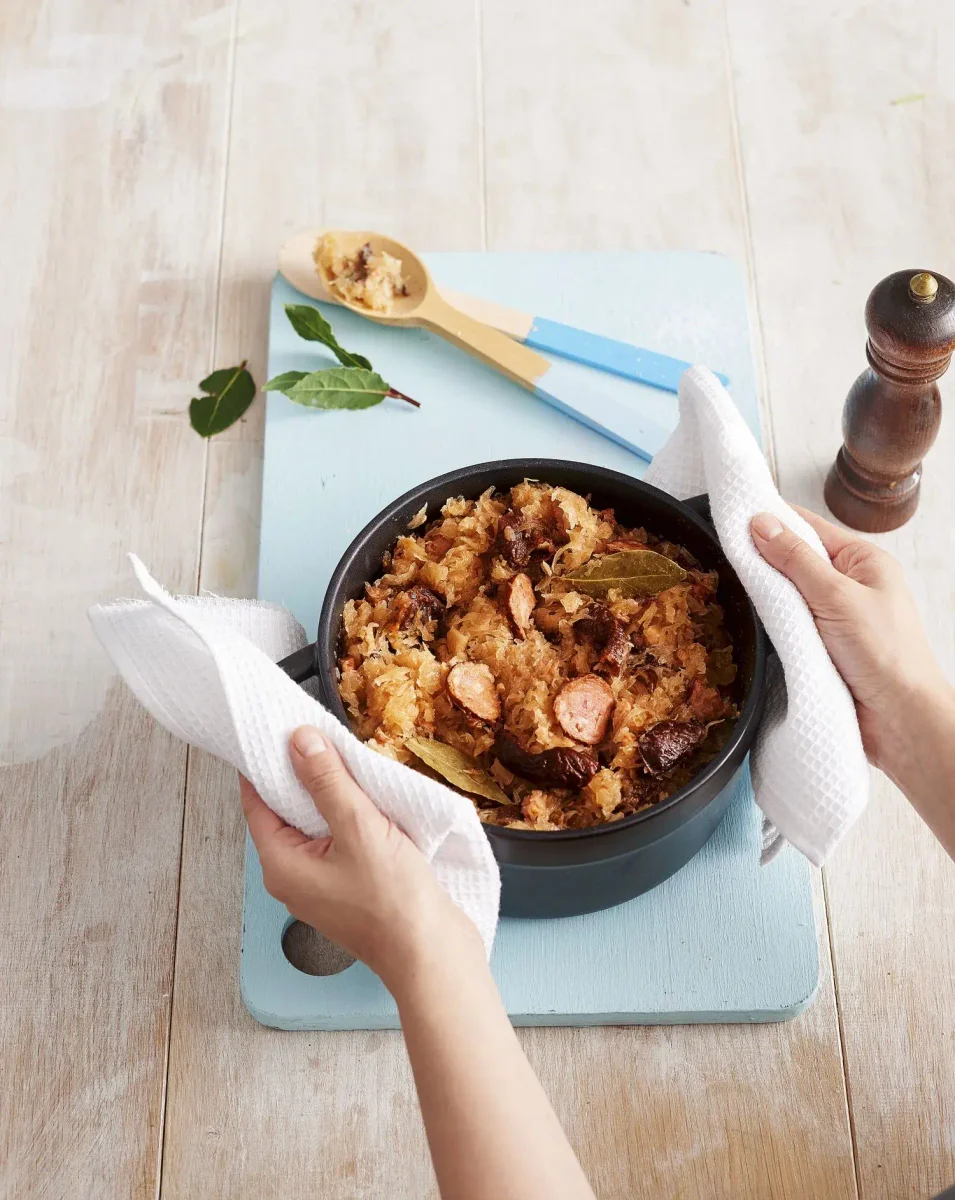
Old Polish bigos is a slow-cooked stew of sauerkraut, assorted meats, sausage, bacon, mushrooms and prunes. Its long simmer brings together savoury, smoky and gently sweet flavours, and it is often even better after resting and reheating.
Ingredients
- 2 kgsauerkraut
- 250 ml (1 cup)stock
- 0 kgpork
- 0 kggame meat
- 0 kgbeef
- 100 gdried mushrooms
- 250 gbacon
- 400 gsausage
- 2onions
- 2 tbsplard
- 200 gdried prunes
- 4 berriesjuniper berries
- 4 berriesallspice berries
- 12whole peppercorns
- 2bay leaves
- 4cloves
- 0 ml (0 cups)port
- 2 pinchessalt
- 2 tbsptomato purée
Instructions
- 1
Simmer the cabbage
Chop the sauerkraut and put it in a cast-iron pot. Pour in the stock and the drippings from all the types of meat, then simmer gently for about 50 minutes.
- 2
Cook the mushrooms
Soak the dried mushrooms in cold water for at least an hour. Cook them until tender, drain them while reserving the cooking liquid, and slice them into strips.
- 3
Prepare the meat
Dice all the browned meat and bacon, and slice the sausage into rounds. Fry the bacon and sausage.
- 4
Fry the onion
Peel and chop the onions, then fry them in the lard. Halve the prunes.
- 5
Combine the ingredients
Add the fried onions to the sauerkraut. Gradually stir in the mushrooms and their cooking liquid, all the diced roasted meat, and the fried bacon and sausage. Bring briefly to a simmer, stirring continuously.
- 6
Finish the stew
Add the prunes, juniper, allspice, peppercorns, bay leaves and cloves, then pour in the port. Simmer for about 1 hour, stirring often. Add salt or tomato purée if needed.
What is old Polish bigos?
Bigos is a Polish stew built around sauerkraut and a generous assortment of meats. This old-style version also includes dried mushrooms, prunes and port, giving the dish savoury, smoky and sweet notes.
Its roots are in Polish home cooking, where slow cooking and reheating help the flavours mingle. The long simmer and the combination of cabbage, meat and fruit are what make this version distinctive.
Nutrition and macros by portion
The nutrition label shows one serving as written: 8878 calories, 541g protein, 0g carbs, 419g fat.
| Portion | Adjustment | kcal | Protein | Carbs | Fat |
|---|---|---|---|---|---|
| Lighter | Less bacon and sausage | 6215 kcal | 379g | 0g | 293g |
| This serving | As written | 8878 kcal | 541g | 0g | 419g |
| Hungry | Larger portion | 13317 kcal | 812g | 0g | 629g |
The sauerkraut and prunes provide most of the carbohydrate, while the bacon, sausage, lard and any added meat contribute much of the fat and protein. Serve a moderate bowl with a fresh salad or vegetables to add a lighter, crisp contrast.
The cabbage base
Sauerkraut: Chop it before simmering so it is easier to serve and eat. Its tangy flavour anchors the richness of the meat and bacon.
Stock: The recipe starts the cabbage with stock and meat drippings. Keep the heat gentle so the cabbage softens without catching on the bottom of the pot.
Mushrooms and their liquid
Soaking: Give the dried mushrooms at least an hour in cold water, then cook them until tender. This stage takes place while the cabbage is simmering.
Reserved liquid: Keep the mushroom cooking liquid when draining the mushrooms, as the method adds it to the stew along with the sliced mushrooms.
Browning the additions
Bacon and sausage: Fry these before adding them to the pot, as directed. Cut the bacon into dice and the sausage into rounds so they are easy to distribute through the cabbage.
Onions: Fry the chopped onions in lard, then add them to the sauerkraut. The recipe also calls for the meat to be browned and roasted before it is diced and stirred in.
Keeping the simmer steady
After combining the ingredients, bring the mixture briefly to a simmer while stirring continuously. Once the prunes and spices are added, cook it gently for about an hour and stir often.
Check the pot as it cooks so the thick stew does not stick. Add salt or tomato purée if needed, as the method suggests.
Serving and resting
Bigos is substantial enough to serve as the main dish. A slice of bread or boiled potatoes makes a practical accompaniment, while a crisp salad can add freshness alongside it.
The recipe notes that the stew tastes best on the third day. Cooling and reheating it several times, including freezing and reheating, is said to help its flavour develop.
Recipe notes & tips
- Soak the dried mushrooms for at least an hour before cooking them.
- Save the mushroom cooking liquid when you drain the mushrooms.
- Keep the heat low while the sauerkraut simmers.
- Stir frequently during the final hour to prevent the stew catching.
- Taste before adding salt, as sauerkraut and cured meats can already be salty.
- For the fullest flavour, plan to serve the bigos after it has rested and been reheated.
Variations
- Meat mix: Use a combination of pork, game and beef as indicated by the recipe.
- More tang: Keep the sauerkraut as the main ingredient and avoid rinsing it before cooking.
- Tomato note: Stir in the listed tomato purée if the stew needs it.
- Fruit balance: Keep the prunes for a mellow sweetness against the sour cabbage.
- Port: Add the specified port with the spices for a rounded, slightly sweet depth.
Common mistakes to avoid
- Discarding the mushroom liquid: Reserve it after cooking, as the method adds it to the stew.
- Rushing the mushrooms: Soak them for at least an hour and cook until tender.
- Cooking over high heat: Keep the sauerkraut at a gentle simmer so it is less likely to catch.
- Adding everything at once: Follow the stages so the onions, mushrooms and fried meats are incorporated in order.
- Leaving the pot unstirred: Stir often during the final hour to keep the thick mixture from sticking.
How to store
Cool the stew and refrigerate it in a covered container, then reheat thoroughly in a pot, stirring often. The recipe recommends cooling and reheating it several times and notes that it tastes best on the third day; it can also be frozen and reheated.
Frequently asked questions
Can I make bigos ahead?
Yes. The recipe notes that it tastes best on the third day and benefits from being cooled and reheated several times.
Do I need to soak the dried mushrooms?
Yes. Soak them in cold water for at least an hour, cook them until tender and keep their cooking liquid.
How long does bigos simmer?
The sauerkraut simmers for about 50 minutes at the start. After the other ingredients and spices are added, simmer for about another hour.
When should I add the prunes and spices?
Add them after the fried onion, mushrooms and meats have been combined with the sauerkraut. Pour in the port at the same stage.
What can I serve with bigos?
Serve it as a main dish, with bread or boiled potatoes if you like. A fresh salad or vegetables provide a lighter contrast.
When should I add salt or tomato purée?
Check the seasoning during the final simmer and add salt or tomato purée if needed, as the method directs.
Cook it from the original
This recipe comes from apetitonline.cz. Their page has the author’s own photos, notes and tips — the best place to cook it from.
Open the recipe on apetitonline.cz