
How To Preserve Grape Leaves In Brine
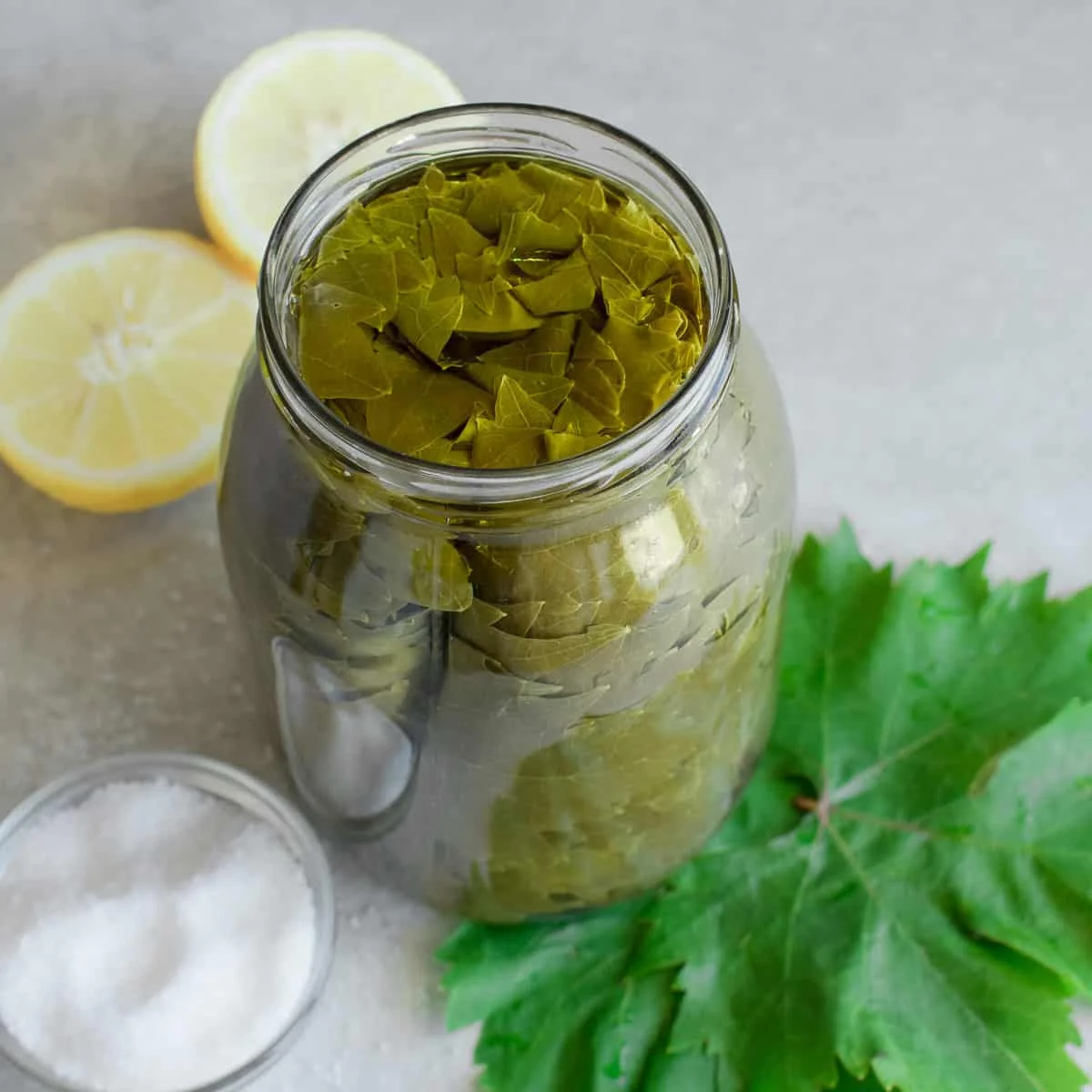
Fresh grape leaves are briefly blanched, packed into a jar and covered with a simple vinegar-and-lemon brine. They are handy to keep on hand for Greek dishes such as dolmades, but this home method should be refrigerated rather than stored in a cupboard.
Ingredients
- 65–70fresh grape leaves
- 1 litrecanning jar
- 6 tablespoonsred wine vinegar
- 1 tablespoonkosher salt
- 1 tablespoonfresh lemon juice
- as neededolive oil
Instructions
- 1
Sterilise the jar
Sterilise the jar before you begin.
- 2
Soak the leaves
Soak the grape leaves for 10 minutes in plenty of water with 2 tablespoons of the red wine vinegar. Transfer them to a strainer.
- 3
Blanch the leaves
Bring a large cooking pot of water to the boil and add 3 tablespoons of red wine vinegar. Add the leaves; once the water comes back to the boil, cook them for 2 minutes.
- 4
Cool and stack
Use a slotted spoon to move the leaves to a very large pot of very cold water, and leave them until completely cool. Drain them in stacks of 10 or 15, with the bottoms aligned.
- 5
Roll one stack
Gently squeeze a stack between your palms to remove leftover water. Place it on your work surface with the wrong side of the leaves facing up, roll it tightly and put it in the jar.
- 6
Fill the jar
Repeat with the remaining stacks of leaves.
- 7
Mix the brine
In a measuring cup, combine the remaining 1 tablespoon of red wine vinegar with the kosher salt and lemon juice. Add 200 ml of hot, boiling water and stir until the salt dissolves. Pour the brine over the leaves, leaving space at the top so it does not touch the lid. If a larger jar needs more brine, make another full or half batch, keeping the same salt-to-acid ratio.
- 8
Cover the leaves
Press the leaves down with a spoon so they sit beneath the brine. Add a thin layer of olive oil on the surface, close the jar and refrigerate it. Do not keep this unvalidated preserve in a dark cupboard at room temperature.
What are preserved grape leaves?
Grape leaves are a familiar ingredient in Greek cooking, especially for dolmades: leaves wrapped around a rice-based filling. Preserving them in brine makes it easier to have leaves ready for cooking outside the fresh-leaf season.
This version uses a short blanch, then vinegar, lemon and salt for the liquid. The leaves are rolled into compact bundles, making them easier to pack and remove from the jar.
Nutrition and macros by portion
The nutrition label shows one serving as written: 90 calories, 3g protein, 18g carbs, 4g fat.
| Portion | Adjustment | kcal | Protein | Carbs | Fat |
|---|---|---|---|---|---|
| Lighter | Use less surface oil | 63 kcal | 2g | 13g | 3g |
| This serving | As written | 90 kcal | 3g | 18g | 4g |
| Hungry | Serve a larger portion | 135 kcal | 5g | 27g | 6g |
Most of the carbohydrates and a little protein come from the grape leaves; the salt contributes nearly all the sodium, while the olive oil supplies the fat. The oil amount and edible yield are not specified, so any per-serving estimate is especially approximate. If serving stuffed leaves as a meal, balance them with vegetables and a protein-rich side.
Choose tender leaves
Leaf quality: Choose fresh, supple leaves without holes or tough, leathery patches. Remove any stems that make rolling difficult.
Rinsing: Soaking with vinegar helps wash the leaves before blanching. Drain them well so excess water does not dilute the brine.
Keep the blanch brief
Boiling point: Start the two-minute timing when the water returns to the boil after adding the leaves. A brief blanch softens them enough to roll while helping them keep their shape.
Cooling: Move the leaves straight into very cold water and cool them completely. This stops the cooking and makes the stacks easier to handle.
Roll and pack neatly
Stacking: Align the leaf bottoms in batches of 10 or 15 so each bundle is even. Squeeze gently rather than crushing the leaves, which can tear them.
Packing: Roll each stack tightly and place it in the jar without forcing it against the sides. Leave headspace at the top, as the recipe directs.
Check the brine coverage
Dissolving: Stir the salt into the hot water with the vinegar and lemon until it has dissolved before pouring the brine over the leaves.
Submerging: Press the rolls down so they are covered by the liquid. The recipe adds a thin film of oil, but oil on top does not make a home-preserved jar safe for room-temperature storage.
Plan safe storage
Refrigeration: This recipe does not give a tested canning process, so do not treat the jar as shelf-stable or store it in a cupboard for a year. Keep it refrigerated and follow current food-safety guidance for how long to keep homemade preserves.
Serving: Use clean utensils when taking leaves from the jar, and return any remaining leaves promptly to the refrigerator.
Use the leaves in a meal
For dolmades: Rinse leaves if they taste too salty or sharp, then fill and roll them according to your chosen recipe. Their briny flavour pairs well with rice, herbs and lemon.
On the side: Serve stuffed leaves with a fresh salad, yoghurt or another simple accompaniment. The preserved leaves themselves are a seasoning-rich component, so taste before adding extra salt to a filling.
Recipe notes & tips
- Sort the leaves before soaking and set aside any torn ones for another use.
- Keep the stacks to 10 or 15 leaves so they are easier to squeeze and roll evenly.
- Wait until the leaves are completely cool before packing them.
- Use a clean spoon to press the rolls beneath the brine.
- Make only as much brine as needed, maintaining the recipe’s stated salt-to-acid ratio.
- Label the jar with the date and keep it refrigerated.
Variations
- Use smaller jars: Divide the rolls between clean jars so you open only what you need.
- Add herbs at serving: Pair the leaves with fresh dill or mint in the filling for a fragrant Greek-style dish.
- Rinse before cooking: Briefly rinse leaves that taste too sharp or salty before stuffing them.
- Use for rice rolls: Fill the leaves with a rice-and-herb mixture and cook them using a separate dolmades recipe.
- Serve simply: Bring the leaves to the table alongside lemon and yoghurt as part of a Greek-inspired spread.
Common mistakes to avoid
- Overcooking the leaves: Start timing only when the water returns to the boil and stop after 2 minutes.
- Skipping the cold-water bath: Cool the leaves completely so they do not continue cooking.
- Squeezing too hard: Press gently between your palms to avoid tearing the leaves.
- Leaving rolls above the brine: Press them down with a spoon so they sit beneath the liquid.
- Assuming the jar is shelf-stable: Refrigerate it; this method does not include a validated room-temperature canning process.
How to store
Keep the jar refrigerated; do not store it in a cupboard or rely on the recipe’s claim of up to a year at room temperature. Since no tested storage duration is provided for this method, consult current food-safety guidance and discard the contents if you notice spoilage. Use clean utensils each time you remove leaves.
Frequently asked questions
Can I store this jar in a cupboard for a year?
No. The method does not include a validated canning process, and the oil layer does not make it safe for room-temperature storage. Keep the jar refrigerated.
Why do the leaves need to be blanched?
The brief blanch softens them so they can be rolled and packed. The recipe specifies 2 minutes after the water returns to the boil.
Can I use a jar larger than 1 litre?
The method says to make more brine if needed, keeping the same salt-to-acid ratio. Use a suitably sized clean jar and refrigerate the finished preserve.
Should I rinse the leaves before using them?
Taste one first. If the brine is too sharp or salty for your dish, rinse the leaves briefly and drain them.
What are preserved grape leaves used for?
They are commonly used to wrap dolmades and other rice or herb fillings. They can also be served as part of a Greek-style spread.
Cook it from the original
This recipe comes from realgreekrecipes.com. Their page has the author’s own photos, notes and tips — the best place to cook it from.
Open the recipe on realgreekrecipes.com