
Charred Shishito Peppers
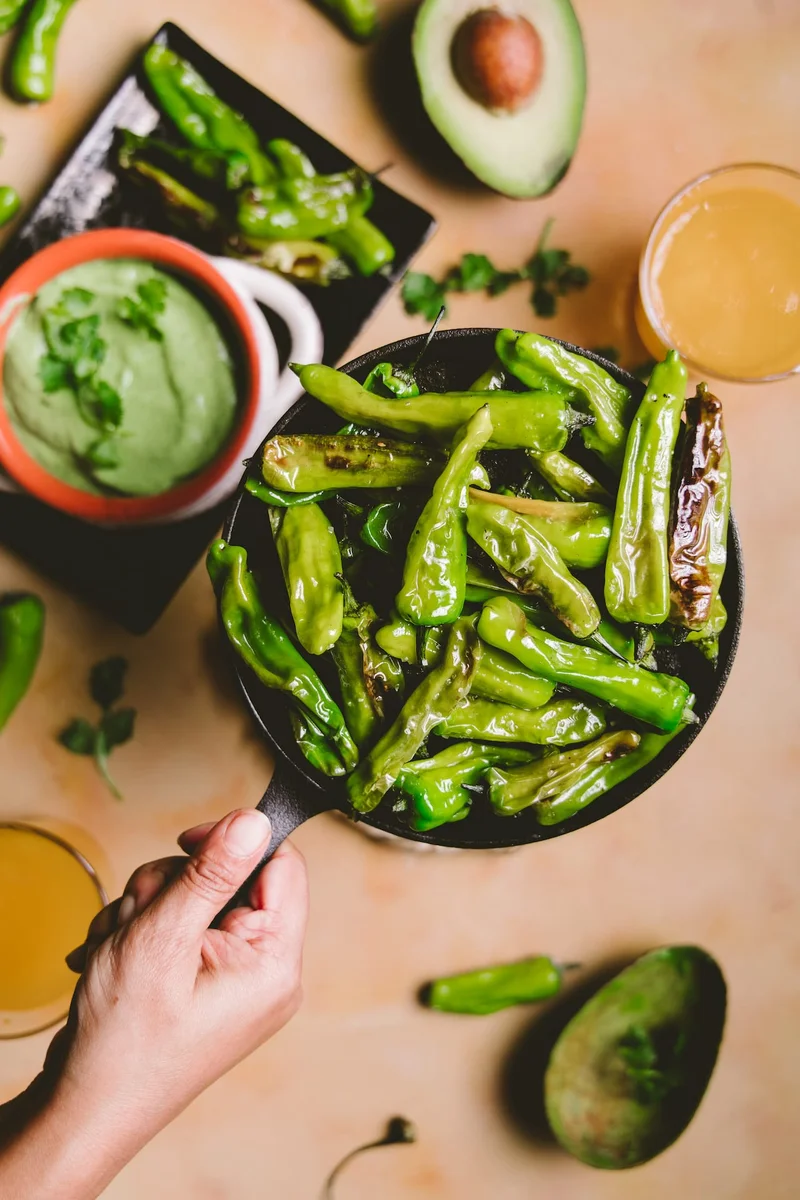
Shishito peppers blister quickly in a hot pan until smoky and tender, then get a simple finish of salt. This Japanese-inspired snack takes just minutes and is easy to serve straight from the pan.
Ingredients
- 454 g (16 oz)shishito peppers
- 5 ml (1 teaspoon)oil
- 2.5 ml (1/2 teaspoon), or more to tastesalt
Instructions
- 1
Heat the pan
Set a cast-iron pan over medium-high heat and drizzle in the oil.
- 2
Blister the peppers
Arrange the shishito peppers in the pan and cook until blistered all over.
- 3
Season and serve
Sprinkle with salt and enjoy right away.
What are shishito peppers?
Shishito peppers are slender green peppers often served as a quick Japanese-style appetiser or snack. They are commonly found on izakaya menus, where simple, shareable dishes suit a relaxed drink.
This version keeps the preparation spare: a hot pan chars the peppers, and salt brings out their savoury flavour. Serve them as soon as they leave the pan, while their skins are still blistered and warm.
Nutrition and macros by portion
The nutrition label shows one serving as written: 45 calories, 2g protein, 8g carbs, 1g fat.
| Portion | Adjustment | kcal | Protein | Carbs | Fat |
|---|---|---|---|---|---|
| Lighter | Use less oil | 31 kcal | 2g | 5g | 1g |
| This serving | As written | 45 kcal | 2g | 8g | 1g |
| Hungry | Double the pepper portion | 68 kcal | 4g | 12g | 2g |
The peppers provide most of the carbohydrates and fibre, while the small amount of oil contributes most of the fat. There is little protein in the ingredients; pair a serving with a protein-rich dish and a grain or other filling side to make a more balanced plate.
Choosing the ingredients
Peppers: Choose firm, bright-green shishitos, ideally of similar size so they cook at roughly the same pace. Dry them well after washing to help them blister rather than steam.
Oil and salt: A small amount of oil helps the skins make contact with the hot pan. Start with the listed salt and add more only after tasting.
Getting a good char
Hot pan: Let the cast-iron pan heat thoroughly over medium-high heat before adding the peppers. This encourages quick blistering without needing a long cook.
Room to move: Arrange the peppers in a layer so they can touch the pan. If they are piled up, cook them in batches rather than crowding them.
Knowing when they are done
Blistered skins: Turn or shift the peppers as needed so they char on different sides. Look for scattered dark spots and softened skins, while keeping the peppers intact.
Quick finish: The method gives no fixed cooking time, so use the colour and texture as your guide. Salt them as soon as they come out of the pan.
Serving them warm
Straight away: These peppers are at their best just after cooking, when the skin is still hot and the flesh tender. Set them out as a snack to share or serve them alongside a Japanese-inspired meal.
To drink: Their salty, smoky flavour pairs well with a chilled drink. Keep any extra seasoning on the side so everyone can adjust their portion.
Scaling the batch
For more people: Cook extra peppers in batches, keeping each layer uncrowded so the pan stays hot. Season each batch lightly, then taste before adding more salt.
For fewer people: Reduce the ingredients proportionally and use a pan that still lets the peppers sit in a loose layer.
Recipe notes & tips
- Dry the peppers thoroughly before they go into the pan.
- Preheat the cast-iron pan so the peppers start blistering as soon as they touch it.
- Use tongs to turn the peppers without piercing their skins.
- Cook in batches if the peppers do not fit in a single layer.
- Taste before adding extra salt, as the listed amount can be adjusted to suit you.
Variations
- Add lemon: Squeeze a little lemon over the peppers just before serving.
- Use flaky salt: Finish with a pinch of flaky salt for a different texture.
- Add sesame: Scatter toasted sesame seeds over the cooked peppers.
- Serve with a dip: Offer a savoury dipping sauce on the side.
- Add spice: Finish with a small pinch of chilli flakes.
Common mistakes to avoid
- Wet peppers: They are more likely to steam than char, so pat them thoroughly dry.
- Cold pan: The skins may soften before they blister, so preheat the pan first.
- Crowded pan: The peppers can steam in a pile, so cook them in batches.
- Too much oil: Excess oil can make the peppers greasy, so measure the small amount specified.
- Salting too early: Salt can draw moisture out while the peppers cook, so add it at the end.
How to store
These peppers are best eaten straight away. If you have leftovers, refrigerate them in a covered container for up to 3 days and reheat briefly in a hot pan; their skins may be softer after storage.
Frequently asked questions
How do I know when shishito peppers are cooked?
Look for blistered, browned patches across the skins and peppers that have softened but still hold their shape. The recipe does not specify a cooking time, so follow these visual cues.
Can I cook these without a cast-iron pan?
Yes. Use another heavy frying pan that can be heated over medium-high heat, and cook the peppers in a single layer.
Do I need to remove the stems?
The method leaves the peppers whole and does not call for removing their stems. You can hold the peppers by the stems when eating them.
Can I prepare shishito peppers ahead?
They cook so quickly that it is best to make them just before serving. You can wash and dry the peppers in advance, then keep them refrigerated until cooking.
What should I serve with charred shishito peppers?
Serve them as a snack or appetiser, or add them to a meal with rice and a protein-rich main. A chilled drink is also a simple pairing.
Cook it from the original
This recipe comes from playfulcooking.com. Their page has the author’s own photos, notes and tips — the best place to cook it from.
Open the recipe on playfulcooking.com