
Cottage cheese pancakes
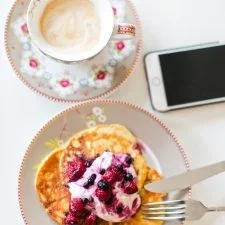
These small cottage cheese pancakes blend egg, cottage cheese and psyllium into a simple batter, then cook gently until golden and firm enough to turn. They make a quick breakfast or light meal, with optional vanilla protein powder for extra flavour and protein.
Ingredients
- 1egg
- 125 gcottage cheese
- ¾ tbsppsyllium husk powder
- 10 g (optional; ½ scoop)vanilla protein powder
- A pinchsalt
- To tasteunflavoured coconut fat, for the pan
Instructions
- 1
Blend the batter
Blend everything with a stick blender. Spoon the batter into four pancakes in a pan greased with unflavoured coconut fat. Cook over fairly low heat (about 50% power) for a relatively long time, until the undersides are golden and the pancakes are firm enough to turn.
- 2
Finish gently
When the pancakes look cooked, cover the pan with a lid and turn off the hob. Leave them briefly to finish cooking in the residual heat.
What are cottage cheese pancakes?
These are small, soft pancakes made from cottage cheese and egg rather than a conventional flour-based batter. This Swedish-language recipe uses keso, the Swedish name for cottage cheese, with psyllium to help the mixture hold together.
The method is deliberately simple: blend the ingredients, cook the pancakes slowly, then let them finish under a lid. That gentle approach helps set the centres without over-browning the outsides.
Nutrition and macros by portion
The nutrition label shows one serving as written: 280 calories, 29g protein, 7g carbs, 15g fat.
| Portion | Adjustment | kcal | Protein | Carbs | Fat |
|---|---|---|---|---|---|
| Lighter | Use less pan fat | 196 kcal | 20g | 5g | 11g |
| This serving | As written | 280 kcal | 29g | 7g | 15g |
| Hungry | Serve with fruit and yoghurt | 420 kcal | 44g | 11g | 23g |
The egg, cottage cheese and optional protein powder provide most of the protein, while the egg and coconut fat contribute much of the fat. Carbohydrate content is modest and mainly comes from the cottage cheese and any protein powder; serve with fruit or wholegrain toast if you want a more balanced, filling plate.
Choosing the ingredients
Cottage cheese: Use the stated 125 g; blending it with the egg makes a more even batter. A stick blender also breaks up the curds, so the pancakes are less lumpy.
Psyllium: The small amount thickens the mixture and helps the pancakes stay together when turned. Use finely powdered psyllium, as specified, rather than assuming whole husks will behave identically.
Protein powder: The recipe treats 10 g of vanilla protein powder as an optional addition. Leave it out if you prefer a plainer flavour; the recipe does not specify a different liquid amount.
Blend to an even batter
Blend until the cottage cheese is incorporated and there are no obvious dry pockets of psyllium. Scrape the sides of the mixing vessel if powder is stuck there, then blend briefly again.
Psyllium thickens as it absorbs moisture, so work steadily once the batter is mixed. Spoon it into the pan rather than trying to pour it like a thin crêpe batter.
Cook slowly before turning
Low heat: The recipe calls for fairly gentle heat, around 50% power, and a relatively long first side. Keep the pan from getting so hot that the undersides colour before the centres set.
Turning cue: Wait until the underside is golden and each pancake feels stable enough to lift. If it bends or breaks when you slide a spatula under it, give it more time.
Use the lid for the finish
Once the pancakes look cooked, cover the pan and switch off the hob, as the recipe directs. The trapped warmth gives them a little time to finish without continuing to brown over direct heat.
The method does not give a precise cooking time, so use the colour and firmness cues rather than the clock. Pan material, hob strength and pancake thickness can all affect how long they need.
Serving ideas
Serve the pancakes warm, on their own or with fruit and yoghurt for a fuller breakfast. A little extra cottage cheese can also suit their savoury, mild flavour.
For a more substantial plate, add fruit or another side rather than making the pancakes much thicker; thinner pancakes are easier to cook through gently.
Recipe notes & tips
- Blend thoroughly so the psyllium is evenly distributed through the batter.
- Keep the heat fairly low to give the centres time to set.
- Use a non-stick pan if you have one, and grease it lightly with unflavoured coconut fat.
- Make four pancakes as directed so they are easier to turn than one large pancake.
- Wait for a golden underside and a stable shape before turning.
- Use the lid and residual heat for the final stage instead of leaving the pan over direct heat.
Variations
- Add cinnamon: Blend a pinch into the batter for a warm spice note.
- Use plain protein powder: Swap the optional vanilla powder for an unflavoured version.
- Serve with berries: Add fresh or thawed berries alongside the warm pancakes.
- Make them savoury: Leave out the optional vanilla powder and serve with extra cottage cheese.
- Add lemon zest: Blend a little finely grated zest into the mixture for a fresh flavour.
Common mistakes to avoid
- Turning too soon: The pancakes may split; wait until the undersides are golden and the shapes feel stable.
- Cooking over high heat: The outsides can brown before the centres set; keep the heat fairly low.
- Uneven blending: Dry psyllium pockets can make the texture patchy; blend thoroughly and scrape down the sides.
- Making one large pancake: It can be difficult to turn intact; portion the batter into four pancakes.
- Skipping the covered finish: The centres may need more time; cover the pan and let them stand on the switched-off hob.
How to store
Cool leftovers promptly, then refrigerate in a covered container and eat within 2 days. Reheat gently in a covered pan over low heat or in the microwave until warmed through.
Frequently asked questions
Can I leave out the protein powder?
Yes. It is marked as optional in the recipe, so you can omit it. The pancakes will have a less pronounced vanilla flavour.
Why are my pancakes difficult to turn?
They may need more time on the first side. Wait for a golden underside and a firmer shape before sliding a spatula underneath.
Can I use whole psyllium husks?
The recipe specifies finely powdered psyllium. Whole husks may absorb liquid differently, so use the powdered form for the intended texture.
How do I know when the pancakes are cooked?
The recipe uses a golden underside and enough firmness to turn as the main cues. Covering the pan after they look cooked lets them finish in the residual heat.
Can I make the batter ahead?
It is best to blend and cook it straight away, since psyllium thickens as it absorbs moisture. If you do prepare it early, expect a thicker batter.
What can I serve with them?
Try fruit and yoghurt for a simple breakfast, or extra cottage cheese for a savoury option. The pancakes are also fine served on their own.
Cook it from the original
This recipe comes from 56kilo.se. Their page has the author’s own photos, notes and tips — the best place to cook it from.
Open the recipe on 56kilo.se