
Vegan vanilla kipferl
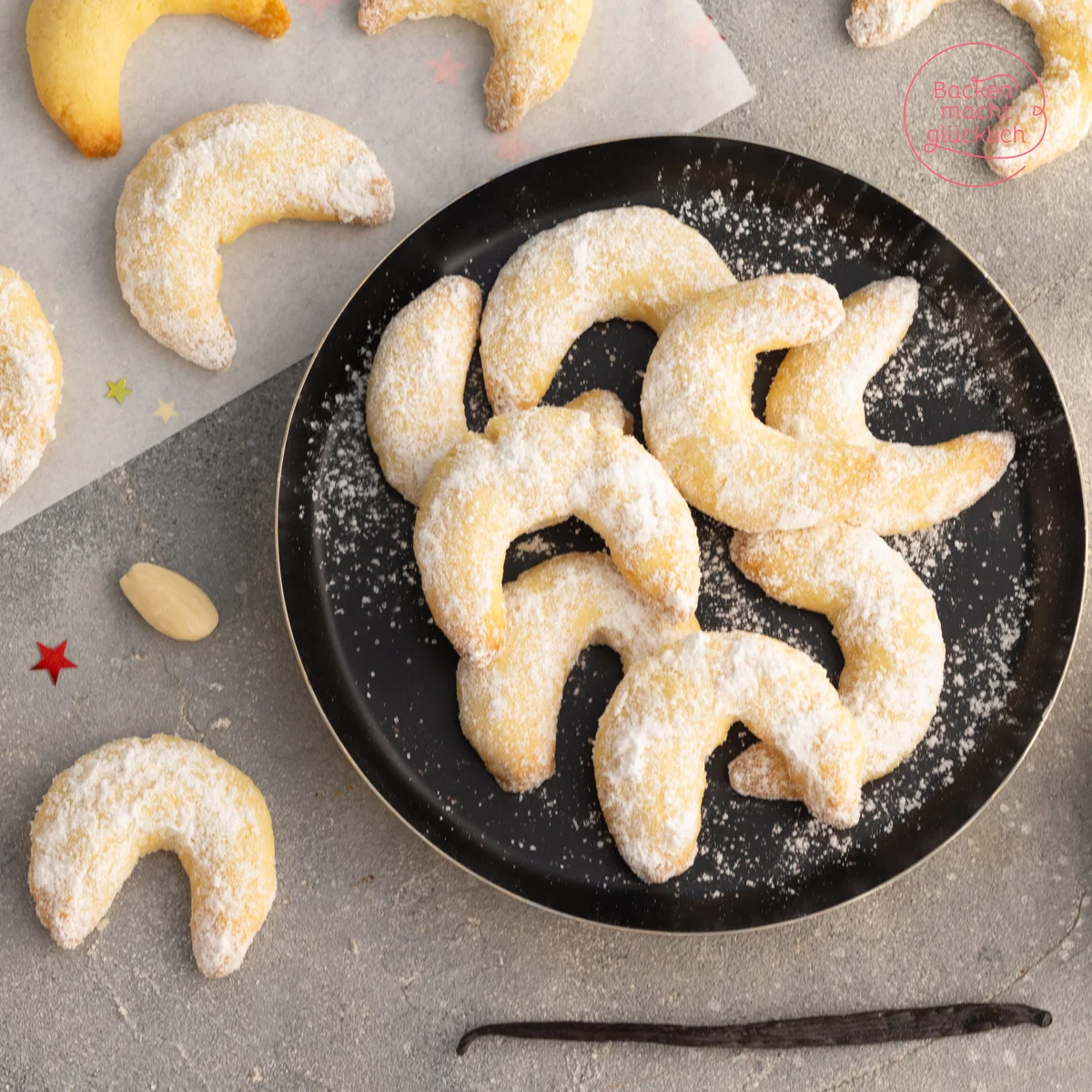
These vegan vanilla kipferl are delicate, crescent-shaped biscuits with a rich almond flavour and a light coating of vanilla sugar. Make them for a festive biscuit tin or whenever you want a crumbly treat without eggs or dairy.
Ingredients
- 200 gplain flour
- 100 gground blanched almonds
- 75 gsugar
- 1 sachetvanilla sugar
- 1 pinchsalt
- 1vanilla pod, seeds only
- 180 gcold margarine or vegan butter
- 30 g (approx.)icing sugar
- 20 gsugar
- 1 sachetvanilla sugar
Instructions
- 1
Make the dough
Put the flour, almonds, 75 g sugar, salt, vanilla seeds and cold margarine or vegan butter, cut into small pieces, in a bowl. Mix with dough hooks until crumb-like, then knead briskly to make a smooth dough. Finish briefly by hand if needed.
- 2
Chill the dough
Divide the dough in half and shape each portion into a thick roll about 20 cm long; they do not need to be perfectly even. Wrap in cling film and chill for at least 1 hour, or overnight.
- 3
Shape the kipferl
Take the first portion from the fridge and preheat the oven to 175°C conventional. Line a baking tray with baking paper. On a lightly floured work surface or baking mat, roll the dough into a longer, thinner cylinder, then cut it into about 20 pieces with a sharp knife. Shape each piece into a small crescent with tapered ends, about 8 cm long; keep them modest in size as they expand in the oven.
- 4
Bake and coat
Bake the kipferl for about 11–13 minutes, keeping them pale. Meanwhile, mix the icing sugar, 20 g sugar and vanilla sugar. Shape the second portion into kipferl. Let the first batch cool very briefly, then roll or dip the biscuits while still warm in the sugar mixture. Repeat with the second tray.
What are vanilla kipferl?
Kipferl are crescent-shaped biscuits associated with central European baking, especially Austrian and German Christmas traditions. Their tender, sandy crumb and curved shape make them recognisable among festive biscuits.
This version uses ground almonds and cold vegan margarine instead of the classic butter-based dough. Vanilla in the dough and the warm sugar coating give each biscuit a fragrant finish.
Nutrition and macros by portion
The nutrition label shows one serving as written: 75 calories, 1g protein, 8g carbs, 5g fat.
| Portion | Adjustment | kcal | Protein | Carbs | Fat |
|---|---|---|---|---|---|
| Lighter | Make smaller kipferl | 53 kcal | 1g | 6g | 3g |
| This serving | As written | 75 kcal | 1g | 8g | 5g |
| Hungry | Serve a few extra | 113 kcal | 2g | 12g | 7g |
The flour and sugars provide most of the carbohydrates, while the margarine and almonds contribute most of the fat; the almonds also provide some protein. Pair a few biscuits with fresh fruit or a plant-based yoghurt for a more filling snack.
Why the dough needs chilling
Cold margarine: starting with it in small pieces helps the mixture first turn crumbly before it comes together into dough.
Chilling: resting the wrapped dough for at least an hour firms it up, making it easier to roll, cut and shape. The recipe also allows an overnight rest.
Shaping neat crescents
Even pieces: divide the thin dough roll into about 20 portions for each half of the dough, then shape each into a small crescent.
Tapered ends: pinch the ends gently so they come to a point, and keep the kipferl around 8 cm long. They spread and puff as they bake, so avoid making them oversized.
Keep the biscuits pale
Oven setting: bake at 175°C conventional for about 11–13 minutes. The aim is a pale biscuit rather than a deeply browned one.
Doneness: check the edges and underside for the first hint of colour, as the delicate crumb can dry out if the biscuits are left in too long.
The warm sugar coating
Coating mix: combine the icing sugar, sugar and vanilla sugar while the first tray bakes so it is ready when the biscuits come out.
Warm biscuits: let them sit only briefly before rolling or dipping them in the mixture. Handle gently, as they are fragile while warm.
Serving and timing
The recipe makes 40 small biscuits, with the dough split into two batches of about 20. Shaping the second portion while the first tray bakes keeps the method moving.
Serve the kipferl with tea or coffee, or arrange them alongside other small biscuits. Their sweet vanilla coating pairs well with an unsweetened hot drink.
Recipe notes & tips
- Use cold margarine or vegan butter so the dough begins as a crumbly mixture.
- If the dough is difficult to shape, chill it for longer before rolling.
- Use a sharp knife to cut the rolled dough into pieces without squashing it.
- Keep the crescents small because they expand during baking.
- Prepare the coating mixture before the biscuits come out of the oven.
- Coat the biscuits while warm, but give them a brief pause so they are easier to handle.
Variations
- Extra vanilla: add a little more vanilla to the dough for a stronger aroma.
- Citrus note: add finely grated lemon zest to the dough for a fresh flavour.
- Chocolate finish: dip the cooled ends in melted vegan dark chocolate.
- Nut swap: use another finely ground nut in place of the almonds for a different flavour.
- Spiced coating: add a pinch of cinnamon to the sugar mixture for a warm variation.
Common mistakes to avoid
- Warm dough: it can become sticky and awkward to shape; chill it until firm.
- Large crescents: they spread and puff in the oven; shape small biscuits with tapered ends.
- Overbaking: the kipferl can lose their delicate texture; take them out while still pale.
- Coating when fully cold: the sugar may not cling as well; roll the biscuits while still warm.
- Handling too soon: hot kipferl are fragile; let them cool briefly before coating.
How to store
Once completely cool, keep the kipferl in an airtight biscuit tin at room temperature for about 2 weeks. They are best eaten as biscuits rather than reheated, as warming can make the delicate crescents crumble.
Frequently asked questions
Can I chill the dough overnight?
Yes. Wrap both portions well and leave them in the fridge overnight, as the method allows.
Can I use vegan butter instead of margarine?
Yes, the recipe specifies cold margarine or vegan butter. Use it cold and cut it into small pieces before mixing.
How do I know when the kipferl are done?
Bake them for about 11–13 minutes at 175°C conventional and keep them pale. Check for only a slight hint of colour around the edges or underneath.
Why are my kipferl difficult to shape?
The dough may have softened while being handled. Return it to the fridge until firm, then roll and shape it on a lightly floured surface.
Should I coat the biscuits while hot or cold?
Let them cool very briefly after baking, then coat them while still warm. They are more fragile when very hot, so handle them gently.
Cook it from the original
This recipe comes from backenmachtgluecklich.de. Their page has the author’s own photos, notes and tips — the best place to cook it from.
Open the recipe on backenmachtgluecklich.de