
Whole Wheat Bread
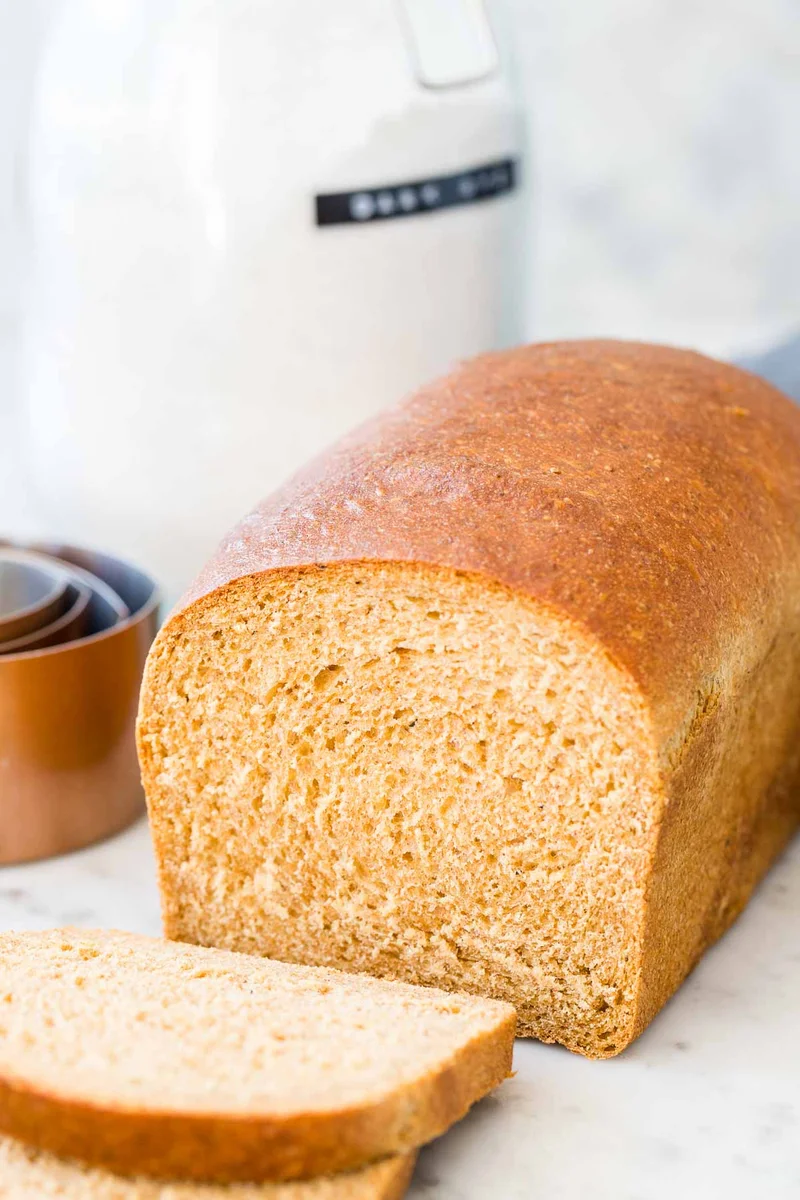
This soft sandwich loaf is made entirely with wholemeal flour and sweetened with honey, molasses or maple syrup. It takes time to rise, but the hands-on work is simple and the finished bread is versatile for toast and sandwiches.
Ingredients
- 120 ml (½ cup)lukewarm water
- 60 ml (¼ cup)orange juice
- 60 ml (¼ cup)milk, or more water
- 60 ml (¼ cup)vegetable oil
- 85 g (¼ cup)honey, molasses or maple syrup
- 420 g (3½ cups, spooned and levelled)wholemeal flour
- 8 g (2½ tsp)instant yeast
- 6 g (1 tsp)salt
Instructions
- 1
Mix and knead
Put all the ingredients in the bowl of a stand mixer and mix until a dough forms. Leave it for 20 minutes, then knead for 8–10 minutes until smooth and elastic; it will still feel slightly sticky. If kneading by hand, lightly oil your hands and the work surface.
- 2
Let dough rise
Move the dough to a greased bowl, cover it with a tea towel or plastic wrap and leave it in a warm place for about 1 hour, until puffy and nearly doubled in size.
- 3
Shape the loaf
Transfer the dough to a floured work surface and gently pat it into a 20 × 30 cm (8 × 12 inch) rectangle, pressing out air pockets. Starting at a short end, roll it up tightly and pinch the seam closed. Tuck the ends slightly underneath to create surface tension, then place it seam-side down in a greased 20 × 10 cm (8 × 4 inch) loaf tin. Cover with greased plastic wrap and leave in a warm, draught-free place for about 45 minutes, until the centre rises about 2.5 cm (1 inch) above the rim.
- 4
Preheat the oven
Heat the oven to 175°C (350°F), with a rack in the lower-middle position.
- 5
Bake the bread
Bake for 35–40 minutes, until golden brown and the centre of the loaf reaches 82°C (180°F).
- 6
Cool before slicing
Turn the loaf out onto a cooling rack, then turn it upright again. If desired, rub the crust with butter for a softer, more flavourful finish. Let the bread cool completely before slicing.
What is whole wheat bread?
Whole wheat bread is made with flour that includes the grain’s bran and germ as well as its starchy centre. This American-style loaf is shaped in a tin for neat slices and a soft, sandwich-friendly crumb.
All-whole-wheat dough can feel denser and thirstier than dough made with white flour. The liquid, oil and sweetener in this version help make a pliable dough and a tender loaf.
Nutrition and macros by portion
The nutrition label shows one serving as written: 2253 calories, 62g protein, 386g carbs, 68g fat.
| Portion | Adjustment | kcal | Protein | Carbs | Fat |
|---|---|---|---|---|---|
| Lighter | Use thinner slices | 1577 kcal | 43g | 270g | 48g |
| This serving | As written | 2253 kcal | 62g | 386g | 68g |
| Hungry | Serve a larger slice | 3380 kcal | 93g | 579g | 102g |
The flour supplies most of the carbohydrates and some protein; the vegetable oil contributes much of the fat, while the milk and sweetener add smaller amounts. Pair a slice or sandwich with a protein-rich filling and fruit or salad to balance the plate.
Choosing the ingredients
Flour: Spoon the flour into the measuring cup and level it rather than packing it down; too much flour can make the loaf dry. The recipe uses wholemeal flour throughout, so there is no need to blend in white flour.
Sweetener: Honey, molasses and maple syrup are offered as alternatives. Each brings a different flavour, but the recipe uses the same stated quantity whichever you choose.
Liquid: Orange juice, milk and water form the dough’s liquid base. You can replace the milk with additional water as the ingredient list allows.
Why the resting time matters
Initial rest: After mixing, let the dough sit for 20 minutes before kneading. This gives the flour time to absorb liquid, which helps make kneading more effective.
Kneading: Work the dough for 8–10 minutes until it feels smooth and elastic. A slight tackiness is expected, so avoid adding extra flour just to make it feel dry.
Getting a good rise
First rise: Cover the dough and leave it somewhere warm for about 1 hour. Look for a puffy dough that has nearly doubled, rather than relying on the clock alone.
Final rise: Once shaped, let the loaf rise until its centre crowns about 2.5 cm (1 inch) above the tin. Keep it away from draughts so the dough can rise steadily.
Shaping for an even loaf
Rectangle: Pat the dough into a 20 × 30 cm (8 × 12 inch) rectangle and press out visible air pockets before rolling. This helps avoid large holes in the baked slices.
Tight roll: Roll from a short end, pinch the seam closed and tuck the ends underneath. Set the loaf seam-side down in the tin so it holds its shape as it rises.
Checking when it is baked
Colour: The crust should be golden brown after 35–40 minutes in a 175°C (350°F) oven. The recipe also gives an internal temperature target of 82°C (180°F) as a doneness check.
Cooling: Let the loaf cool completely on a rack before slicing. Cutting while warm can compress the soft crumb and make the slices harder to handle.
Ways to serve it
Toast: Serve slices toasted with butter, jam or a savoury spread. The loaf’s mild sweetness also works well with nut butter.
Sandwiches: Use fully cooled slices for sandwiches with fillings such as cheese, salad or leftover roast vegetables. Pair a sandwich with fruit or a simple salad for a more rounded plate.
Recipe notes & tips
- Use lukewarm, not hot, water so the dough starts at a comfortable temperature for the yeast.
- If kneading by hand, lightly oil your hands and work surface rather than adding lots of flour.
- Keep the dough covered during both rises to stop its surface drying out.
- Grease the loaf tin and the plastic wrap that covers the shaped loaf to help prevent sticking.
- Use the stated rise cues as well as the approximate timings, since dough can rise at different rates.
- Wait until the loaf is completely cool before slicing for cleaner, less compressed slices.
Variations
- Use molasses: Swap it for the honey for a deeper, more robust sweetness.
- Use maple syrup: Choose it in place of honey for a different, gentle sweetness.
- Replace the milk: Use the additional water allowed for in the ingredient list.
- Soften the crust: Rub the warm loaf with butter after turning it out, as suggested in the method.
- Make toast: Slice the cooled loaf and toast it for a crisp-edged breakfast or snack.
Common mistakes to avoid
- Packing the flour: This can leave the dough too dry; spoon it into the measuring cup and level it.
- Adding too much flour: The dough is meant to be slightly sticky; use lightly oiled hands for hand-kneading.
- Rushing the first rise: Wait until the dough is puffy and nearly doubled, even if it needs more than the approximate hour.
- Underproofing the shaped loaf: Let the centre crown about 2.5 cm (1 inch) above the tin rim before baking.
- Cutting it warm: Cool the loaf completely first to avoid squashing its crumb.
How to store
Once completely cool, store the loaf in a sealed bag or bread container at room temperature and use within a few days. Reheat slices in a toaster; freezing sliced bread is a convenient option for longer storage.
Frequently asked questions
Can I use active dry yeast?
The ingredient list specifies instant yeast and points to separate notes for active dry yeast. Follow the original recipe’s yeast notes if making that substitution.
Can I use water instead of milk?
Yes. The ingredient list allows the milk to be replaced with more water.
How do I know when the dough has risen enough?
For the first rise, look for dough that is puffy and nearly doubled. After shaping, it should crown about 2.5 cm (1 inch) above the tin rim.
Why is the dough slightly sticky?
A slightly sticky texture is expected for this dough. If kneading by hand, lightly oil your hands and the work surface rather than adding a large amount of flour.
Can I slice the bread while it is warm?
It is better to wait until it has cooled completely. This helps the soft loaf hold its shape when sliced.
What can I use instead of honey?
The recipe offers molasses or maple syrup as alternatives, using the same stated quantity.
Cook it from the original
This recipe comes from platedcravings.com. Their page has the author’s own photos, notes and tips — the best place to cook it from.
Open the recipe on platedcravings.com