
Mashed Potato Cakes
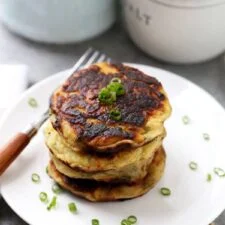
These American-style mashed potato cakes turn leftover mash into crisp, golden patties with soft, fluffy centres. They make a quick side dish or a simple way to give cold mashed potatoes a new lease of life.
Ingredients
- 480 ml (2 cups)cold or room-temperature mashed potatoes
- 1 largeegg, whisked
- 2garlic cloves, minced
- 5spring onions, finely chopped
- 60 g (½ cup)plain flour
- 5 ml (1 teaspoon)kosher salt
- 2.5 ml (½ teaspoon)ground black pepper
- 45 ml (3 tablespoons)vegetable oil
Instructions
- 1
Mix the potatoes
In a large bowl, combine the mashed potatoes, whisked egg, garlic, spring onions, salt and pepper. Divide the mixture into 8 equal portions and shape each into a patty about 1.3 cm (½ inch) thick.
- 2
Heat the oil
Pour the oil into a large pan and heat it over a medium-high heat.
- 3
Coat the patties
Coat each patty in flour, then place it in the pan. Cook in two batches if needed; the original recipe’s pan held 4 patties at a time.
- 4
Fry until golden
Cook for about 6 minutes on each side, until golden brown. Flip the patties and cook the second side for about the same amount of time.
- 5
Serve the cakes
Transfer the cooked potato cakes to a plate and serve.
What are mashed potato cakes?
Mashed potato cakes are patties made by combining mash with a binder and seasonings, then pan-frying them until crisp. They are a familiar American-style way to make a fresh dish from leftover mashed potatoes.
This version adds egg, garlic and spring onions for flavour, with a flour coating to help the outside brown. The result is a contrast of crisp edges and a soft centre.
Nutrition and macros by portion
The nutrition label shows one serving as written: 89 calories, 2g protein, 13g carbs, 3g fat.
| Portion | Adjustment | kcal | Protein | Carbs | Fat |
|---|---|---|---|---|---|
| Lighter | Use less pan oil | 62 kcal | 2g | 9g | 2g |
| This serving | As written | 89 kcal | 2g | 13g | 3g |
| Hungry | Serve a larger portion | 134 kcal | 3g | 19g | 5g |
The potatoes and flour provide most of the carbohydrates, while the vegetable oil contributes much of the fat. The egg adds some protein, with a smaller amount from the potatoes; serve a cake or two with a protein-rich main and vegetables for a more balanced plate.
Start with cold mash
Potatoes: Cold or room-temperature mash is easier to portion and shape than warm, loose mash. If yours is very soft, handle the patties gently as you coat them.
Seasoning: Garlic and spring onions bring savoury flavour to the mild potatoes. Mix them through evenly so each cake gets some of both.
Shape and coat gently
Patties: Divide the mixture into 8 equal portions and shape them to about 1.3 cm thick. Even sizing helps them cook at a similar rate.
Flour: Coat each patty just before it goes into the pan. A light, even coating helps form a browned exterior without leaving excess flour on the surface.
Fry in manageable batches
Pan space: Leave room between the cakes rather than crowding them. If your pan cannot hold all 8 comfortably, cook in batches as the recipe suggests.
Heat: Use a medium-high heat and give the oil time to warm before adding the patties. Keep an eye on the colour as they cook so the outside browns without burning.
Look for a golden crust
First side: Let each patty cook for about 6 minutes before turning. A well-browned surface should release more easily from the pan than one that is still pale.
Second side: Cook for about 6 minutes again, checking that the cakes are golden on both sides. The centre should remain soft rather than turning dry.
Serve them while crisp
These cakes are best served soon after frying, when their outsides are at their crispest. They work as a side for eggs, roasted vegetables or a simple salad.
For a fuller plate, pair them with a protein-rich main and something fresh or lightly dressed to balance the rich, starchy patties.
Recipe notes & tips
- Use cold or room-temperature mashed potatoes so the mixture is easier to shape.
- Make the patties as even as possible to help them brown at the same pace.
- Coat each patty in flour just before frying.
- Cook in batches if the patties would crowd your pan.
- Give the first side time to brown before trying to turn the cakes.
Variations
- Add herbs: Mix chopped parsley or chives into the potato mixture.
- Bring the heat: Add a pinch of chilli flakes to the mash for a little warmth.
- Add cheese: Fold grated cheese into the mixture for a richer, savoury cake.
- Change the onion: Use finely chopped chives in place of the spring onions.
- Serve with a dip: Offer sour cream or a tangy yoghurt sauce alongside.
Common mistakes to avoid
- Using warm, loose mash: It can be difficult to shape; chill it briefly before forming the patties.
- Making uneven patties: Different thicknesses cook at different rates; aim for about 1.3 cm each.
- Skipping the flour coating: The cakes may not develop the same browned exterior; coat each one before frying.
- Crowding the pan: The patties are harder to turn and brown evenly; cook in batches.
- Flipping too soon: The surface may tear before it has browned; allow about 6 minutes before turning.
How to store
Refrigerate leftover cakes in a covered container for up to 3 days. Reheat in a lightly oiled pan over medium heat until hot, turning once; this helps revive the crisp exterior.
Frequently asked questions
Can I use freshly made mashed potatoes?
Yes, but let them cool to room temperature first. Warm mash can be softer and harder to shape into patties.
Can I make the patties ahead?
You can shape them ahead and keep them covered in the fridge until ready to cook. Coat them in flour just before they go into the pan.
How do I know when to flip a cake?
After about 6 minutes, check that the underside is golden and the patty releases readily from the pan. If it is still pale, give it a little longer.
Why are my potato cakes falling apart?
The mash may be too soft, or the patties may have been turned before the first side browned. Chill very soft mash and handle the cakes gently.
Can I bake these instead of pan-frying?
The recipe is designed for pan-frying, which gives the cakes their browned crust. Baking will produce a different, less directly seared surface.
Cook it from the original
This recipe comes from pickledplum.com. Their page has the author’s own photos, notes and tips — the best place to cook it from.
Open the recipe on pickledplum.com