
Basic Pork Adobo Recipe
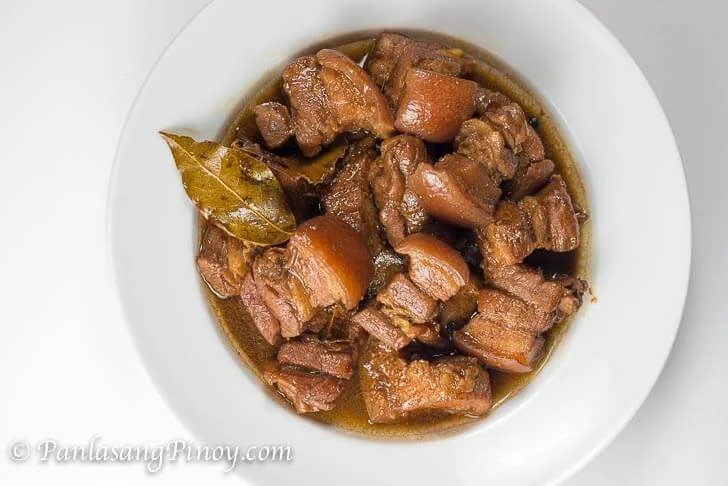
Filipino pork adobo simmers pork belly with soy sauce, vinegar, garlic, peppercorns and bay leaves until tender. This version is straightforward to make in one pot, with a savoury, tangy sauce for spooning over rice.
Ingredients
- 680 g (1 1/2 lb)pork belly, cubed
- 1 1/2 teaspoonswhole peppercorns
- 5 to 6dried bay leaves
- 6 to 8 clovesgarlic, crushed
- 5 tablespoonssoy sauce
- 3 tablespoonscoconut vinegar
- 360 ml (1 1/2 cups)water or beef broth
- 3 tablespoonscooking oil
- to taste, optionalsalt
Instructions
- 1
Heat the oil
Heat the cooking oil in a pot.
- 2
Cook the garlic
Add the crushed garlic and cook until it just starts to turn light brown.
- 3
Infuse the oil
Add the peppercorns and bay leaves, then cook for 20 seconds so their flavours infuse the oil.
- 4
Brown the pork
Add the pork belly and stir as it cooks until lightly browned. Keep an eye on the garlic so it does not burn, adjusting the heat if needed.
- 5
Simmer until tender
Pour in the soy sauce and water or beef broth, then bring to the boil. Cover and cook over low heat for 40 minutes, or until the pork is tender. If the liquid is drying up too quickly, add more water or beef broth.
- 6
Add the vinegar
Pour in the vinegar and bring the liquid back to the boil. Stir and cook for 8 minutes.
- 7
Check the seasoning
Taste the adobo and add salt if needed.
- 8
Serve the adobo
Transfer the pork and sauce to a serving plate and serve.
- 9
Enjoy together
Share and enjoy.
What is pork adobo?
Adobo is a Filipino way of cooking ingredients in a savoury, tangy mixture that commonly includes vinegar, soy sauce, garlic and spices. Its name is related to the Spanish word for seasoning or marinade, but Filipino adobo has its own long-established cooking traditions and many regional and household variations.
This version uses pork belly, which becomes tender as it simmers and gives the sauce a rich flavour. Peppercorns and bay leaves add aromatic depth without complicating the method.
Nutrition and macros by portion
The nutrition label shows one serving as written: 970 calories, 16g protein, 3g carbs, 101g fat.
| Portion | Adjustment | kcal | Protein | Carbs | Fat |
|---|---|---|---|---|---|
| Lighter | Use leaner pork belly | 679 kcal | 11g | 2g | 71g |
| This serving | As written | 970 kcal | 16g | 3g | 101g |
| Hungry | Serve with extra rice | 1455 kcal | 24g | 5g | 152g |
Pork belly provides most of this dish's energy, fat and protein, while the soy sauce contributes much of the sodium; rice served alongside adds carbohydrates. Balance a serving with vegetables and rice, adjusting the rice portion to suit the meal.
Choosing the pork
Pork belly: Cut it into reasonably even cubes so the pieces cook at a similar pace. It has plenty of fat, which makes the finished adobo rich and succulent.
Beef broth or water: Broth gives the simmering liquid a fuller savoury note, while water lets the soy, vinegar and pork flavours stand out more clearly. Either works here.
Build flavour in the pot
Garlic first: Let the crushed garlic turn only lightly golden before adding the pork. It continues cooking in the pot, so taking it too far at this stage can make it taste bitter.
Whole spices: A brief 20-second cook gives the peppercorns and bay leaves time to perfume the oil. Keep the heat moderate and stir if the garlic is colouring quickly.
Get the simmer right
Low heat: Once the liquid boils, cover the pot and keep it at a gentle simmer for 40 minutes. A hard boil can reduce the liquid too quickly before the pork has softened.
Tenderness: Check a piece after the stated cooking time; it should be tender when pierced. If it is still firm, continue simmering and add a splash of water or broth if the pot is becoming dry.
When to add vinegar
Vinegar goes in after the covered simmer in this method. Bring the liquid back to the boil, then cook it for 8 minutes to blend its sharpness with the soy and pork juices.
Coconut vinegar gives the dish a distinctive tang, but the recipe's timing is just as important as the ingredient: add it at the specified stage rather than at the beginning.
Serving ideas
Rice: Steamed rice is a natural partner for the rich pork and its savoury, tangy sauce. Spoon some of the cooking liquid over the rice, rather than leaving it behind.
To balance the plate, serve a modest portion of pork alongside vegetables such as lightly cooked greens. Their fresh, simple flavour contrasts with the richness of the belly.
Recipe notes & tips
- Cut the pork into evenly sized cubes for more even cooking.
- Keep the garlic pale gold; it can burn while the pork browns.
- Use a gentle simmer once the pot is covered.
- Top up the liquid with water or broth if it reduces too quickly.
- Taste before adding salt, as soy sauce already seasons the dish.
- Serve with steamed rice to make use of the cooking sauce.
Variations
- Use water: Choose water instead of beef broth for a cleaner, less pronounced stock flavour.
- Try a different vinegar: Use another mild vinegar if coconut vinegar is unavailable, keeping the same quantity.
- Add chilli: Add a chilli with the peppercorns for a hotter sauce.
- Use pork shoulder: Swap in cubed pork shoulder for a less fatty result, allowing extra simmering time if it needs it.
- Add onion: Cook sliced onion with the garlic for a sweeter, more aromatic base.
Common mistakes to avoid
- Burnt garlic: Add the pork as soon as the garlic is lightly golden and lower the heat if it darkens quickly.
- Boiling too hard: Keep the covered pot at a gentle simmer so the liquid does not disappear too fast.
- Dry pot: Check the liquid during the 40-minute simmer and add water or broth if it is reducing quickly.
- Tough pork: Check tenderness after 40 minutes and simmer longer if needed.
- Over-salting: Taste after the soy sauce and vinegar have cooked before adding optional salt.
How to store
Refrigerate leftovers in a covered container within 2 hours and use within 3 days. Reheat gently in a pan until steaming hot throughout, adding a splash of water if the sauce has thickened; avoid reheating repeatedly.
Frequently asked questions
Can I make pork adobo with water instead of broth?
Yes. The recipe allows either water or beef broth, and both can be used for the simmer.
How do I know when the pork is tender?
Pierce a piece with a fork after the 40-minute simmer. If it is still firm, continue cooking gently until tender, adding liquid if the pot is drying out.
Can I use a different kind of vinegar?
Yes, another mild vinegar can stand in for coconut vinegar. The flavour will differ, so taste the finished sauce before adjusting the seasoning.
Why is the vinegar added near the end?
That is the order used in this recipe: the pork simmers first in soy sauce and broth or water, then the vinegar is added and cooked for 8 minutes.
What should I serve with pork adobo?
Steamed rice is a classic, practical accompaniment for the sauce. Vegetables on the side add a fresh contrast to the rich pork.
Can I prepare it ahead?
Yes. Cool and refrigerate it in a covered container, then reheat gently until steaming hot throughout. Add a little water if the sauce has thickened in storage.
Cook it from the original
This recipe comes from panlasangpinoy.com. Their page has the author’s own photos, notes and tips — the best place to cook it from.
Open the recipe on panlasangpinoy.com