
Pork Vindaloo
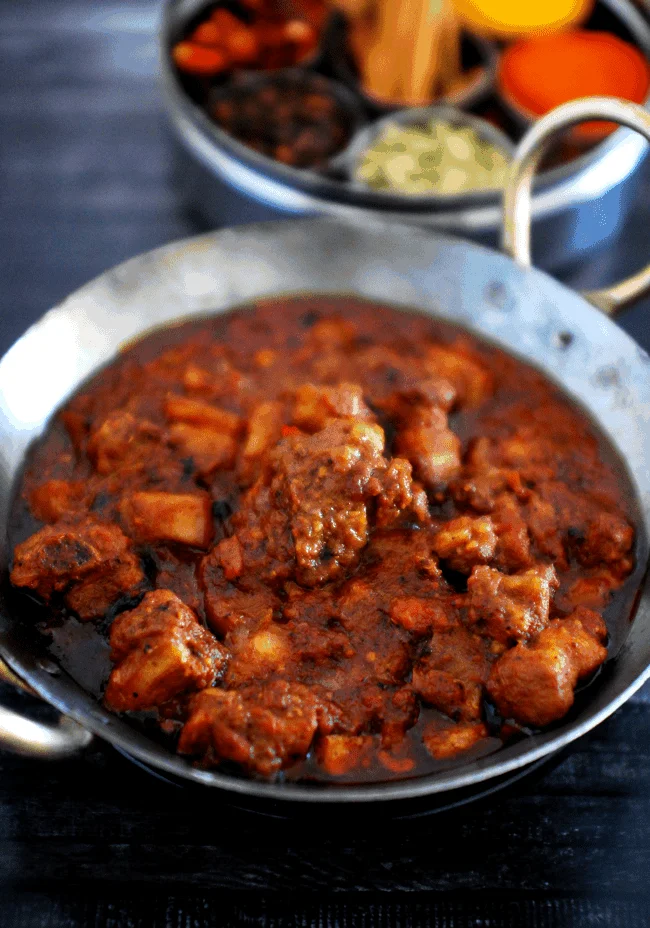
Pork vindaloo is a tangy, warmly spiced curry with tender pork in a chilli, vinegar and onion sauce. This version builds its flavour from a freshly ground spice paste and a slow, covered simmer.
Ingredients
- 1 kgpork, cubed (the original cook used bone-in pork belly)
- 20dried Kashmiri chillies
- 2 tbsp eachchopped ginger and garlic
- 10cloves
- 1 large piececinnamon
- 1 tspmustard seeds
- 1 tspfenugreek seeds
- 4½ tbspvinegar
- 2 largeonions, thinly sliced
- 1 medium-largetomato, chopped
- 60 ml (¼ cup)oil (the original cook used sunflower oil)
- 1 tspsalt, for marinating
- 1–2 tbspwater, for loosening the masala
- 360 ml (1½ cups)water, for simmering
- to tastesalt, to adjust at the end
- to tastepepper, if needed
- 1 tbspwater, for grinding the paste
Instructions
- 1
Marinate the pork
Toss the cleaned pork pieces with ½ tbsp vinegar and 1 tsp salt.
- 2
Make the paste
Soak the Kashmiri chillies, ginger, garlic, cloves, cinnamon, mustard seeds and fenugreek seeds in 4 tbsp vinegar for 20 minutes. Add 1 tbsp water, then grind to a nearly smooth paste that still has a little texture.
- 3
Cook the pork
Heat the oil in a deep, wide pan. Add the sliced onions and cook until golden brown, then stir in the ground paste. Fry over a low heat for 6–8 minutes, until the raw aroma fades and oil begins to show. Add 1–2 tbsp water as needed to bring the masala together. Add the marinated pork and mix well, then pour in 1½ cups water and bring to the boil. Turn the heat to its lowest setting, cover and cook for 30 minutes, stirring occasionally.
- 4
Add the tomato
Taste the curry and add the chopped tomato according to your preference. Mix well, cover and cook over the lowest heat for a further 20–25 minutes, until the water has almost dried and the pork is tender.
- 5
Adjust the seasoning
Taste once more and add salt and pepper if needed.
What is pork vindaloo?
Vindaloo is a Goan curry whose name and vinegar-forward character reflect Portuguese culinary influence in the region. It is known for a sharp, spiced sauce, though heat and acidity vary from one household recipe to another.
Here, dried Kashmiri chillies lend colour and a gentle warmth, while vinegar cuts through the richness of the pork. Slow cooking gives the meat time to soften and take on the spice paste.
Nutrition and macros by portion
The nutrition label shows one serving as written: 850 calories, 32g protein, 13g carbs, 74g fat.
| Portion | Adjustment | kcal | Protein | Carbs | Fat |
|---|---|---|---|---|---|
| Lighter | Use leaner pork, less oil | 595 kcal | 22g | 9g | 52g |
| This serving | As written | 850 kcal | 32g | 13g | 74g |
| Hungry | Serve with extra rice | 1275 kcal | 48g | 20g | 111g |
The pork supplies most of the protein and, particularly if using belly, much of the fat; the oil adds further fat. The chillies, onions and tomato contribute some carbohydrate, while rice served alongside adds substantially more. Pair a serving with a generous portion of vegetables and choose a rice portion to suit your appetite.
Building the spice paste
Whole spices: soaking the chillies, cloves, cinnamon, mustard and fenugreek in vinegar softens them for grinding and helps distribute their flavour through the curry.
Texture: grind the mixture almost smooth, but leave a little grain rather than turning it into a completely fine purée. The small addition of water helps the ingredients move through the grinder.
Getting the onions and masala right
Golden onions: cook the thin slices until properly golden before adding the paste; this gives the curry a deeper savoury base. Keep the heat steady and stir so they colour without scorching.
Fried paste: give the masala 6–8 minutes on low heat. It is ready when its raw smell has faded and a little oil begins to appear; add the measured water gradually if it starts sticking.
Choosing and cooking the pork
Cut: keep the pork pieces fairly even so they cook at a similar rate. Bone-in belly, as used by the original cook, makes a particularly rich curry; leaner cuts will give a less fatty result.
Doneness: simmer the covered pork gently for 30 minutes, then cook it with the tomato for another 20–25 minutes. The meat should be tender, and the sauce should have reduced until little excess water remains.
Balancing vinegar and tomato
Vinegar: the pork is first seasoned with a small amount, while the rest flavours the ground spice paste. Its tang is central to the dish, so avoid adding extra until you have tasted the finished curry.
Tomato: the recipe suggests tasting before adding it and adjusting to preference. It brings a softer, rounded acidity alongside the sharper vinegar.
Serving the curry
Rice: plain rice makes a simple base and absorbs the reduced sauce. A portion of the curry with rice and a green vegetable or salad gives the plate a mix of textures.
Timing: the recipe gives 20 minutes for soaking the spices, followed by 30 minutes and then 20–25 minutes of covered cooking. The total time is not specified, so allow extra time for preparation and for the pork to become tender.
Recipe notes & tips
- Cut the pork into similarly sized pieces so they simmer evenly.
- Keep the onions moving near the end of browning, when they can colour quickly.
- Grind the spices to a slightly coarse paste for the texture specified in the method.
- Use low heat once the pork is covered and simmering to avoid scorching the masala.
- Taste before adding extra salt, pepper or tomato, as the final balance is adjustable.
Variations
- Use leaner pork: choose a lean cut for a less rich curry, and check it for tenderness as it cooks.
- Adjust the chilli: use fewer Kashmiri chillies for a milder result.
- Make it boneless: use boneless pork pieces, keeping them evenly cut and checking for tenderness.
- Serve with rice: spoon the reduced curry over plain rice to catch the vinegar-spiced sauce.
- Add vegetables on the side: serve with a simply cooked green vegetable for contrast.
Common mistakes to avoid
- Scorching the onions: lower the heat and stir frequently once they begin to turn golden.
- Burning the masala: fry it over low heat and add the specified water gradually if it sticks.
- Grinding too coarsely: aim for an almost smooth paste, with only a little texture remaining.
- Boiling hard: reduce the heat to its lowest setting after bringing the pork and water to the boil.
- Stopping too early: cook until the pork is tender and the sauce has nearly dried, rather than following the clock alone.
How to store
Cool leftovers promptly and refrigerate in a covered container for up to 3 days. Reheat gently in a pan until piping hot throughout, adding a splash of water if the sauce has become too thick.
Frequently asked questions
How hot is this pork vindaloo?
It uses 20 dried Kashmiri chillies, which add colour and chilli warmth. For a milder curry, reduce the number of chillies to suit your taste.
Can I use pork belly?
Yes. The original cook used pork belly with bone, which makes the curry especially rich. A leaner cut can also be used, but check it regularly for tenderness.
Why is vinegar used in vindaloo?
Vinegar gives the curry its distinctive tang and is also used to soak the spices before grinding. Taste the finished dish before adding any more.
Can I make the spice paste ahead?
You can grind it ahead and refrigerate it in a covered container, then use it when cooking. Keep it chilled and use it within a few days.
How do I know when the pork is cooked?
It should be tender when pierced and easy to bite through. The recipe allows 30 minutes before adding tomato and a further 20–25 minutes afterwards, but the cut and size of the pieces affect the time.
What should I serve with pork vindaloo?
Plain rice is a straightforward match for the reduced, tangy sauce. Add a green vegetable or salad for a fresh contrast.
Cook it from the original
This recipe comes from mariasmenu.com. Their page has the author’s own photos, notes and tips — the best place to cook it from.
Open the recipe on mariasmenu.com