
Spring Vegetable Pasta
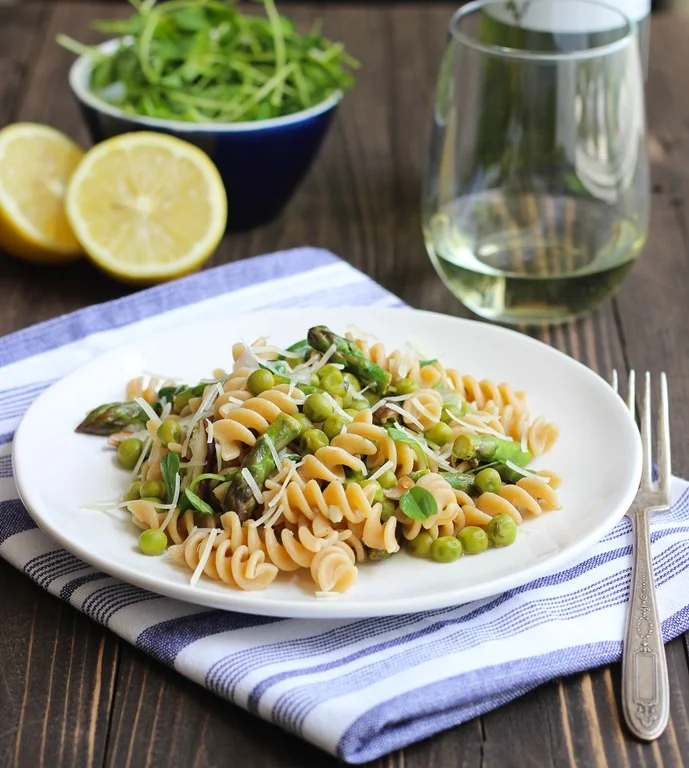
Spring vegetable pasta pairs asparagus, peas and shiitake mushrooms with lemon, herbs and a little white wine. It is a bright, weeknight-friendly way to make the most of spring produce, ready in about 25 minutes.
Ingredients
- 227 g (8 ounces)pasta of choice (the original recipe uses wholegrain fusilli)
- 30 ml (2 tablespoons)olive oil or butter (or vegan butter)
- 1shallot, finely chopped
- 2 clovesgarlic, minced
- juice of 2 lemons + zest of 1lemons
- 60 ml (¼ cup)dry white wine
- 227 g (8 ounces)shiitake mushrooms, sliced
- 283 g (10 ounces)green peas, fresh or frozen and defrosted
- 1 bunchasparagus, chopped
- 5 ml (1 teaspoon) fresh, or 2.5 ml (½ teaspoon) driedthyme
- 2.5 ml (½ teaspoon)dried parsley
- 57 g (2 ounces)pea shoots, chopped
- ½shredded parmesan cheese (or nutritional yeast)
Instructions
- 1
Cook the pasta
Bring a pot of water to the boil and cook the pasta according to its package directions.
- 2
Cook the aromatics
Warm the oil or butter in a large pan over medium heat. Add the garlic and shallot and cook for 2–3 minutes.
- 3
Simmer the asparagus
Add the asparagus, white wine, lemon juice and herbs. Cover the pan and cook for about 5 minutes, until the asparagus is just tender.
- 4
Add the vegetables
Add the shiitake mushrooms and stir until they have absorbed some of the liquid. Add the peas and pea shoots, then cook for a further 2–3 minutes, stirring.
- 5
Serve the pasta
Divide the pasta between bowls and top with parmesan cheese.
What is spring vegetable pasta?
This is a seasonal pasta dish built around spring vegetables, citrus and herbs. Pasta has deep roots in Italian cooking, while this version takes a straightforward American-style approach to a quick, produce-led meal.
The combination works because lemon brightens the earthy mushrooms and sweet peas, while asparagus brings a fresh, tender bite. The vegetables cook in the same pan with wine and herbs, making a light sauce to toss through the pasta.
Nutrition and macros by portion
The nutrition label shows one serving as written: 510 calories, 20g protein, 76g carbs, 16g fat.
| Portion | Adjustment | kcal | Protein | Carbs | Fat |
|---|---|---|---|---|---|
| Lighter | Use less oil and parmesan | 357 kcal | 14g | 53g | 11g |
| This serving | As written | 510 kcal | 20g | 76g | 16g |
| Hungry | Add more pasta | 765 kcal | 30g | 114g | 24g |
Most of the carbohydrates come from the pasta and peas, while olive oil or butter and parmesan contribute much of the fat. The peas, mushrooms and cheese also provide some protein, though the amount will vary with the pasta and topping chosen. Pair a serving with a leafy salad for a fresh, balanced plate.
Choosing the ingredients
Pasta: Fusilli catches peas and small pieces of vegetable in its twists, but another shape works too. Wholegrain pasta adds a more robust flavour; follow the cooking directions on the packet.
Spring vegetables: Use fresh peas when they are available, or defrost frozen peas before adding them. Choose firm asparagus and slice the mushrooms evenly so they cook at a similar pace.
Building the pan sauce
Aromatics: Cook the shallot and garlic gently over medium heat for 2–3 minutes, just until softened and fragrant. Avoid letting the garlic brown, which can make its flavour harsh.
Wine and lemon: The wine, lemon juice and herbs simmer with the asparagus to make the dish's light, tangy coating. Add the lemon zest at serving if you want its fresh citrus aroma to stand out.
Getting the vegetables tender
Asparagus: Cover the pan for about 5 minutes, then check a piece with a fork. It should be tender but still hold its shape rather than turning soft.
Mushrooms and peas: Stir in the mushrooms until they have taken up some of the liquid, then add the peas and pea shoots for the final 2–3 minutes. This keeps the more delicate greens from cooking for too long.
Timing the pasta and vegetables
Pasta: Start the water first, then cook the pasta while the vegetables are being prepared. Use the packet timing as the guide, since shapes and brands vary.
Finishing: Drain the pasta when it is ready and serve it in bowls with the vegetables on top. If the pasta finishes before the pan, keep it briefly until the vegetables are done rather than leaving it in hot water.
Serving suggestions
Toppings: Parmesan adds a savoury finish; nutritional yeast is the suggested alternative. Add the topping just before serving so it stays distinct rather than disappearing into the hot vegetables.
On the side: A simple green salad or crusty bread makes an easy accompaniment. The pasta already includes several vegetables, so keep sides uncomplicated.
Recipe notes & tips
- Chop the shallot, garlic, asparagus and mushrooms before heating the pan so the short cooking stages run smoothly.
- Defrost frozen peas before cooking so they warm through quickly.
- Cut the asparagus into similarly sized pieces for more even cooking.
- Use a large pan that leaves room to stir the vegetables without crushing them.
- Choose fresh thyme or dried thyme as listed, and avoid substituting one-for-one without adjusting the amount.
Variations
- Use another pasta shape: Choose a short shape that can hold peas and pieces of vegetable.
- Make it dairy-free: Use olive oil or vegan butter and finish with nutritional yeast instead of parmesan.
- Change the mushrooms: Use another sliced mushroom if shiitake is unavailable.
- Add lemon zest: Sprinkle the zest over the bowls for a more aromatic citrus finish.
- Use frozen peas: Defrost them before adding, as directed in the ingredient list.
Common mistakes to avoid
- Browning the garlic: Keep the heat at medium and cook it with the shallot for only 2–3 minutes.
- Overcooking the asparagus: Check it after about 5 minutes and stop when it is just tender.
- Adding peas too early: Stir them in with the pea shoots for the final 2–3 minutes.
- Crowding a small pan: Use a large pan so the vegetables can be stirred evenly.
- Guessing the pasta timing: Follow the package directions, as cooking times differ by shape.
How to store
Refrigerate leftovers in a covered container and use within 3 days. Reheat gently in a pan or microwave until hot throughout; add a small splash of water if the pasta seems dry.
Frequently asked questions
Can I use frozen peas?
Yes. Defrost them before adding to the pan, then cook them with the pea shoots for 2–3 minutes.
Can I make this pasta vegan?
Yes. Choose olive oil or vegan butter and use nutritional yeast instead of parmesan.
How do I know when the asparagus is done?
After about 5 minutes covered, it should be just tender when tested with a fork but still keep its shape.
Can I use dried thyme?
Yes. The recipe specifies ½ teaspoon dried thyme instead of 1 teaspoon fresh thyme.
What pasta shape works best?
Fusilli is used in the original version, but the recipe allows any pasta shape. Check its packet for the cooking time.
Cook it from the original
This recipe comes from makingthymeforhealth.com. Their page has the author’s own photos, notes and tips — the best place to cook it from.
Open the recipe on makingthymeforhealth.com