
Fresh Mango Salsa
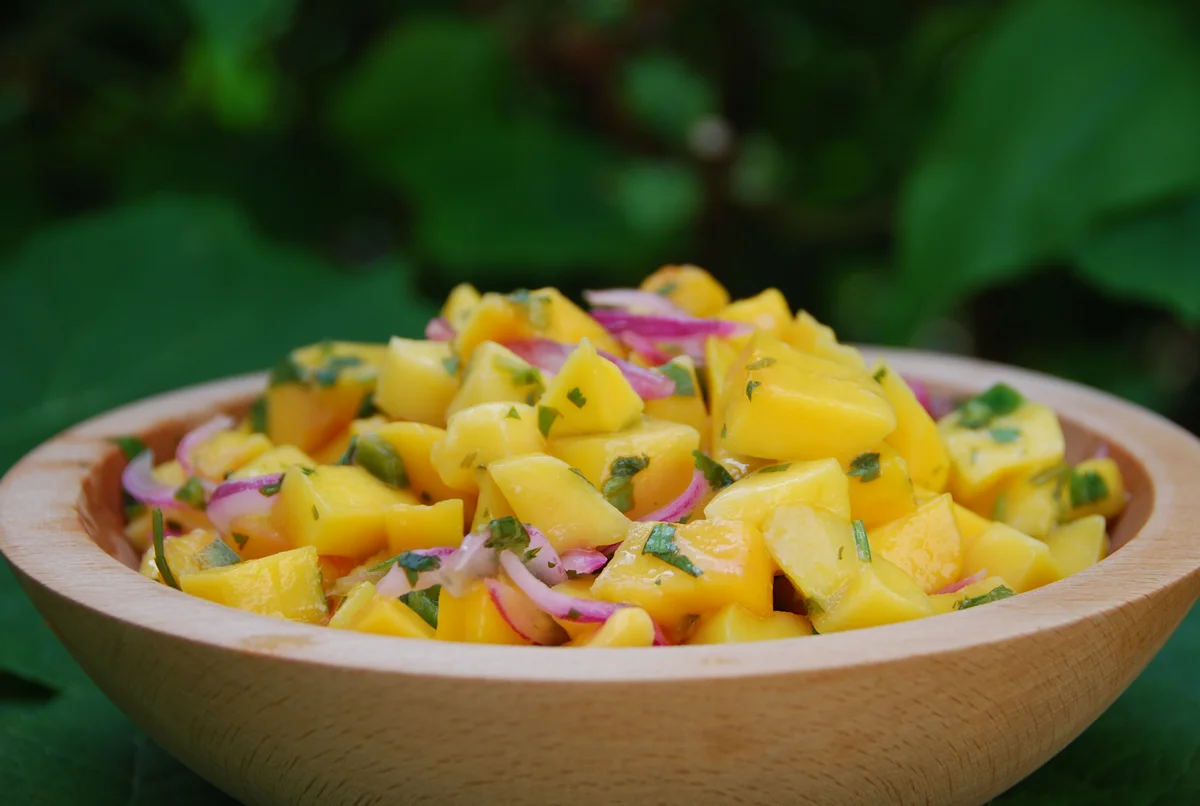
This fresh mango salsa pairs sweet, ripe fruit with lime, red onion, jalapeño and cilantro. It comes together quickly and brings a bright, juicy contrast to grilled food, tacos or a simple bowl of rice and beans.
Ingredients
- 1/2 mediumred onion, cut into very thin slivers (about 80 ml)
- Juice from 2 limes (about 60 ml)lime juice
- 1.13 kg (2 1/2 pounds; about 4)ripe mangoes, peeled and cut into large dice
- 1 largejalapeño pepper, stemmed, seeded and finely chopped (about 30 ml, or more to taste)
- Leaves from 4 stemscilantro, finely chopped (about 45 ml)
- 30 ml (2 tablespoons)olive oil
- 5 ml (1 teaspoon)kosher or sea salt, or more to taste
Instructions
- 1
Soak the onion
Put the onion and lime juice in a mixing bowl and toss to coat. Leave them to sit for 10 minutes.
- 2
Mix the salsa
In a separate mixing bowl, combine the mango, jalapeño, cilantro, oil and salt. Add the onion and lime juice mixture once it has sat for 10 minutes, then toss well. Taste and add salt or jalapeño as needed.
What is mango salsa?
Salsa is a broad family of sauces and fresh mixtures served with food in Mexico and across Latin America. This version uses diced mango as its juicy, sweet base, balanced with lime, onion, chilli and cilantro.
The combination works because the lime and onion sharpen the ripe fruit, while jalapeño adds adjustable heat. Olive oil gives the mixture a little richness without taking over its fresh flavour.
Nutrition and macros by portion
The nutrition label shows one serving as written: 180 calories, 2g protein, 39g carbs, 7g fat.
| Portion | Adjustment | kcal | Protein | Carbs | Fat |
|---|---|---|---|---|---|
| Lighter | Use less olive oil | 126 kcal | 1g | 27g | 5g |
| This serving | As written | 180 kcal | 2g | 39g | 7g |
| Hungry | Serve a larger portion | 270 kcal | 3g | 59g | 11g |
Most of the carbohydrates come from the mango, while olive oil supplies most of the fat; the salsa itself contains little protein. Serve it with beans, fish or chicken and a filling side to make a more balanced plate.
Choose ripe mangoes
Ripe fruit: Choose mangoes that give slightly when pressed and smell fragrant near the stem. They should be soft enough to taste sweet but firm enough to hold their shape when diced.
Even pieces: Cut the mango into large, roughly similar-sized dice so each spoonful has a good balance of fruit and seasonings.
Give the onion a head start
Lime soak: Letting the thin onion slivers sit in lime juice for 10 minutes softens their sharp edge and seasons them before they meet the mango. Keep the slivers fine so they mix through the salsa easily.
Adjust the heat
Seeded chilli: Removing the jalapeño seeds and stem makes it easier to control the heat. Chop it finely so it is distributed throughout rather than concentrated in a few bites.
To taste: Start with the listed amount, then add more chopped jalapeño after mixing if you want a livelier kick.
Keep the texture fresh
Gentle toss: Fold the ingredients together carefully to keep the mango pieces intact. The finished salsa should be juicy and lightly coated, not mashed.
Final seasoning: Taste after the lime and onion mixture has been added, then adjust the salt or jalapeño as the recipe directs.
Plan the timing
Ten-minute rest: The onion sits in the lime juice while you prepare the remaining ingredients, making good use of the recipe's resting time. Allow about 20 minutes in total.
Serve soon: The salsa is at its freshest shortly after mixing, while the mango still has a firm, distinct texture.
What to serve it with
Savoury dishes: Spoon it over grilled fish or chicken, or serve it alongside tacos and roasted vegetables. Its sweet-tart flavour also suits rice and beans.
For a simple plate: Pair a generous serving of salsa with a protein-rich main and a filling side such as beans or rice.
Recipe notes & tips
- Use mangoes that are ripe but still firm enough to dice cleanly.
- Slice the onion very thinly so it softens during its 10-minute lime soak.
- Wear gloves or wash your hands after handling the jalapeño.
- Add extra jalapeño gradually and taste as you go.
- Toss gently to keep the mango pieces intact.
- Taste the salsa after combining everything, then adjust the salt.
Variations
- Add avocado: Fold in diced avocado just before serving for a creamier texture.
- Try extra citrus: Add a little more lime juice for a sharper, tangier finish.
- Use red chilli: Replace the jalapeño with finely chopped red chilli, adjusting the amount to taste.
- Add cucumber: Mix in diced cucumber for extra crunch and freshness.
- Serve with black beans: Pair the salsa with black beans for a heartier taco or bowl topping.
Common mistakes to avoid
- Overripe mango: Very soft fruit can turn mushy; choose mangoes that yield slightly but still hold their shape.
- Thick onion slices: Chunky pieces can overwhelm a bite; slice the onion as finely as possible.
- Too much chilli at once: Heat is hard to undo; add extra jalapeño a little at a time.
- Rough mixing: Vigorous tossing breaks down the fruit; fold the ingredients together gently.
- Skipping the taste check: Salt and chilli can vary in intensity; taste after mixing and adjust.
How to store
Store leftovers in an airtight container in the fridge and use within 2 days for the best texture. Stir gently before serving; this fresh salsa is best served cold or at room temperature rather than reheated.
Frequently asked questions
Can I make mango salsa ahead of time?
You can prepare it a few hours ahead and keep it covered in the fridge. For the freshest texture, mix gently and serve the same day.
How can I make it less spicy?
Use less jalapeño, and make sure to remove its seeds as directed. You can also leave the jalapeño out and add a small amount only if needed after tasting.
What if my mangoes are not ripe?
Unripe mangoes will be firmer and more tart, so the salsa may lack sweetness. Use fragrant, slightly yielding fruit for the intended balance.
Can I use bottled lime juice?
Fresh lime juice gives the brightest flavour, but bottled juice can be used if needed. Start with the stated quantity and taste before adding more.
What goes well with mango salsa?
Serve it with tacos, grilled fish or chicken, roasted vegetables, or rice and beans. It also works as a dip with tortilla chips.
Cook it from the original
This recipe comes from patijinich.com. Their page has the author’s own photos, notes and tips — the best place to cook it from.
Open the recipe on patijinich.com