
Sweet and Sour Pork
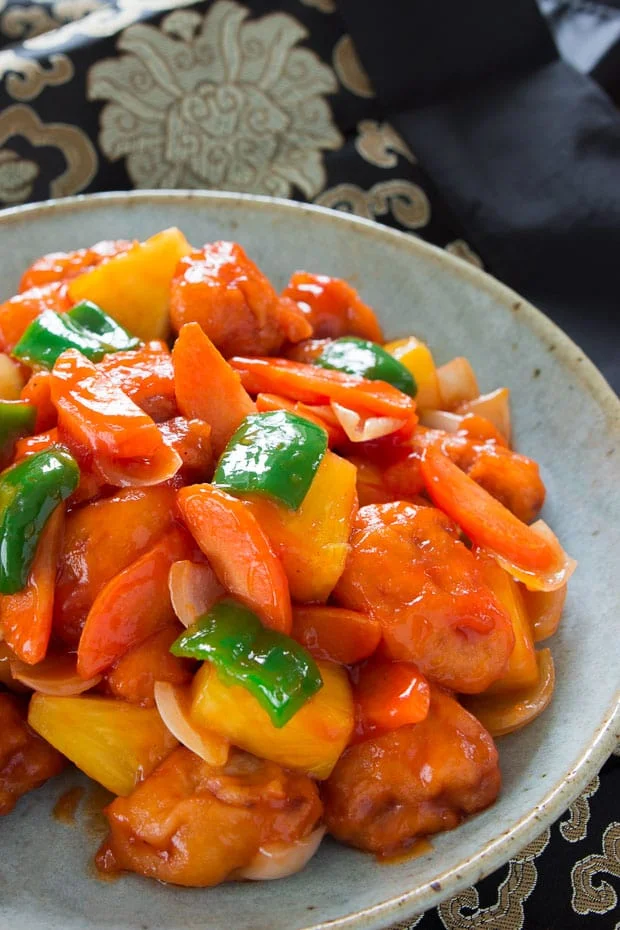
Sweet and sour pork pairs crisp battered pieces of marinated pork with pineapple, vegetables and a glossy, tangy-sweet sauce. This Chinese-American favourite makes a colourful, quick dinner for two.
Ingredients
- 280 gpork shoulder, cut into 2 cm pieces
- 1 teaspoonsoy sauce
- 1 teaspoonoyster sauce
- 1 teaspoonShaoxing wine
- 1/2 teaspoonginger juice, squeezed from grated ginger
- 80 ml (1/3 US cup)water
- 60 ml (1/4 US cup)rice vinegar
- 60 ml (1/4 US cup)ketchup
- 38 g (3 tablespoons)granulated sugar
- 1 1/2 teaspoonspotato starch
- 1/4 teaspoonsalt
- 50 ggreen pepper, cut into squares
- 125 gfresh pineapple, cut into cubes
- 50 gonion, cut into squares
- 50 gcarrot, sliced
- 43 g (about 1/3 US cup)plain flour
- 20 g (about 2 tablespoons)potato starch
- 2.3 g (about 1/2 teaspoon)baking powder
- 1 largeegg
- As neededcold water
Instructions
- 1
Marinate the pork
Mix the pork with the soy sauce, oyster sauce, Shaoxing wine and ginger juice. Leave to marinate for at least 15 minutes.
- 2
Mix the sauce
Whisk together the water, rice vinegar, ketchup, sugar, potato starch and salt, then set the sauce aside.
- 3
Prepare the vegetables
Cut the vegetables and pineapple, and set them out ready to cook. Line a wire rack with paper towels.
- 4
Heat the oil
Pour oil to a depth of 2.5 cm into a heavy-based pot and heat it to 170°C (340°F).
- 5
Combine dry ingredients
Whisk the flour with 2 tablespoons of potato starch and the baking powder.
- 6
Measure egg mixture
Whisk the egg in a measuring jug until the yolk and white are combined. Add enough cold water to make 130 ml (2/3 US cup minus 2 tablespoons) of liquid.
- 7
Make the batter
Pour the liquid into the flour mixture and stir until no large lumps remain; avoid mixing it more than necessary.
- 8
Fry the pork
Dip each piece of pork in the batter and lower it into the preheated oil. Fry until golden brown, then transfer the pieces to the prepared rack.
- 9
Fry the vegetables
Fry the vegetables and pineapple until their colours brighten and they are just cooked. Transfer them to the rack.
- 10
Toss with sauce
Stir the sauce to lift any settled starch, then pour it into a clean frying pan over high heat. Bring it to a boil and cook until thick; add the pork and vegetables and toss to coat.
What is sweet and sour pork?
Sweet and sour pork is a Chinese-American restaurant classic: battered pork is fried and coated in a sharp, sweet sauce, often with vegetables and pineapple. It draws on Chinese sweet-and-sour flavour traditions, while the familiar combination of ketchup, pineapple and crisp pork reflects its American restaurant style.
Here, a brief savoury marinade seasons the pork before it is fried, and the sauce thickens separately in the pan. Tossing everything together at the end helps the coating keep some of its crispness.
Nutrition and macros by portion
The nutrition label shows one serving as written: 720 calories, 39g protein, 79g carbs, 26g fat.
| Portion | Adjustment | kcal | Protein | Carbs | Fat |
|---|---|---|---|---|---|
| Lighter | Use less batter and oil | 504 kcal | 27g | 55g | 18g |
| This serving | As written | 720 kcal | 39g | 79g | 26g |
| Hungry | Serve with steamed rice | 1080 kcal | 59g | 119g | 39g |
The pork and egg provide most of the protein, while the flour, starch, sugar and pineapple contribute much of the carbohydrate. Fat comes mainly from the pork and the oil absorbed during frying; serve with rice and extra vegetables if you want a more substantial, balanced plate.
The marinade and sauce
Pork marinade: soy sauce, oyster sauce and Shaoxing wine bring savoury depth, while ginger juice adds a fresh aromatic note. The 15-minute minimum gives the small pork pieces time to take on the seasoning.
Sweet and sour balance: rice vinegar supplies tang, while ketchup and sugar round it out with sweetness. Potato starch thickens the mixture into a glaze rather than a thin dressing.
Getting the batter right
Dry mix: flour gives the coating body, potato starch helps it fry crisp, and baking powder lightens the batter. Whisk these together before adding the wet ingredients to distribute them evenly.
Mix gently: stop once the large lumps are gone, since overmixing can make the coating heavier. The recipe keeps the cold water amount flexible, so measure it with the egg to the stated total volume.
Frying for crisp pork
Oil temperature: aim for 170°C before adding the battered pork. If the oil is too cool, the coating can absorb more oil; work in batches if the pot would otherwise be crowded.
Doneness cue: the recipe calls for golden-brown pieces, then draining them on a paper towel-lined rack. Keep the pieces in a single layer so steam does not soften their crust.
Vegetables and pineapple
Quick cooking: fry the vegetables and pineapple only until bright and just barely cooked, as they will be tossed with the hot sauce afterwards. Cutting them into similar-sized pieces helps them cook at a similar pace.
Flavour contrast: pineapple brings juicy sweetness, while green pepper, onion and carrot add freshness and crunch. Keep the pieces ready beside the hob before frying, as this stage moves quickly.
Thickening and serving
Stir first: potato starch can settle while the sauce waits, so give it a thorough stir before pouring it into the hot pan. Bring the sauce to a boil and let it thicken before adding the fried ingredients.
Serve straight away for the best contrast between the glossy sauce and crisp coating. Rice makes a simple accompaniment and catches any extra sauce.
Recipe notes & tips
- Cut the pork into evenly sized pieces so they fry at a similar rate.
- Have the sauce and all the cut vegetables ready before heating the oil.
- Keep the oil at 170°C and fry in batches if needed.
- Drain the pork on a wire rack lined with paper towels rather than piling the pieces up.
- Stir the sauce just before cooking so the potato starch is evenly mixed in.
- Toss the pork with the sauce only once it has thickened, then serve promptly.
Variations
- Use chicken: swap in evenly sized pieces of chicken and cook them through before draining.
- Add chilli: include sliced fresh chilli with the vegetables for a spicy edge.
- Change the vegetables: use other quick-cooking vegetables in place of the pepper or carrot.
- Use tinned pineapple: drain it well before frying so it does not add excess liquid.
- Serve with rice: add steamed rice alongside to make the sauce go further.
Common mistakes to avoid
- Crowded pot: too many pieces at once can lower the oil temperature; fry in batches.
- Overmixed batter: excess mixing can make the coating heavy; stop when the large lumps are gone.
- Unheated oil: the coating may turn greasy before it browns; wait until the oil reaches 170°C.
- Overcooked vegetables: they can lose their colour and crunch; fry only until just barely cooked.
- Lumpy sauce: settled starch can thicken unevenly; stir it thoroughly before adding it to the pan.
How to store
Refrigerate leftovers in a covered container for up to 2 days. Reheat in a frying pan until piping hot; the pork coating will be softer after storage, and the sauce may thicken further.
Frequently asked questions
Can I prepare anything ahead?
You can cut the vegetables and mix the sauce ahead, keeping them covered and refrigerated. Marinate the pork for at least 15 minutes, then make the batter shortly before frying.
How do I know the oil is hot enough?
Use a thermometer and wait for 170°C. If you do not have one, add a small dab of batter: it should sizzle when it meets the oil, though a thermometer is the more reliable check.
Can I make this without deep-frying?
The method relies on frying the battered pork in oil, so baking or shallow-frying will produce a different coating and texture. For the intended result, use a heavy-based pot and fry in batches.
Why does the sauce need to be stirred before cooking?
Potato starch can sink to the bottom while the sauce stands. Stirring it back in helps the sauce thicken evenly in the pan.
What should I serve with sweet and sour pork?
Steamed rice is a straightforward side that works well with the sauce. You can also serve it with extra vegetables.
Can I use frozen pineapple?
Fresh pineapple is specified here. If using frozen, thaw and drain it well first, as excess water can affect the quick fry and sauce.
Cook it from the original
This recipe comes from norecipes.com. Their page has the author’s own photos, notes and tips — the best place to cook it from.
Open the recipe on norecipes.com