
Authentic Indian Naan
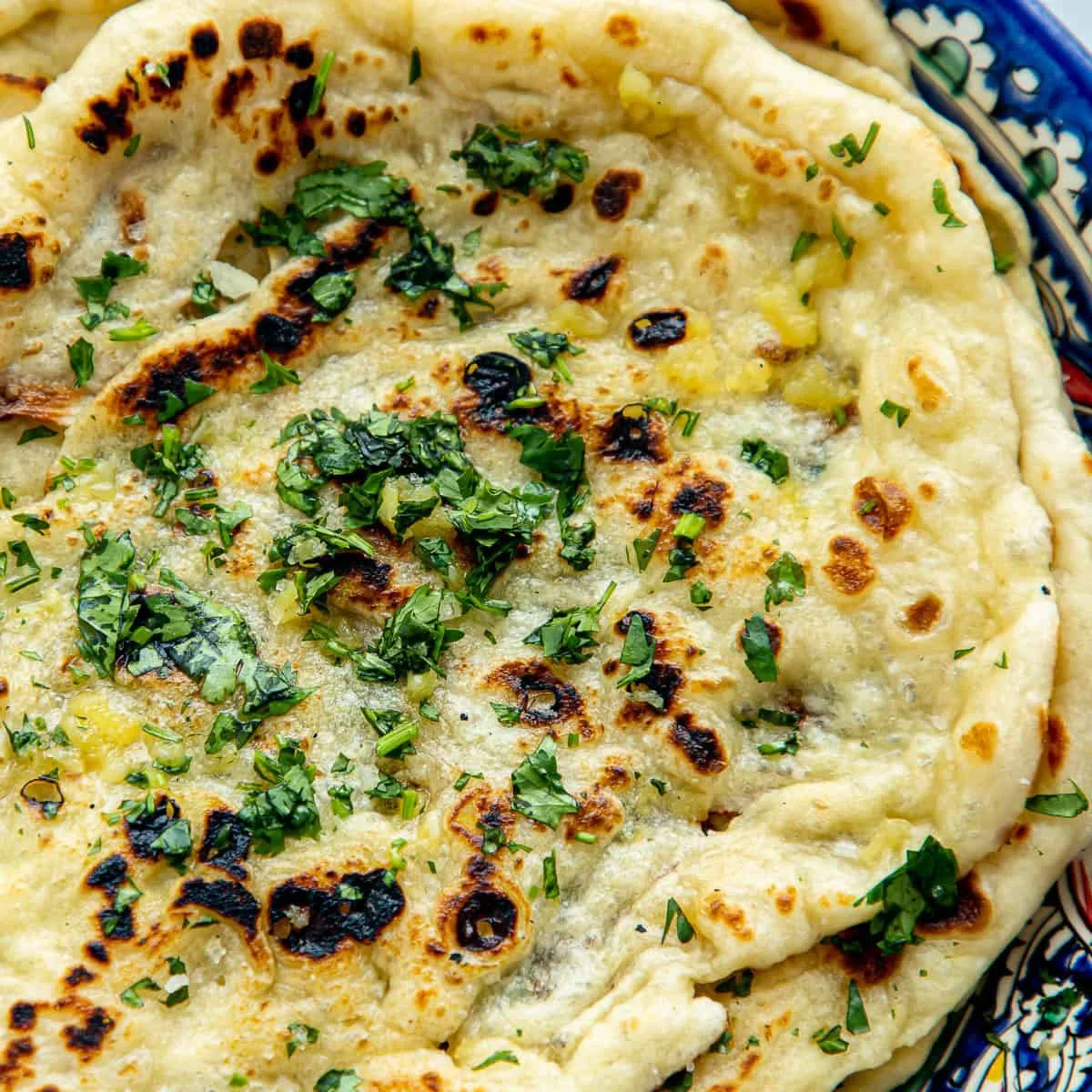
These soft, pillowy Indian naan are cooked in a hot skillet, so you can make them at home without a tandoor. Greek yoghurt gives the dough a tender crumb, while garlic ghee, coriander and flaky salt finish each flatbread.
Ingredients
- 300 gplain flour
- 6 gkosher salt
- 9 gwhite sugar
- 125 gwarm water
- 3 ginstant yeast
- 100 gplain Greek yoghurt
- 20 gmelted ghee or cooking oil
- 50 gghee
- 6 clovesgarlic, minced
- 1/2 bunchfresh coriander, finely chopped
- to tasteflaky salt
Instructions
- 1
Activate the yeast
In a large bowl, whisk together 300 g plain flour, 6 g kosher salt and 9 g white sugar. In a separate jug, combine 125 g warm water, 3 g instant yeast, 100 g plain Greek yoghurt and 20 g melted ghee. Leave the liquid for 10 minutes, until its surface looks frothy.
- 2
Mix the dough
Pour the yeast mixture into the dry ingredients and mix by hand until the liquid is absorbed. Keep mixing until a rough, shaggy dough forms and no dry flour remains.
- 3
Knead and prove
Cover the bowl with a damp tea towel and leave the dough to rest for 15 minutes. Turn it out onto a lightly floured surface and knead until smooth, then return it to the bowl and cover with the towel. Leave in a warm place, such as an oven with only its interior light on, for 1.5 to 2 hours, until doubled in size.
- 4
Divide the dough
Turn the risen dough onto a lightly floured surface and gently knock out the air. Flatten it slightly, then use a digital scale to divide it into 8 equal pieces of 70 g each.
- 5
Shape and prove
Shape each piece into a tight ball. Turn it smooth-side down, fold the edges towards the middle and pinch the seam closed. Lightly oil a baking tray and your hands, roll each ball on the work surface to seal its base, then arrange them on the tray. Cover and leave for 30 minutes, until the dough has increased in size by 50%.
- 6
Make garlic ghee
While the dough proves, melt 50 g ghee or butter in a stainless-steel pan over medium heat. Add 6 crushed garlic cloves and cook gently over low heat without browning them. Take the pan off the heat and transfer the mixture to a bowl to cool to room temperature.
- 7
Roll the naan
Place a proved dough ball on a lightly floured surface, smooth-side down. Gently flatten it with your hands, pressing the edges, then roll it very thin until almost translucent.
- 8
Cook until blistered
Heat a cast-iron skillet over high heat. Wipe its base with a paper towel holding a single drop of cooking oil. Lay the rolled dough flat in the hot skillet and watch for it to puff and form large blisters. Check the underside and, once adequately charred, turn the naan over to cook the other side.
- 9
Brush and serve
Take the naan out of the skillet and immediately brush its hot surface with the garlic ghee. Sprinkle with chopped coriander and a pinch of flaky salt. Stack the finished naan and cover with a plate to keep them soft and warm as you cook the remaining portions.
What is Indian naan?
Naan is a leavened flatbread associated with the Indian subcontinent and often cooked against the fierce heat of a tandoor. This home version uses a cast-iron skillet to blister the dough without special oven equipment.
Greek yoghurt adds moisture and helps give the bread its soft, chewy texture. A garlic-ghee topping and fresh coriander make this version especially good alongside curries or grilled dishes.
Nutrition and macros by portion
The nutrition label shows one serving as written: 230 calories, 5g protein, 31g carbs, 9g fat.
| Portion | Adjustment | kcal | Protein | Carbs | Fat |
|---|---|---|---|---|---|
| Lighter | Use less garlic ghee | 161 kcal | 4g | 22g | 6g |
| This serving | As written | 230 kcal | 5g | 31g | 9g |
| Hungry | Serve an extra naan | 345 kcal | 8g | 47g | 14g |
The flour supplies most of the carbohydrates, while the yoghurt contributes some protein and the ghee provides most of the fat. Pair a naan with a protein-rich curry and vegetables for a more balanced plate.
What each ingredient does
Flour and yeast: Plain flour forms the structure, while instant yeast raises the dough and creates its light interior. Sugar is included in the dough alongside the salt.
Getting the dough ready
Hydration: The 15-minute rest gives the flour time to absorb the liquid before kneading. After that, knead until the dough looks and feels smooth rather than rough.
First prove: Keep the covered bowl somewhere warm and wait for the dough to double, allowing 1.5 to 2 hours. The rise, rather than the clock alone, is the cue to move on.
Shaping and rolling
Portions: Dividing the dough into 8 pieces of 70 g each helps the naan cook at a similar pace. Shape each piece into a tight ball and pinch its seam closed.
Thin dough: Roll each ball until very thin and almost translucent, as directed in the method. Use only enough flour on the work surface to prevent sticking.
Cooking for blisters
Hot pan: Preheat the cast-iron skillet over high heat so the dough begins to puff when it hits the surface. The recipe calls for wiping the pan with a paper towel holding a single drop of oil.
Doneness: Look for large blisters on top and check the underside for adequate charring before turning. The naan cooks on both sides, so watch it closely while it is in the pan.
Garlic butter and serving
Garlic ghee: Warm the garlic gently in the ghee or butter without browning it, then take the pan off the heat. Brushing the naan immediately after cooking helps the topping coat its warm surface.
To serve: Finish with coriander and flaky salt, then stack and cover the breads to keep them soft and warm while the remaining naan cook. Serve alongside curry, dal or a meal that benefits from bread for scooping.
Recipe notes & tips
- Wait for the yeast mixture to look frothy after its 10-minute rest.
- Keep the dough covered with a damp tea towel during the first prove.
- Use a scale to portion the dough into 8 pieces of 70 g each.
- Roll the naan thinly so it can puff and blister in the skillet.
- Keep cooked naan stacked under a plate to help them stay soft and warm.
Variations
- Plain naan: Leave off the garlic ghee, coriander and flaky salt after cooking.
- Herb finish: Add extra chopped coriander to the garlic ghee before brushing.
- Oil option: Use cooking oil instead of melted ghee in the dough, as allowed in the ingredients.
- Butter topping: Use butter instead of ghee for the garlic topping, as described in the method.
- Milder garlic: Use fewer garlic cloves in the topping for a subtler flavour.
Common mistakes to avoid
- Rushing the first prove: Wait until the dough has doubled in size before dividing it.
- Skipping the dough rest: Leave it covered for the full 15 minutes so the flour can hydrate.
- Leaving dry flour in the dough: Mix until all the flour is absorbed before kneading.
- Browning the garlic: Cook it gently over low heat and remove it before it colours.
- Turning too soon: Check that the underside is adequately charred before flipping the naan.
How to store
Stack the naan and cover them while warm to keep them soft for serving. For later, cool completely and store in an airtight container; reheat briefly in a hot, dry skillet until warmed through.
Frequently asked questions
Can I make naan without a tandoor?
Yes. This method cooks the rolled dough in a very hot cast-iron skillet and relies on the pan heat to puff and blister it.
How do I know when the dough has finished proving?
After the first prove, it should have doubled in size. After shaping, the recipe calls for a further 30 minutes, until the portions have grown by about 50%.
How thin should I roll the naan?
Roll each portion until it is very thin and almost translucent, as specified in the method.
Why is my naan not blistering?
The recipe calls for a skillet heated over high heat. Make sure the pan is hot before adding the dough, then watch for large blisters to form.
Can I use butter instead of ghee?
The method allows butter in the garlic topping. The ingredients also allow cooking oil in place of the 20 g melted ghee in the dough.
How do I keep cooked naan soft while I finish the batch?
Stack each cooked naan and cover the stack with a plate while the remaining portions cook.
Cook it from the original
This recipe comes from pantsdownapronson.com. Their page has the author’s own photos, notes and tips — the best place to cook it from.
Open the recipe on pantsdownapronson.com