
Best Lasagne
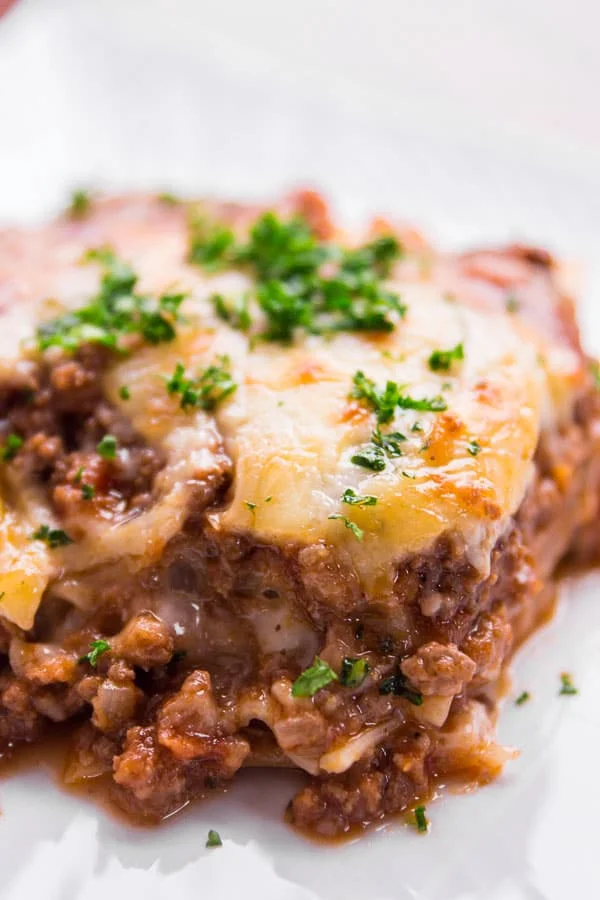
This American-style lasagne layers a slow-simmered beef and pork sauce with parboiled pasta and a mozzarella–Gruyère topping. The sauce is built in stages for deep flavour, while slightly undercooking the pasta lets it finish in the oven.
Ingredients
- 30 ml (2 tablespoons)extra virgin olive oil
- 2 mediumonions, chopped
- 5 clovesgarlic, finely minced
- 1 mediumcarrot, peeled and finely grated
- 500 gminced beef
- 200 gminced pork
- 80 ml (⅓ cup)whole milk
- 240 ml (1 cup)dry red wine
- 800 gwhole stewed tomatoes
- 3 tablespoonstomato purée
- 2 teaspoons, or to tastesalt
- 1 teaspoondried oregano
- ¼ teaspoonground black pepper
- 1dried shiitake mushroom
- 5 ml (1 teaspoon)extra virgin olive oil
- 9 small sheetslasagne sheets
- 200 gmozzarella, grated
- 100 gGruyère, grated
- To garnishflat-leaf parsley, minced
Instructions
- 1
Soften the vegetables
Put 30 ml olive oil, the onions, garlic and carrot in a large pan. Cover and cook over medium-low heat until the onions are soft and translucent. The vegetables should release enough moisture to prevent sticking; if they begin to burn, lower the heat and add a little water.
- 2
Caramelise the base
Take off the lid and raise the heat. Sauté until the mixture has reduced to about one-third of its original volume and is beginning to caramelise.
- 3
Brown the meat
Move the vegetables to the sides of the pan and turn the heat up to medium-high. Add the beef and pork, breaking up any clumps with a spatula.
- 4
Add the milk
Pour in the milk and bring it to a boil. Keep breaking up the meat until it is cooked through and no liquid remains.
- 5
Reduce the wine
Add the wine and boil until most of the liquid has evaporated and the smell of alcohol has gone.
- 6
Season the sauce
Crush the tomatoes into small pieces with your hands as you add them to the pan. Stir in the tomato purée, salt, oregano and black pepper.
- 7
Grate the mushroom
Use a microplane to shave the dried shiitake into the sauce. Alternatively, grind the mushroom to a powder in a spice grinder.
- 8
Simmer until thick
Cook the sauce over medium-low heat until thick, about 30–40 minutes.
- 9
Parboil the pasta
Bring a large pan of generously salted water to the boil with 5 ml olive oil. Cook the pasta for 3 minutes less than the packet directs; for pasta with a 9-minute cooking time, cook it for 6 minutes.
- 10
Heat the oven
Set an oven rack in the top position and preheat the oven to 180°C (350°F).
- 11
Mix the cheeses
Put the mozzarella and Gruyère in a bowl and toss them together so they are evenly distributed.
- 12
Start the layers
Spread a layer of meat sauce across the bottom of the baking dish, just thick enough to cover it.
- 13
Add some cheese
Sprinkle a layer of the mixed cheese over the sauce.
- 14
Layer the pasta
Cover the cheese with parboiled pasta, cutting the sheets as needed to fill gaps. Repeat the layering until there are 3 layers of pasta.
- 15
Finish the top
After the third pasta layer, spread the remaining meat sauce over it. Add enough cheese to cover the sauce completely.
- 16
Bake until browned
Set the lasagne on a baking sheet to catch any spills, then bake until the sauce is hot and bubbling and the cheese has browned. If the sauce has been bubbling for a while but the cheese is not browning, raise the oven to 230°C (450°F) to finish.
- 17
Rest and serve
Take the lasagne out of the oven, garnish with minced parsley and leave it to rest for 10 minutes before cutting and serving.
What is lasagne?
Lasagne is a baked pasta dish associated with Italy, made by layering pasta with sauce and cheese. This American-style version uses a rich meat sauce with beef and pork, plus a generous cheese topping.
The method builds flavour in the sauce before assembling the dish. Parboiling the sheets for less time than the packet suggests gives them room to finish cooking as the lasagne bakes.
Nutrition and macros by portion
The nutrition label shows one serving as written: 530 calories, 31g protein, 34g carbs, 29g fat.
| Portion | Adjustment | kcal | Protein | Carbs | Fat |
|---|---|---|---|---|---|
| Lighter | Smaller slice, more salad | 371 kcal | 22g | 24g | 20g |
| This serving | As written | 530 kcal | 31g | 34g | 29g |
| Hungry | Larger slice | 795 kcal | 47g | 51g | 44g |
The pasta and tomatoes provide most of the carbohydrates, while the olive oil and cheeses contribute much of the fat. The beef, pork, milk and cheeses supply protein. Serve a slice with a generous portion of salad or vegetables to balance the meal.
Build flavour in the sauce
Vegetable base: cook the onion, garlic and carrot gently until soft, then reduce the mixture until it starts to caramelise. This concentrated base helps give the meat sauce depth.
Meat and liquids: let the milk cook away before adding the wine, then allow most of the wine to evaporate. This staged approach keeps the sauce from becoming watery.
Tomatoes and shiitake: crush the tomatoes into small pieces and grate the dried mushroom finely so it disperses through the sauce.
Get the pasta right
Salted water: season the boiling water generously, then cook the sheets for 3 minutes less than the packet timing. They should be pliable enough to layer but not fully cooked.
Even coverage: trim sheets to fill gaps in the dish, keeping the layers as continuous as possible so the filling is held between the pasta.
Layer for a balanced bake
Bottom layer: spread sauce just thick enough to cover the base, then add cheese. This gives the first pasta layer a moist bed.
Top layer: finish with the remaining meat sauce and enough cheese to conceal it. The cheese browns while the sauce beneath heats and bubbles.
Know when it is ready
Bubbling sauce: look for bubbling around the edges and a hot centre. The recipe gives visual cues rather than a fixed baking time, so use those signs to judge doneness.
Browned cheese: if the sauce is bubbling but the top is still pale, raise the oven to 230°C (450°F) to finish browning it.
Rest before cutting
Resting time: leave the baked lasagne alone for 10 minutes before slicing. This gives the layers a chance to settle, making it easier to serve neat portions.
To serve: flat-leaf parsley adds a fresh finish. A simple green salad or cooked vegetables make a useful contrast to the rich sauce and cheese.
Recipe notes & tips
- Let the sauce reduce until thick so it does not make the layers watery.
- Break up the meat thoroughly as it cooks for an even texture.
- Cut pasta sheets to fit the dish rather than leaving large uncovered gaps.
- Keep an eye on the cheese during the final browning, especially if you raise the oven temperature.
- Rest the lasagne for the full 10 minutes before slicing.
Variations
- More herbs: add a little extra dried oregano to the tomato sauce.
- Different cheese: replace the Gruyère with another good-melting cheese.
- Vegetable layer: add cooked vegetables between the pasta layers.
- Pork-free sauce: use 700 g minced beef in place of the beef and pork combination.
- Fresh parsley: scatter extra minced parsley over each portion just before serving.
Common mistakes to avoid
- Burning the vegetables: lower the heat and add a little water if the pan starts to catch.
- Leaving liquid in the meat: cook until the milk has boiled away before adding the wine.
- Rushing the wine: simmer until most of the liquid has evaporated and its alcohol smell has gone.
- Overcooking the pasta: stop 3 minutes before the packet timing so it can finish in the oven.
- Slicing too soon: wait 10 minutes after baking so the layers can settle.
How to store
Cool leftovers promptly, cover and refrigerate for up to 3 days. Reheat portions in the oven or microwave until piping hot throughout.
Frequently asked questions
Can I prepare the sauce ahead?
Yes. Make the sauce in advance, chill it in a covered container and refrigerate it. Assemble and bake the lasagne when you are ready.
Should I cook the pasta sheets fully first?
No. This method parboils them for 3 minutes less than the packet timing so they can finish cooking in the oven.
What if my lasagne sheets are not small?
Use the sheets you have and cut them to fit the baking dish, as needed. Aim to cover the layers without leaving large gaps.
How can I tell when it is baked?
The sauce should be hot and bubbling and the cheese browned on top. If the sauce is bubbling but the cheese remains pale, raise the oven to 230°C (450°F) to finish.
Why does the lasagne need to rest?
The 10-minute rest helps the layers settle so the lasagne is easier to cut and serve.
Can I freeze leftovers?
The recipe does not specify freezing. For best texture, refrigerate leftovers and reheat them within 3 days.
Cook it from the original
This recipe comes from norecipes.com. Their page has the author’s own photos, notes and tips — the best place to cook it from.
Open the recipe on norecipes.com