
Samgyeopsal (Pork Belly) Wine Marinade
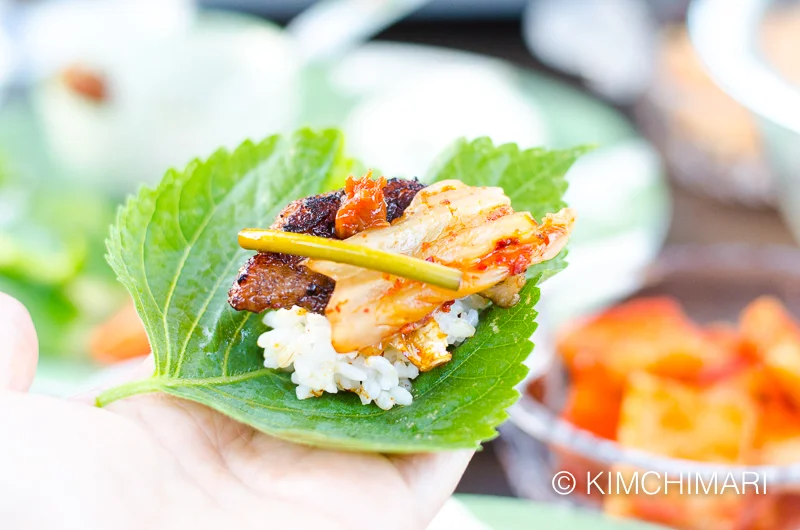
Samgyeopsal is pork belly marinated with wine, bay, peppercorns and rosemary, bringing a modern fusion note to a Korean favourite. Grill it in a frying pan or on a barbecue and serve with ssam vegetables, kimchi and ssamjang.
Ingredients
- 680 g (1.5 lb)pork belly (samgyeopsal)
- 355 ml (1.5 cups)wine (red or white)
- 1 tsp (5 ml)whole peppercorns (coloured peppercorns work well too)
- 1 tbsp (15 ml)olive oil
- 5bay leaves
- 5 sprigsrosemary
Instructions
- 1
Score the pork
If the pork belly slices are thick, optionally score one side across the layers.
- 2
Combine marinade
Put the pork belly in a bowl with the wine, bay leaves, peppercorns and rosemary sprigs.
- 3
Roll the slices
For a more attractive presentation, roll each pork belly slice around a bay leaf, then add the marinade.
- 4
Marinate the pork
Marinate for 2–3 hours before cooking, or leave overnight in the fridge. If using red wine, do not marinate for more than 24 hours.
- 5
Grill and serve
Cook the samgyeopsal in a frying pan, tabletop grill pan or outdoor grill. Serve with ssamjang, ssam vegetables, kimchi and other accompaniments.
What is samgyeopsal?
Samgyeopsal is Korean pork belly, commonly cooked at the table or grilled and eaten with leafy vegetables and accompaniments. This version keeps the pork at the centre while adding wine and herbs for a modern fusion-style marinade.
Wine brings a fruity note, while bay, peppercorns and rosemary add aromatic depth. The rich pork belly is a natural match for crisp, fresh sides.
Nutrition and macros by portion
The nutrition label shows one serving as written: 990 calories, 16g protein, 3g carbs, 94g fat.
| Portion | Adjustment | kcal | Protein | Carbs | Fat |
|---|---|---|---|---|---|
| Lighter | Smaller pork portion | 693 kcal | 11g | 2g | 66g |
| This serving | As written | 990 kcal | 16g | 3g | 94g |
| Hungry | Larger pork portion | 1485 kcal | 24g | 5g | 141g |
The pork belly supplies most of the fat and protein, while the wine contributes most of the small amount of carbohydrate. Pair a serving with plenty of ssam vegetables and kimchi for a more varied plate.
Choosing the wine and herbs
Wine: Use red or white wine, as the recipe allows. Red wine has a fuller flavour; white wine gives the marinade a lighter, fruitier character.
Herbs: Whole peppercorns, bay leaves and rosemary infuse the wine as the pork rests. Coloured peppercorns can add visual variety as well as their peppery flavour.
Scoring and rolling
Scoring: If your slices are thick, make shallow cuts across the layers on one side. The recipe makes this optional, so skip it for thinner slices.
Rolling: Tuck a bay leaf into the centre of each rolled slice for presentation. Keep the rolls secure and arrange them in the marinade so the pork can rest in it.
Marinating safely
Timing: Give the pork 2–3 hours to take on the wine and herb flavours. It can also be left overnight in the fridge.
Red wine: Keep the marinating time to no more than 24 hours when using red wine. Marinate the pork in the fridge rather than at room temperature.
Grilling and doneness
Cooking surface: A frying pan, tabletop grill pan or outdoor grill will all work. Cook in batches if needed so the slices have room to brown rather than steam.
Doneness: The pork should be cooked through, with browned edges and a juicy centre. Cooking time will depend on the thickness of the slices and the heat of your grill.
Serving the pork
Fresh sides: Serve the grilled pork with ssam vegetables, kimchi and ssamjang, as suggested in the recipe. Leafy vegetables add a crisp contrast to the rich meat.
At the table: Set out the accompaniments alongside the pork so everyone can combine them as they like. The wine and herbs bring plenty of flavour, so keep the sides simple if you prefer.
Recipe notes & tips
- Use pork belly slices of a similar thickness so they cook at roughly the same pace.
- Pat excess marinade from the slices before grilling to help them brown.
- Turn the pork as needed to brown both sides without letting the herbs scorch.
- Keep the marinade and raw pork refrigerated during the marinating time.
- Set out the ssamjang and vegetables before the pork comes off the grill so you can serve it hot.
Variations
- Choose white wine: Use it for a lighter, fruitier herb marinade.
- Choose red wine: Use it for a fuller-flavoured marinade, keeping the marinating time within 24 hours.
- Use coloured peppercorns: Swap them for plain peppercorns for a more varied peppery flavour.
- Roll the slices: Tuck a bay leaf inside each roll for a more decorative presentation.
- Cook outdoors: Grill the marinated pork on an outdoor grill instead of in a pan.
Common mistakes to avoid
- Marinating red wine too long: Keep the pork in red wine for no more than 24 hours.
- Leaving pork at room temperature: Marinate it in the fridge instead.
- Crowding the pan: Cook in batches so the pork has room to brown.
- Using thick slices without scoring: Score one side across the layers if the slices are thick.
- Serving without fresh sides: Add ssam vegetables and kimchi to balance the rich pork.
How to store
Store leftover cooked pork in a covered container in the fridge and eat within 3 days. Reheat until piping hot, using a frying pan or microwave. Keep raw pork marinating in the fridge and cook it within the recipe's stated limit, especially when using red wine.
Frequently asked questions
Can I use red or white wine?
Yes. The recipe allows either; red wine gives a fuller flavour, while white wine is lighter. Do not marinate in red wine for more than 24 hours.
How long should the pork belly marinate?
Marinate for 2–3 hours before cooking, or leave it overnight in the fridge. With red wine, stop at 24 hours.
Do I need to score the pork belly?
No, scoring is optional. It is suggested for thick slices, with cuts made across the layers on one side.
Can I cook this without an outdoor grill?
Yes. Use a frying pan or a tabletop grill pan instead.
What should I serve with samgyeopsal?
Serve it with ssamjang, ssam vegetables and kimchi. You can add other accompaniments to suit the meal.
Cook it from the original
This recipe comes from kimchimari.com. Their page has the author’s own photos, notes and tips — the best place to cook it from.
Open the recipe on kimchimari.com