
Bavette Steak
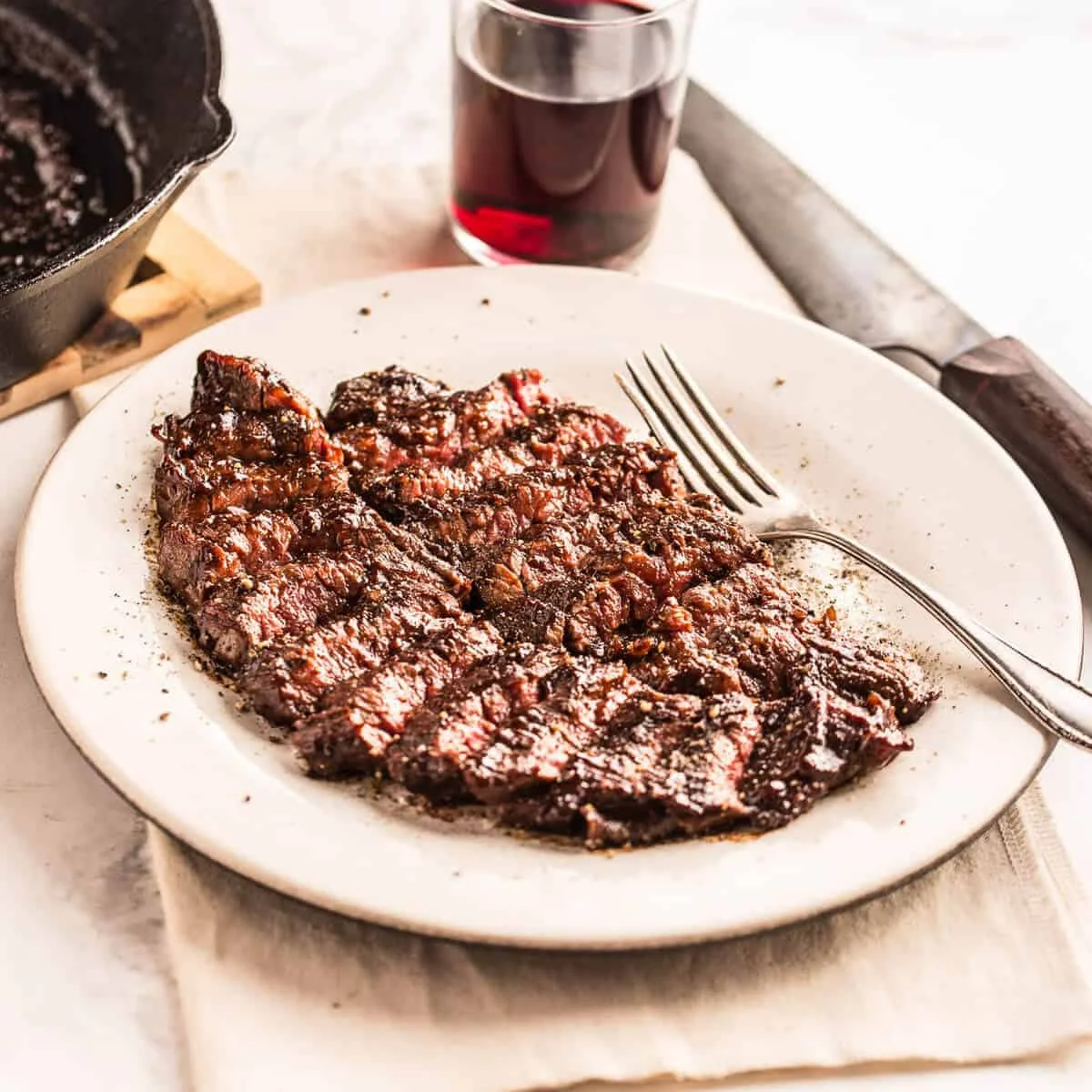
Bavette is a flavourful, quick-cooking steak with a loose grain that takes well to a hot sear. Serve it simply with salt and pepper, or coat it in chocolate barbecue sauce for a sweet, smoky finish.
Ingredients
- 400 gbavette steak
- for fryingoil
- to tastesalt and pepper
- 30 gchocolate barbecue sauce (optional)
Instructions
- 1
Heat the pan
Heat a cast-iron skillet until very hot.
- 2
Prepare the steak
Take the steak out of the fridge and pat it dry with a paper towel. Rub it with oil and season one side with salt, keeping the pepper for later.
- 3
Sear the steak
Put the steak in the hot pan and move it around to help it sear evenly, for about 2 minutes.
- 4
Flip and season
Turn the steak over, salt the other side and cook until well caramelised. If it is thick, sear the edges too. Keep the pan hot to prevent the meat from boiling.
- 5
Check the temperature
Use a meat thermometer to check that the centre reaches 42°C (107°F) for rare or 45°C (113°F) for medium-rare.
- 6
Rest the steak
Take the steak off the heat and rest it on a wire rack or plate, turning it every 30 seconds. Its temperature will rise by a few degrees as it rests.
- 7
Serve without sauce
Slice the steak thinly against the grain, then season with salt and freshly cracked black pepper.
- 8
Finish with sauce
For the sauced version, add 2 tablespoons of barbecue sauce to the pan and bring it to a simmer. Add the steak and turn to coat, then slice and season.
What is bavette steak?
Bavette is a long, flat cut of beef often called flank or flap steak. Its name comes from French, but it is a popular cut in American-style steak cooking, where a hot, fast sear suits its shape and texture.
This version keeps the steak straightforward, with an optional chocolate barbecue sauce for a sweet, smoky contrast. Slicing across the grain helps make each piece easier to chew.
Nutrition and macros by portion
The nutrition label shows one serving as written: 482 calories, 40g protein, 6g carbs, 32g fat.
| Portion | Adjustment | kcal | Protein | Carbs | Fat |
|---|---|---|---|---|---|
| Lighter | Skip the barbecue sauce | 337 kcal | 28g | 4g | 22g |
| This serving | As written | 482 kcal | 40g | 6g | 32g |
| Hungry | Add a larger side | 723 kcal | 60g | 9g | 48g |
The steak provides most of the protein and fat, while the barbecue sauce contributes most of the carbohydrates if you use it. Serve with vegetables or salad for freshness, or add potatoes or bread if you want a more substantial plate.
Why use a very hot pan?
Dry steak: patting the surface dry helps it sear rather than steam when it meets the pan.
Hot cast iron: the recipe relies on a thoroughly heated skillet to colour the outside quickly. Avoid crowding or moving the steak excessively; the method calls for moving it around for an even sear.
Seasoning and sauce
Salt first: salt one side before searing, then add more when you flip the steak. Pepper is held back until serving so it stays freshly cracked.
Chocolate barbecue sauce: this is optional, so the steak can be served without it. For the sauced finish, the method specifies 2 tablespoons of barbecue sauce; the ingredient list gives 30 g of optional chocolate barbecue sauce.
How to judge doneness
Thermometer: check the centre of the steak, aiming for 42°C (107°F) for rare or 45°C (113°F) for medium-rare, as specified in the method.
Carry-over cooking: the temperature will rise by a few degrees while the steak rests. Keep in mind that the recipe does not give a separate resting time.
Resting and slicing
Resting: transfer the steak to a wire rack or plate and turn it every 30 seconds, as directed. This gives the meat a brief pause after cooking before you slice it.
Against the grain: look for the direction of the visible muscle fibres and cut across them into thin slices. This is especially useful for a cut with a pronounced grain.
What to serve with it
Fresh sides: serve the slices with a green salad or steamed vegetables to add freshness alongside the rich beef.
Heartier sides: potatoes, chips or crusty bread make a more substantial plate and pair well with the optional barbecue sauce.
Recipe notes & tips
- Pat the steak thoroughly dry before it goes into the pan.
- Heat the cast-iron skillet until very hot before adding the steak.
- Use a meat thermometer to check the centre rather than guessing from the outside.
- Turn the steak every 30 seconds while it rests, following the method.
- Slice thinly across the grain for more tender-feeling pieces.
- Crack the black pepper over the steak just before serving.
Variations
- Keep it simple: omit the optional sauce and finish with salt and freshly cracked black pepper.
- Use the chocolate sauce: simmer the listed chocolate barbecue sauce in the pan, then turn the steak to coat.
- Add a salad: serve the sliced steak with crisp salad leaves for a fresh contrast.
- Make it heartier: add potatoes or chips alongside the steak.
- Serve with bread: include crusty bread to make the meal more filling.
Common mistakes to avoid
- Damp surface: the steak can steam rather than sear; pat it dry before cooking.
- Pan not hot enough: the steak may lose its sear; heat the cast-iron skillet until very hot first.
- Pepper added too early: the method reserves it for serving; season with salt before cooking and pepper at the end.
- Guessing doneness: use a thermometer and check for 42°C (107°F) for rare or 45°C (113°F) for medium-rare.
- Slicing with the grain: cut across the visible fibres instead for thinner, easier-to-chew slices.
- Sauce confusion: the method calls for 2 tablespoons, while the ingredient list gives 30 g; measure the listed amount if following the ingredients.
How to store
Refrigerate leftover steak in a covered container and use within 3 days. Reheat gently in a pan until warmed through; high heat can make it tougher.
Frequently asked questions
Can I cook bavette without a cast-iron skillet?
Yes. Use another heavy frying pan that can be heated until very hot, following the same searing method.
What temperature does this recipe recommend?
The method gives 42°C (107°F) for rare and 45°C (113°F) for medium-rare. It also notes that the temperature will rise by a few degrees while the steak rests.
Do I have to use the chocolate barbecue sauce?
No, it is optional. The steak can be sliced and served with salt and freshly cracked black pepper instead.
How should I slice bavette?
Slice it thinly across the grain, cutting across the direction of the visible muscle fibres.
How much barbecue sauce should I use?
The ingredient list gives 30 g of optional chocolate barbecue sauce, while the method says to add 2 tablespoons of barbecue sauce. Use the listed 30 g if measuring from the ingredients.
Cook it from the original
This recipe comes from pantsdownapronson.com. Their page has the author’s own photos, notes and tips — the best place to cook it from.
Open the recipe on pantsdownapronson.com