
Shrimp and Snow Peas
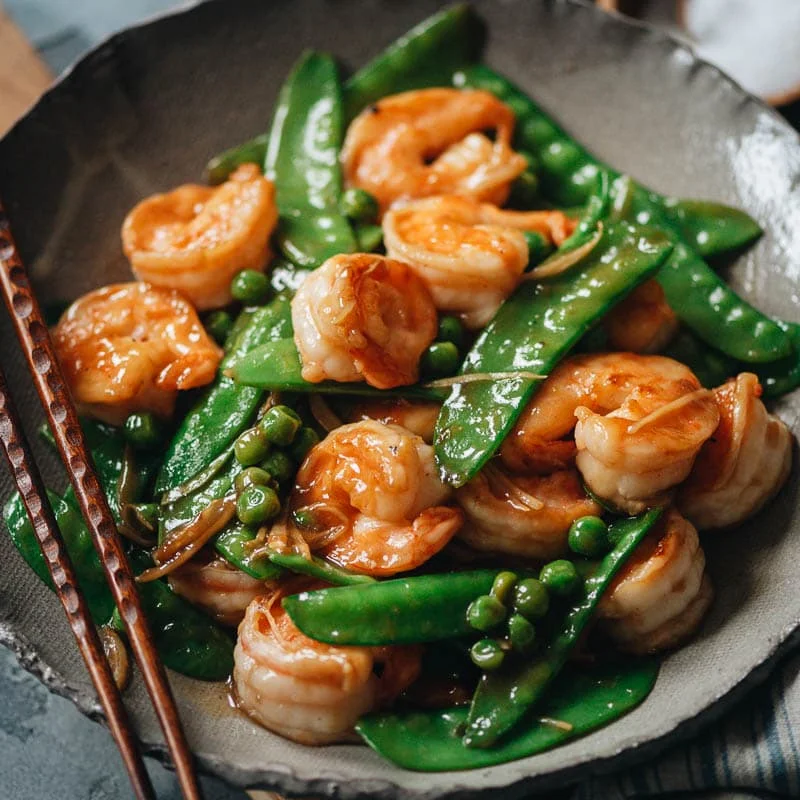
Shrimp and snow peas are quickly stir-fried with ginger and coated in a savoury, lightly thickened sauce. This speedy Chinese-inspired dish brings tender seafood and crisp vegetables together for an easy weeknight meal.
Ingredients
- 450 g (1 lb)shrimp, peeled and deveined
- 60 ml (1/4 cup)frozen peas (optional)
- 10 ml (2 teaspoons)Shaoxing wine or dry sherry
- 1.25 ml (1/4 teaspoon)salt
- 10 ml (2 teaspoons)cornflour
- 30 ml (2 tablespoons)oyster sauce
- 15 ml (1 tablespoon)soy sauce
- 120 ml (1/2 cup)chicken stock or vegetable stock
- 2.5 ml (1/2 teaspoon)rice vinegar
- 2.5 ml (1/2 teaspoon)sugar
- 0.6 ml (1/8 teaspoon)white pepper or black pepper
- 10 ml (2 teaspoons)cornflour
- 22.5 ml (1 1/2 tablespoons)peanut oil
- 225 g (8 oz)snow peas, cleaned and strings removed
- 5 cm (2 inches)ginger, julienned
Instructions
- 1
Marinate the shrimp
Put the shrimp in a medium bowl with the marinade ingredients and mix thoroughly by hand. Set aside while you prepare the remaining ingredients.
- 2
Mix the sauce
Stir the sauce ingredients together in a small bowl until combined.
- 3
Cook the shrimp
Heat 15 ml (1 tablespoon) of the oil in a large carbon-steel skillet or non-stick pan over medium-high heat until hot. Spread the shrimp in one layer and cook without moving for about 1 minute, until the underside is cooked. Turn them, then stir a few times until they are no longer translucent and have curled fully. Transfer to a large plate.
- 4
Fry the ginger
Add the remaining 7.5 ml (1/2 tablespoon) of oil and the ginger to the pan. Stir a few times, just until fragrant.
- 5
Cook the snow peas
Arrange the snow peas in one layer with as little overlap as possible. Leave them undisturbed for 30 seconds, until the underside browns slightly. Turn and cook for about 30 seconds more, until they begin to soften.
- 6
Thicken the sauce
Return the cooked shrimp to the skillet. Stir the sauce again to dissolve the cornflour, then pour it into the pan. Add the frozen peas if using, and stir and cook until the sauce has thickened. Transfer everything to a serving plate.
- 7
Serve hot
Serve hot over rice.
What is shrimp and snow peas?
This Chinese-style stir-fry pairs shrimp with crisp snow peas in a savoury, ginger-scented sauce. It draws on the quick, high-heat approach common to many Chinese home and restaurant stir-fries.
Here, the shrimp and vegetables are cooked separately before the sauce brings them together. That keeps the shrimp tender and gives the snow peas a chance to develop a little colour.
Nutrition and macros by portion
The nutrition label shows one serving as written: 261 calories, 28g protein, 16g carbs, 9g fat.
| Portion | Adjustment | kcal | Protein | Carbs | Fat |
|---|---|---|---|---|---|
| Lighter | Less oil, more snow peas | 183 kcal | 20g | 11g | 6g |
| This serving | As written | 261 kcal | 28g | 16g | 9g |
| Hungry | Add extra rice | 392 kcal | 42g | 25g | 14g |
The shrimp provide most of the protein, while the snow peas, optional peas and rice served alongside contribute carbohydrates. Oil and the sauces account for much of the fat, with the exact balance depending on the brands used. Pair it with a generous serving of vegetables and a measured portion of rice for a balanced plate.
The marinade and sauce
Shrimp marinade: Shaoxing wine, salt and cornflour season the shrimp and give the surface a light coating. A short rest while you prepare the other ingredients is all the method calls for.
Sauce: Oyster sauce and soy sauce supply savoury depth, while stock loosens the mixture. Rice vinegar, sugar and pepper round it out; the extra cornflour thickens it in the pan.
Cook the shrimp gently
Single layer: Give the shrimp room in the hot pan so they cook evenly rather than crowding together. Leave them untouched for about a minute before turning.
Doneness: The shrimp are ready to transfer when they are no longer translucent and have curled fully. They go back into the pan later, so avoid prolonging their first cooking.
Keep the snow peas crisp
Dry and spread: Clean the snow peas and remove their strings as directed, then arrange them with minimal overlap. The brief, undisturbed cooking helps the undersides brown slightly.
Texture: They should begin to soften after about a minute in total, while still keeping some bite. Stirring the sauce in at the end finishes the dish without a long simmer.
Why ginger and oil matter
Ginger: Cut it into thin strips so its fragrance releases quickly in the hot oil. Stir only a few times before adding the snow peas, as the method relies on a quick sauté.
Peanut oil: The recipe divides the oil between cooking the shrimp and frying the ginger. Add the second portion after removing the shrimp so the aromatics can flavour the pan.
Serve it with rice
Rice is the suggested accompaniment and catches the glossy sauce. Serve the stir-fry as soon as the sauce thickens so the shrimp stay tender and the snow peas retain their crispness.
For a broader meal, add a simple side of steamed vegetables or a light soup. Keep the accompaniments plain enough to let the ginger and savoury sauce come through.
Recipe notes & tips
- Have the sauce and vegetables ready before heating the pan, as the stir-frying moves quickly.
- Use a wide skillet so the shrimp and snow peas can cook in a single layer.
- Pat the shrimp dry if they are wet after thawing to help them cook cleanly in the pan.
- Stir the sauce just before pouring to lift any settled cornflour from the bottom of the bowl.
- For a gluten-free version, use dry sherry, tamari and Chee Hou Sauce in place of Shaoxing wine, soy sauce and oyster sauce, respectively.
Variations
- Use vegetable stock: Swap it for chicken stock for a meat-free sauce.
- Add the peas: Stir in the optional frozen peas for extra sweetness and colour.
- Change the pepper: Use black pepper if white pepper is not to hand.
- Adjust the ginger: Use a little less ginger for a milder flavour.
- Serve with noodles: Spoon the stir-fry over cooked noodles instead of rice.
Common mistakes to avoid
- Crowding the shrimp: They may cook unevenly; spread them in one layer and work in batches if needed.
- Overcooking the shrimp: They can turn firm; transfer them once they are opaque and fully curled.
- Overlapping the snow peas: They may steam rather than brown; arrange them with minimal overlap.
- Skipping the sauce stir: Cornflour can settle at the bottom; mix the sauce again just before adding it.
- Leaving the sauce too long: It can thicken more than intended; transfer the dish once it has thickened.
How to store
Refrigerate leftovers promptly in a sealed container and use within 2 days. Reheat gently in a pan until piping hot, adding a small splash of stock if the sauce has become too thick.
Frequently asked questions
Can I use frozen shrimp?
Yes. Thaw them completely and drain well before marinating so excess water does not dilute the sauce.
How do I make this dish gluten-free?
Use dry sherry instead of Shaoxing wine, tamari instead of soy sauce and Chee Hou Sauce instead of oyster sauce. Check the labels of the other ingredients as well.
Can I leave out the frozen peas?
Yes. They are optional, and the dish still includes snow peas.
How can I tell when the shrimp are done?
They should no longer be translucent and should have curled fully. Transfer them from the pan at that point, as they will be returned briefly to the sauce.
Can I prepare the ingredients in advance?
You can clean and trim the snow peas, cut the ginger and mix the sauce ahead of time. Keep prepared ingredients chilled until you are ready to cook.
Cook it from the original
This recipe comes from omnivorescookbook.com. Their page has the author’s own photos, notes and tips — the best place to cook it from.
Open the recipe on omnivorescookbook.com