
Vegan Cabbage Kimchi with Apples and Ginger
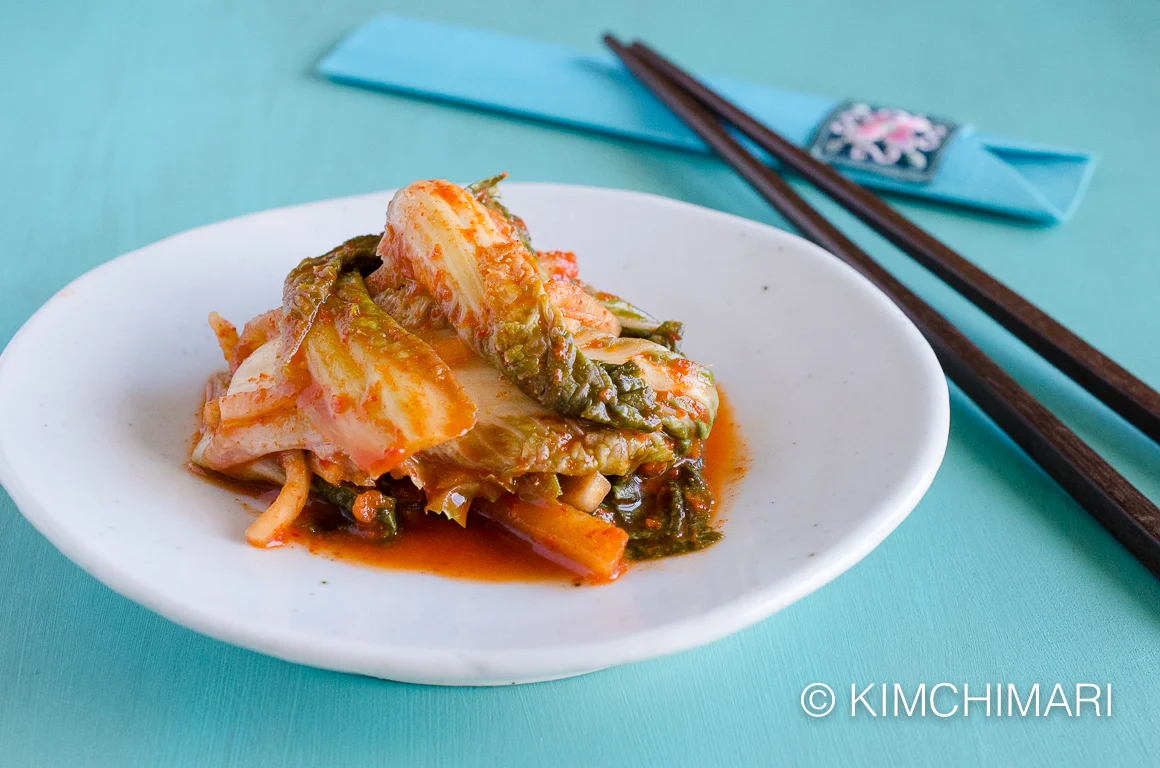
This Korean vegan cabbage kimchi combines cabbage and radish with a gently sweet, spicy seasoning of apple, ginger and kelp stock. It is made without fish sauce, garlic or green onions, and is a good choice when you want a milder, plant-based kimchi to ferment at home.
Ingredients
- 1 small (750 g/10 oz)bomdong cabbage or napa cabbage (or 2 small)
- 1 medium (500 g/1 lb)radish
- 1 piece (5 × 5 cm/2 × 2 inches)kelp (dashima)
- 2.4 L (10 cups)water
- 240 ml (1 cup)Korean coarse sea salt, with the bittern removed (cheonilyeom)
- 30 g (1/4 cup)sweet rice flour
- 360 ml (1 1/2 cups)sea kelp stock
- 240 ml (1 cup)Korean chilli powder (gochugaru), or less for a milder kimchi
- 1 small apple (grated; 62.5 ml/1/4 cup)apple
- 1 tspginger, grated or chopped
- 2 tspKorean soup soy sauce (guk ganjang)
- 3 tbspKorean sea salt, with the bittern removed
- 5 tspgreen plum syrup (maesil extract), or 2 tsp to 1 tbsp sugar
Instructions
- 1
Mix the brine
Combine 2.4 L (10 cups) of water with 240 ml (1 cup) of Korean coarse sea salt to make the brine.
- 2
Make kelp stock
Simmer one piece of dashima in 2 cups of water for 10 minutes. Take it off the heat and leave the stock to cool.
- 3
Separate the leaves
Cut off the end of the bomdong cabbage so the leaves separate.
- 4
Brine the cabbage
Put the cabbage into the brine. Brine bomdong leaves for 1 hour; for regular napa cabbage, cut it in half and brine for 3 hours, then cut it into pieces.
- 5
Mix the paste
While the cabbage brines, combine 360 ml (1 1/2 cups) of sea kelp stock with 30 g (1/4 cup) of sweet rice flour in a pot. Bring the mixture to a boil.
- 6
Simmer and cool
When the paste starts to bubble, reduce the heat to medium-low and simmer, whisking for about 2 minutes while it bubbles gently. Leave it to cool.
- 7
Julienne the radish
Cut the radish into julienne strips.
- 8
Grate apple and ginger
Grate the apple and ginger separately.
- 9
Season the radish
Toss the radish with one-third of the gochugaru, or just enough to coat the strips.
- 10
Add apple and ginger
When the rice flour paste has cooled until warm to the touch but is no longer hot, stir in the grated apple and ginger.
- 11
Finish the seasoning
Stir the remaining chilli powder, soup soy sauce and salt into the seasoning mixture.
- 12
Add the sweetener
Finish the seasoning with the green plum syrup or sugar.
- 13
Rinse and drain
When the cabbage bends easily without breaking, rinse it in cold water 2–3 times and leave it to drain for about 15–20 minutes. Bomdong is thinner than napa cabbage, so brine it lightly; napa cabbage needs the longer 3-hour brining time.
- 14
Combine everything
Put the cabbage and radish in a large bowl and mix them with the seasoning paste.
- 15
Taste and adjust
Taste the kimchi and adjust the seasoning if needed.
- 16
Start fermentation
Leave the kimchi at room temperature for 1–1.5 days, until it has started to ripen. Transfer it to the fridge, where it will continue to ripen more slowly.
What is cabbage kimchi?
Kimchi is a Korean fermented vegetable dish, most commonly made with cabbage and seasoned with chilli. This version takes inspiration from temple-style vegan kimchi, leaving out fish sauce, garlic and green onions.
Apple and green plum syrup bring sweetness, while ginger and gochugaru give the seasoning its aromatic, spicy character. Kelp stock and a sweet rice flour paste help the seasoning cling to the vegetables.
Nutrition and macros by portion
The nutrition label shows one serving as written: 41 calories, 1g protein, 9g carbs, 0g fat.
| Portion | Adjustment | kcal | Protein | Carbs | Fat |
|---|---|---|---|---|---|
| Lighter | Use less sweetener | 29 kcal | 1g | 6g | 0g |
| This serving | As written | 41 kcal | 1g | 9g | 0g |
| Hungry | Serve a larger portion | 62 kcal | 2g | 14g | 0g |
The cabbage and radish contribute most of the carbohydrates, while the apple and sweetener add a little more. The recipe lists no fat per serving, and its protein is modest; pair a serving with tofu, beans or another protein-rich dish and rice for a more balanced plate.
Choosing the cabbage
Bomdong: This leafy cabbage is thinner than napa, so it needs only about 1 hour in the brine and a light pickle.
Napa cabbage: Cut it in half and brine it for 3 hours before cutting it into pieces. The recipe’s two cabbage options need different brining times, so use the texture test rather than relying on the clock alone.
Getting the brine right
Salt brine: Mix the water and coarse salt thoroughly before adding the cabbage. Brining seasons the leaves and softens them enough to bend without snapping.
Rinsing: Once the cabbage bends easily, rinse it in cold water 2–3 times and drain it for 15–20 minutes. Draining well helps keep excess water from thinning the seasoning paste.
Making the rice flour paste
Kelp stock: Simmer the dashima for 10 minutes, then let the stock cool before using it in the paste. The stock gives the mixture a savoury base without fish sauce.
Rice flour: Bring the stock and sweet rice flour to a boil, then simmer over medium-low heat for about 2 minutes while whisking. The paste should bubble gently and be warm, not hot, when you mix in the apple and ginger.
Building the seasoning
Radish: Coat the julienned strips with one-third of the gochugaru before combining them with the cabbage. This gives the radish an even first layer of chilli.
Sweetness and heat: The apple and green plum syrup soften the chilli’s edge, while the remaining gochugaru seasons the paste. Use less chilli powder if you prefer a milder kimchi.
Fermentation timing
Room temperature: Leave the mixed kimchi out for 1–1.5 days, checking that it has begun to ripen before moving it to the fridge. The exact pace can vary with the room temperature.
Refrigeration: Chilling slows the fermentation, but the kimchi will continue to ripen gradually. Taste it as it develops to find the level of tang you like.
How to serve it
With rice: Serve the kimchi as a side with steamed rice and other Korean-style dishes. Its spicy, tangy seasoning also adds a punchy contrast to plain grains.
In a meal: Pair it with a protein-rich main and another vegetable dish for a more complete plate. Use a clean utensil when serving from the jar to help keep the remaining kimchi in good condition.
Recipe notes & tips
- Taste the brined cabbage for flexibility before rinsing; it should bend easily without breaking.
- Drain the cabbage for the full 15–20 minutes so excess water does not dilute the paste.
- Let the rice flour paste cool until warm rather than hot before adding the apple and ginger.
- Coat the radish with the first third of the gochugaru before mixing the full seasoning.
- Start with less gochugaru if you are unsure about the heat, then adjust the seasoning to taste.
- Keep the cabbage and radish coated evenly with paste when mixing in the large bowl.
Variations
- Milder chilli: Use less gochugaru to reduce the heat.
- Sugar instead of syrup: Replace the green plum syrup with 2 tsp to 1 tbsp sugar.
- Napa cabbage: Use napa instead of bomdong and brine it for 3 hours before cutting it into pieces.
- Bomdong cabbage: Use bomdong leaves and brine them for 1 hour.
- More ginger: Increase the grated or chopped ginger slightly for a stronger ginger note.
Common mistakes to avoid
- Brining napa for too little time: Give it 3 hours in the brine before cutting it into pieces.
- Over-brining bomdong: Its thinner leaves need only about 1 hour, so check that they bend easily.
- Skipping the rinse: Rinse the cabbage in cold water 2–3 times after brining.
- Leaving the cabbage wet: Drain it for 15–20 minutes so excess water does not thin the paste.
- Adding apple to hot paste: Cool the paste until warm to the touch first.
- Using all the chilli on the radish: Reserve two-thirds of the gochugaru for the seasoning mixture.
How to store
Once the kimchi has started to ripen at room temperature for 1–1.5 days, transfer it to the fridge. It will continue to ferment there more slowly; keep it covered and use a clean utensil when serving.
Frequently asked questions
Can I use napa cabbage instead of bomdong?
Yes. Cut the napa cabbage in half and brine it for 3 hours, then cut it into pieces. Bomdong leaves need only about 1 hour.
How can I tell when the cabbage is ready to rinse?
It should bend easily without breaking. The recipe uses this as the cue to rinse the cabbage.
Can I make the kimchi less spicy?
Yes. Use less gochugaru; the recipe specifically suggests reducing it to lower the heat.
Can I use sugar instead of green plum syrup?
Yes. The recipe gives 2 tsp to 1 tbsp of sugar as an alternative to the 5 tsp of green plum syrup.
How long should I leave the kimchi at room temperature?
Leave it for 1–1.5 days, until it has started to ripen, then move it to the fridge. It will continue to ripen more slowly while chilled.
Cook it from the original
This recipe comes from kimchimari.com. Their page has the author’s own photos, notes and tips — the best place to cook it from.
Open the recipe on kimchimari.com