
Yorkshire pudding
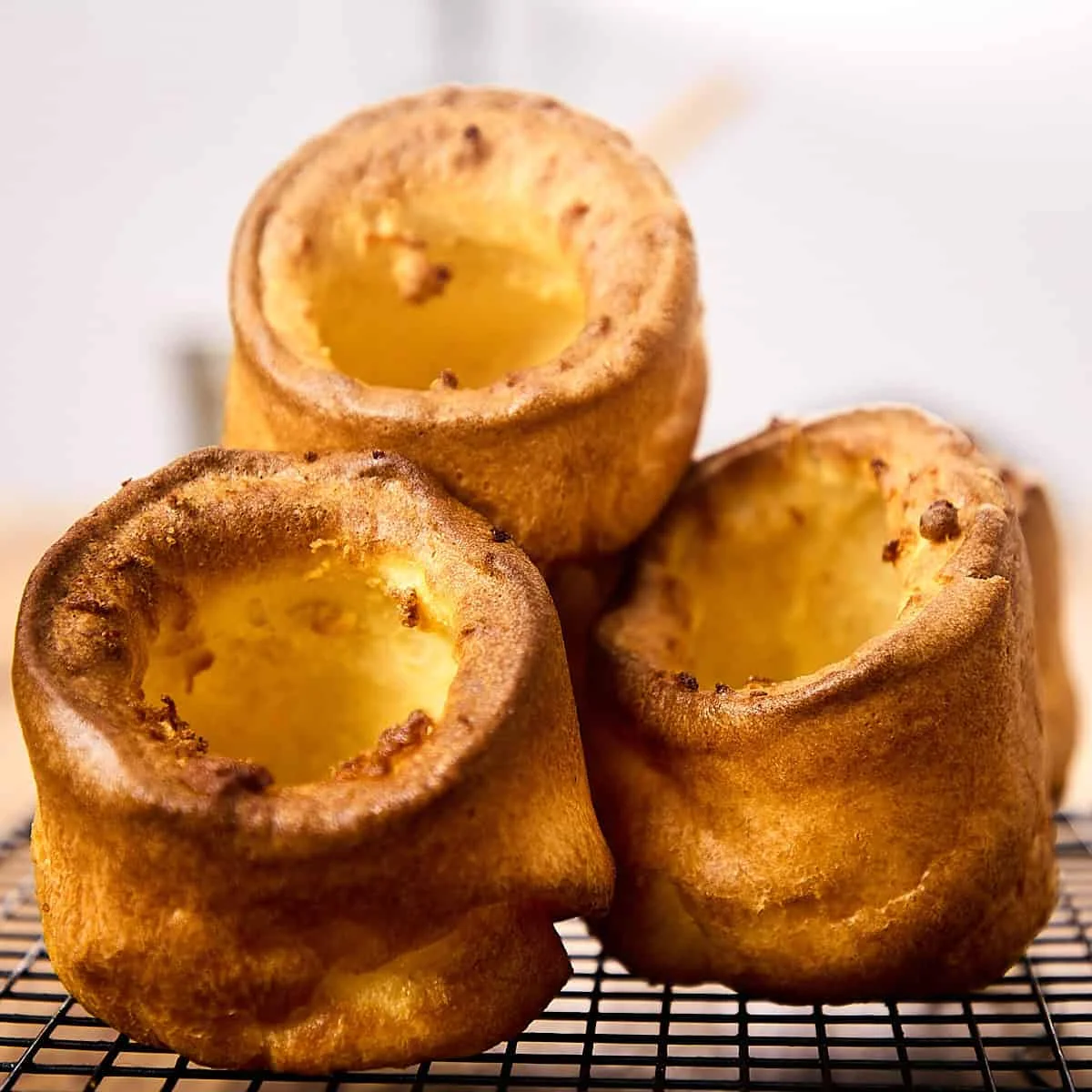
Yorkshire puddings are crisp, risen savoury batter puddings with soft, custardy centres, traditionally served alongside a roast. This version rests the batter and pours it into very hot fat for a lofty result and plenty of room for gravy.
Ingredients
- 250 gmilk
- 5 largeeggs
- 150 gplain flour
- 6 g (1 tsp)salt
- 100 gduck fat, beef dripping, or a mixture of duck fat and olive oil
Instructions
- 1
Blend the batter
Put the milk, eggs, flour and salt in a blender. Blitz until smooth with no lumps; the batter should be as thin as cream.
- 2
Rest the batter
Pour the batter into a jug and refrigerate for at least 1 hour, or overnight, to let the gluten relax.
- 3
Heat the oven
Preheat the oven to 200°C (390°F). Add a knob of fat or a tablespoon of oil to each hole of a 12-cup muffin tin or Yorkshire pudding tray. Heat the tin in the oven for 10–15 minutes.
- 4
Fill the tin
Carefully pour the cold batter into the centre of the hot fat, filling each hole about three-quarters full.
- 5
Bake until risen
Bake for 15–20 minutes without opening the oven door. The puddings are ready when tall, crisp and deep golden brown.
What are Yorkshire puddings?
Yorkshire puddings are a British savoury batter pudding, traditionally served with roast beef and gravy. Despite the name, they are baked in hot fat rather than steamed like a conventional pudding.
This version uses a simple mixture of eggs, milk and flour. Resting the batter and heating the fat thoroughly help the puddings rise while their centres stay soft.
Nutrition and macros by portion
The nutrition label shows one serving as written: 73 calories, 2g protein, 11g carbs, 2g fat.
| Portion | Adjustment | kcal | Protein | Carbs | Fat |
|---|---|---|---|---|---|
| Lighter | Use less cooking fat | 51 kcal | 1g | 8g | 1g |
| This serving | As written | 73 kcal | 2g | 11g | 2g |
| Hungry | Serve extra puddings | 110 kcal | 3g | 17g | 3g |
The flour and milk provide most of the carbohydrates, while the eggs contribute protein and some fat; the cooking fat is the main source of added fat. Serve a pudding with vegetables and a protein-rich roast or other main to balance the plate.
Why rest the batter?
Resting: Chilling the blended batter for at least 1 hour gives the flour time to hydrate and the gluten time to relax. You can make it the night before and keep it refrigerated.
Get the fat properly hot
Hot tin: Give the muffin tin or Yorkshire pudding tray 10–15 minutes in the oven after adding the fat. The batter should meet fat that is already hot, which helps it start rising straight away.
Careful pour: Pour into the centre of each well and avoid splashing hot fat. Fill each one about three-quarters full, as directed.
Watch the rise and colour
Doneness: Look for tall puddings with crisp edges and a deep golden-brown colour after 15–20 minutes. The exact time can vary with the tin and oven, so use those visual cues as well as the stated timing.
Oven door: Keep it closed while they bake. Opening it can interrupt the rise, so check through the glass instead.
Choosing the cooking fat
Duck fat: Use it for a rich savoury flavour that suits roast dinners.
Beef dripping: This is a traditional-tasting option that pairs especially well with beef and gravy.
Olive oil: The recipe allows a mixture of duck fat and olive oil; keep the total amount of fat to 100 g.
Serving the puddings
Yorkshire puddings are made to catch gravy, so serve them fresh alongside roast meat and vegetables. They also work as a savoury accompaniment to a roast dinner without meat.
For a more balanced plate, pair one or two puddings with a generous serving of vegetables and a protein-rich main.
Recipe notes & tips
- Blend until the batter is completely smooth before chilling it.
- Chill the batter for at least 1 hour, or prepare it the night before.
- Heat the tin with the fat in it for the full 10–15 minutes.
- Pour the batter carefully into the centre of each hot, greased well.
- Keep the oven door shut throughout the 15–20 minute bake.
Variations
- Use beef dripping: Choose it for a classic savoury flavour with roast beef.
- Use duck fat: Swap in duck fat for a rich roast-dinner accompaniment.
- Mix the fats: Combine duck fat and olive oil while keeping to the stated 100 g total.
- Make mini puddings: Divide the batter among the 12 wells and serve them as individual portions.
- Prepare ahead: Blend the batter the night before and keep it chilled until needed.
Common mistakes to avoid
- Skipping the rest: Chill the batter for at least 1 hour, or overnight, as the method directs.
- Using a cool tin: Heat the tin with the fat for 10–15 minutes before adding batter.
- Overfilling the wells: Fill each hole about three-quarters full.
- Opening the oven door: Keep it closed during baking so the puddings can rise undisturbed.
- Taking them out too early: Bake for 15–20 minutes and look for a tall, crisp, deep golden-brown finish.
How to store
Cool leftovers and refrigerate them in an airtight container for up to 2 days. Reheat in a hot oven until warmed through and crisp; they are best served fresh from baking.
Frequently asked questions
Can I make the batter ahead?
Yes. Transfer it to a jug, cover and refrigerate for up to overnight, as the method suggests.
Why should the tin be hot?
The recipe directs you to heat the tin with the fat for 10–15 minutes before pouring in the batter. This gives the cold batter a hot surface to meet.
Can I open the oven to check them?
The method says not to open the oven door while they bake. Check their rise and colour through the glass instead.
How do I know when they are done?
They should be tall, crisp and deep golden brown, usually after 15–20 minutes.
Which fat should I use?
The recipe offers duck fat, beef dripping, or a mixture of duck fat and olive oil. Use 100 g in total.
Can I freeze Yorkshire puddings?
The recipe does not give freezing instructions. For the best texture, serve them freshly baked or refrigerate leftovers and reheat them in a hot oven.
Cook it from the original
This recipe comes from pantsdownapronson.com. Their page has the author’s own photos, notes and tips — the best place to cook it from.
Open the recipe on pantsdownapronson.com